Unknown's avatar

About Miri

Writer, activist, social worker, and huge fan of cats, flowers, and cities.

Is Homosexuality “Unnatural”?

Spoiler alert: no.

First, let’s define “natural.” Here’s what Merriam-Webster has to say:

  • “being in accordance with or determined by nature”
  • “having a specified character by nature”
  • “occurring in conformity with the ordinary course of nature : not marvelous or supernatural”
  • “existing in or produced by nature : not artificial”

For something to be “unnatural,” then, it would have to be the opposite of these things.

And now here are some facts about homosexuality:

  • Same-sex attraction exists among humans all over the world.
  • Although there’s no such thing as the “Gay Gene,” plenty of research has suggested that ties do exist between genetics and sexual orientation.
  • While some research has shown that one’s environment can influence their sexual orientation–for instance, a study showed that gay men report less positive interactions with their fathers than straight men–such factors aren’t exactly up to the individual to choose. (Also, one can’t really determine causation in cases like that.)
  • In general, psychological authorities agree that homosexuality is caused by an interaction of countless factors, usually develops in early childhood, and is not a choice.
  • There is no evidence that sexual orientation can be forcibly changed through “conversion therapy” or any other methods. (However, one’s orientation may be fluid and can sometimes change on its own over time, just like other types of sexual preference.)
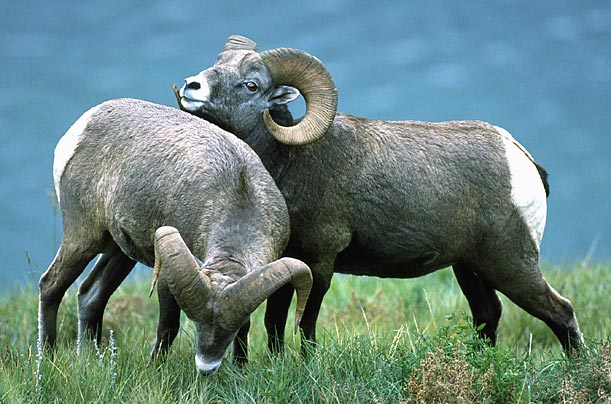
  • Even animals can be gay! Homosexual behavior has been documented in tons of different animal species, such as penguins, pigeons, vultures, elephants, giraffes, dolphins, lizards, sheep, and, curiously, fruit flies and bedbugs. Bonobos, meanwhile, are almost entirely bisexual.

Compare this list to the definitions of “natural” above. Could it be that homosexuality is just a part of nature?

Some people like to claim that because homosexuality is “unnatural” because it’s maladaptive in terms of evolution–after all, how are you supposed to pass on your genes if you can’t have biological offspring?

First of all, for various reasons that I may elaborate in a future post, I don’t believe we need to let evolutionary concerns dictate our behavior. Second, there are plenty of other conditions that people are born with that aren’t evolutionarily adaptive–albinism, for instance. Nobody goes around railing about how albino people are “unnatural.” (Except perhaps in parts of Africa, where the condition is heavily stigmatized. But it goes without saying that what happens to albino people in some cultures is deplorable.)

That’s not even to mention the fact that, last I checked, it’s not anybody’s business whether or not particular individuals want to pass their genes on to the next generation or not.

The reason I’m writing about all of this is because homosexuality’s supposed “unnaturalness” is a common justification given by bigots for why they oppose gay rights. (For some examples, see here, here, and here.) As usual, however, their arguments have nothing to do with the meaning of the word “natural” or with current research on homosexuality. (At least among Christians, the idea that homosexuality is “unnatural” comes from bible verses such as Leviticus 18:22, which refers to same-sex relations as an “abomination.” There’s a vague line of reasoning if I ever heard one.)

Therefore, I wish they’d just give the real reason they don’t support gay rights–that they don’t like gay people, don’t wish to examine why they feel this way, and would rather the LGBT community just shut up and stop making their lives so difficult.

“If You’re Fat, Then What Am I?”

There are a lot of misconceptions out there about body image and eating disorders. I can’t even begin to address all of them here. But there’s one I’ve been thinking about lately–that problems with body image are caused solely by comparing yourself to unrealistic standards, and can be solved by simply comparing yourself to the “real” bodies around you instead.

First, a disclaimer–I’ve never had anorexia or bulimia. However, I’m not entirely out of my depth here. Had I gone to see a psychiatrist at some point prior to this year, he or she would probably have taken note of my obsessive calorie-counting, severe dietary restrictions, compulsive weight-checking and fat-pinching, and general conviction that I was “fat,” and diagnosed me with something called “eating disorder not otherwise specified,” or “EDNOS.” This means that one doesn’t meet the diagnostic criteria for any of the eating disorders, but is definitely disordered nonetheless.

(For the record, I’m much better now.)

Anyway, one thing I remember very vividly from my years of thinking I’m fat was one particular response that I often encountered. Some people (mostly other girls), upon learning how I felt, would respond with this: “If you’re fat, then what am I?”

Now, I understand exactly where this comes from. Many of my peers were probably insecure, too, and it makes sense that they would be reminded of their own insecurity once I mentioned mine. Since I was indeed thinner than many other people, that response makes sense on some level. If I’m fat, they must be obese!

But it doesn’t really work that way. It would certainly be convenient if people’s self-concepts were always rational and based on reality. But the very definition of mental problems is that they’re distortions of reality–they’re unrealistic. That’s why grief after the death of a loved one isn’t considered a mental disorder, but depression is.

And that’s exactly why “If you’re fat then what am I” is not an effective response. At the time, I didn’t give two shits what other people were. It didn’t enter my thought process. In my case, my conviction that I was fat was mostly caused by cultural factors; namely, the fact that Russians are fucking preoccupied with beauty and weight. Absolutely preoccupied. It was also caused by years of ballet lessons, my depressive personality (which magnifies personal flaws), the belief that I could lose 10-20 pounds and still be healthy, fear that guys wouldn’t find me attractive if I had folds on my stomach, and many other causes.

For other people with body image and eating issues, the causes may be different. Some people develop the feeling that they’re unable to control their environment, so they control the only thing they can–their body. Others may start out actually overweight, start to diet and lose weight, and find that they’re addicted to the feeling of getting thinner. Others develop an overwhelming guilt whenever they eat, especially when they eat unhealthily, and they start to purge after eating. Some may have friends who constantly talk about their bodies’ flaws (remember Mean Girls?) and start to think the same way.

Whatever the causes are, these issues are much too complicated to be defeated by a simple glance at someone who weighs more than you.

Of course, “If you’re fat then what am I” also fails one of the most basic requirements of being a good listener–don’t change the subject to yourself. If your friend feels crappy and needs to talk to you, don’t make it about you. If your own issues are making it difficult for you to listen, tell your friend that. Sure, they might be disappointed that you can’t listen to them, but that’s much better than how they’re going to feel when you take their pain and turn it into a conversation about you and your weight.

It’s easy to resent people who, according to you, “should” be perfectly happy with their weight but are not. I can’t say I don’t get a twinge of annoyance whenever I witness a girl much smaller than me freaking out about her weight. But then I remind myself that she’s not me. Poor body image seems almost like a cliche among young women these days, but it’s so much more complex than you might think.

You Don’t Need Alcohol

[This is my first column for the Daily Northwestern, NU’s student newspaper. I can’t find the link on their website so I’m not linking to it, but here’s the full piece.]

You don’t need alcohol.

Wait, hear me out. You really don’t need it.

Before I came to college, I obviously expected that there’d be a lot of drinking and partying going on here. What I didn’t know is why. I grew up in a large, loud Russian family, where alcohol flows freely at dinner parties and camping trips, but never takes center stage. My parents seem mosty the same to me whether they’ve had five drinks each or not a single drop, and they seemed to have just as much fun without alcohol or with it.

I was puzzled, then, when I came to college and found that alcohol was often–not always, but often–the main event. As far as I knew, most people readily admit that they don’t like the taste of alcohol, at least not of the sort usually served at college parties. Dealing with the unpleasant consequences of drinking too much is a drag. Meaningful connections aren’t usually made while one is drunk. So why?

The answer both suprised and disappointed me: people think they need it.

I started hearing the same story from almost everyone I asked. “I don’t really feel comfortable with people unless I’ve been drinking.” “I can’t talk to girls without a few drinks.” “I could never hook up with someone if we’re not both drunk.”

One friend even confided to me that he literally can’t have sex if he’s not drunk. “Why not?” I asked. “I’m more of a traditional person,” he said. “I don’t feel comfortable doing that with someone I don’t really know if I’m sober.”

Could it really be that the brilliant, accomplished people I go to school with can’t make friends or hook up without alcohol?

The answer, I think, is no. I think we’ve been deluding ourselves. Sure, it can be fun to get drunk. But should it ever be something we “need” to function socially?

I think I can attest to the fact that it’s not necessary. I used to be painfully shy and incapable of having a conversation with anyone my age. Since coming to college, I’ve truly branched out and made many friends. Yet I’ve never been drunk and can count the number of parties I’ve been to on the fingers of one hand. People, if the girl who used to bring encyclopedias to read at birthday parties can do it, anyone can.

I also don’t think we should be using alcohol to help us ignore our own values. If you’re just not the sort of person who wants to sleep with people you don’t know, that’s totally fine. I’m not either. If you think it’s perfectly okay but feel too insecure to do it without alcohol, that’s something you can work on.

That applies to making friends, too. This school is full of really cool, really interesting people. You’re going to find people who think you’re awesome. It’s just a matter of convincing yourself of that. So practice in front of the mirror, get friends to introduce you, do whatever you have to do. Having the confidence to approach people and connect with them is a wonderful thing, and it’ll be with you always–long after the party’s over and the alcohol’s all gone.

Islamophobia Does Not “Cause” Riots

So I was reading the current issue of Utne Reader (great magazine, by the way) and came across an article about Islamophobia, reprinted from Intelligence Report.

At was a good article, at least up until the third paragraph. There, I saw something that made my eyes want to pop out of my head, migrate to the author’s place of residence, and slap him in the face:

Recent news reports strongly suggest a spike in anti-Muslim hate crimes. In May 2010, for example, a bomb exploded at an Islamic center in Jacksonville, Florida. In August, a man slashed the neck and face of a New York taxi driver after finding out he was a Muslim. Four days later, someone set fire to construction equipment at the future site of an Islamic center in Murfreesboro, Tennessee. In March 2011, a radical Christian pastor burned a Koran in Gainesville, Florida, leading to deadly riots in Afghanistan that left at least 20 people dead. [emphasis mine]

No. No no no. First of all, unlike the first three incidents, burning a Koran is not an “anti-Muslim hate crime.” Last I checked, in America that counts as free speech, heinous as it may be. Second, Islamophobia may have caused the first three incidents, but it did not cause the fourth one. That one was caused by morons who chose to respond to a provocation in a violent way.

One of my biggest issues with liberal discourse on societal problems is its proclivity to diminish or erase entirely the concept of human agency. (Some) liberals talk as though society just makes people do things without them actually processing information and deciding how to act on it.

(Among more radical liberals, this lends itself to the belief that violent response to injustice is not only inevitable, but morally justified, even if innocent people are injured or killed in the process. See: Hamas apologists.)

Leaving aside the morality of the rioters’ actions, it nevertheless takes quite a few conceptual steps to get from American Islamophobia to Muslims killing people in Afghanistan. While one could reasonably assume that Islamophobia (along with a number of other factors, such as having a violent disposition) caused people to do things like bomb mosques, stab Muslim taxi drivers, and burn Korans, one cannot then jump from that to “Islamophobia causes people in Afghanistan to riot and kill people.” Just, no.

I should hope that it’s quite clear that moderating variables must be at play here. (Case in point: Jews have been subject to as much [if not more] racism and discrimination throughout history as Muslims have, but if we rioted and killed each other every time somebody did something anti-Semitic, there’d be none of us left. Do a Google search on “burning Israeli flag” and you’ll see how common this is, and don’t tell me nobody ever burns Bibles, either.) For whatever reason, the rioters in question chose not to respond to this incident by starting an initiative to educate Westerners about Islam, by simply ranting about it to family and friends, or by shrugging and moving on.

Instead, they chose to respond to a no-name dipshit burning a Koran thousands of miles away by killing 20 innocent people.

Clearly, the vast, vast majority of Muslims in the world did not react this way, just like most teenagers who happen to come into possession of a loaded gun do not immediately go shoot up a school. The few who do go shoot up schools have serious issues that go way beyond the fact that they have access to a gun.

Islamophobia is a serious problem and should not be swept under the rug. But let’s not get ahead of ourselves here. All humans have agency, and we should assign the same level of responsibility to the Muslims who rioted as to the Americans who provoked them.