
The Art of Looking Good

When I’m applying for jobs or scholarships, I’m often reminded to twist the wording on my resumes, cover letters, and applications (not even to mention interviews) to make myself and my experiences look better than they actually are.

I’ve never really stopped to think about how this makes me feel, but I’ll do so now.

Lying is unethical, in my opinion. So is intentionally misrepresenting the truth, which is what you do when you “word things differently,” as they say. I’ve just realized how shameful it is in my mind that being employable and successful in our society is based on our ability to paint ourselves in brighter hues than we really deserve to be painted in.

This summer, I’ll be volunteering at a summer camp for kids in Washington Heights, a neighborhood in Manhattan, where I’ll probably be doing stuff like arts and crafts with them. The idea of the camp is to promote health and mental wellness, though I don’t see how that’s really what I’m doing. I’ll basically be playing games with some kids from the city. But how will it go on my resume? “Volunteered at a day camp for underprivileged children of recent immigrants in north Manhattan, teaching them about health and mental wellness.”

Yeah, something like that.

And I’ll probably mention something about how I turned down a job that would’ve paid me $2,600 for this opportunity.

And here’s the kicker—nobody’s going to ask me what I actually did with these kids. Nobody’s going to go check five or ten years down the line to see if any of my interventions actually did any good in preventing them from developing illnesses like diabetes and depression. Nobody’s going to ask these kids if they enjoyed their time with me. Chances are, nobody’s even going to ask for a recommendation from my supervisor.

But I still get to put this crap on my resume like it’s such an amazing thing that I did. Me, privileged white girl from Ohio, helping these poor little immigrant children learn how to stay healthy, all for no pay. Commuting an hour there and back each day from Queens! In the summer heat! Oh, and working for my parents for a whole month after that to pay them back for sending me there.

This is what I call the art of looking good. It’s how we get into schools like Northwestern and get the sort of jobs that we’ll all be getting afterwards. Playing this game makes me sick. The thought that I, a person who loves to write and understands the power of words, am twisting them around so casually to get ahead in life, disgusts me.

I’m not naive enough to opt out of this game, because I do want to be successful in life, and clearly that’s what it takes these days. But I play this game halfheartedly, and I protest against it and buckle under its weight every agonizing step of the way.

I wish I could’ve written on my college application that, you know what, the prestigious internship I did in Israel the summer before senior year of high school was awful. I learned nothing except that I hate doing scientific research and I hate religion. I also learned that the sacrifices I made to be able to go there were all for nothing. I didn’t make any friends there. I did learn a bit about my native country, but not much, and nothing I couldn’t have learned by touring the country with my dad, which would’ve been significantly more fun.

But that’s not at all what I wrote on my college application, or else I very well might not be sitting in this Northwestern dorm right now.

Nobody wants to hear about my failures, no matter how much they taught me. Like when they ask you about your weaknesses in a job interview, they don’t really want to know that sometimes the amount of work you have makes you cry, or that sometimes you check Facebook at work, or that several times you accidentally made a comment to a coworker that might be interpreted as racist. They want to know that you have some minuscule barely-significant flaw, but don’t worry, you’re working on it!

Likewise, if I end this summer feeling like I accomplished nothing with these kids, nobody wants to know that, so that’s not what’ll go on my resume. My resume will say that I taught. I helped. I volunteered. Never, ever will it say that I failed. Even if I do.
Some Thoughts on Depression

[TMI Warning]

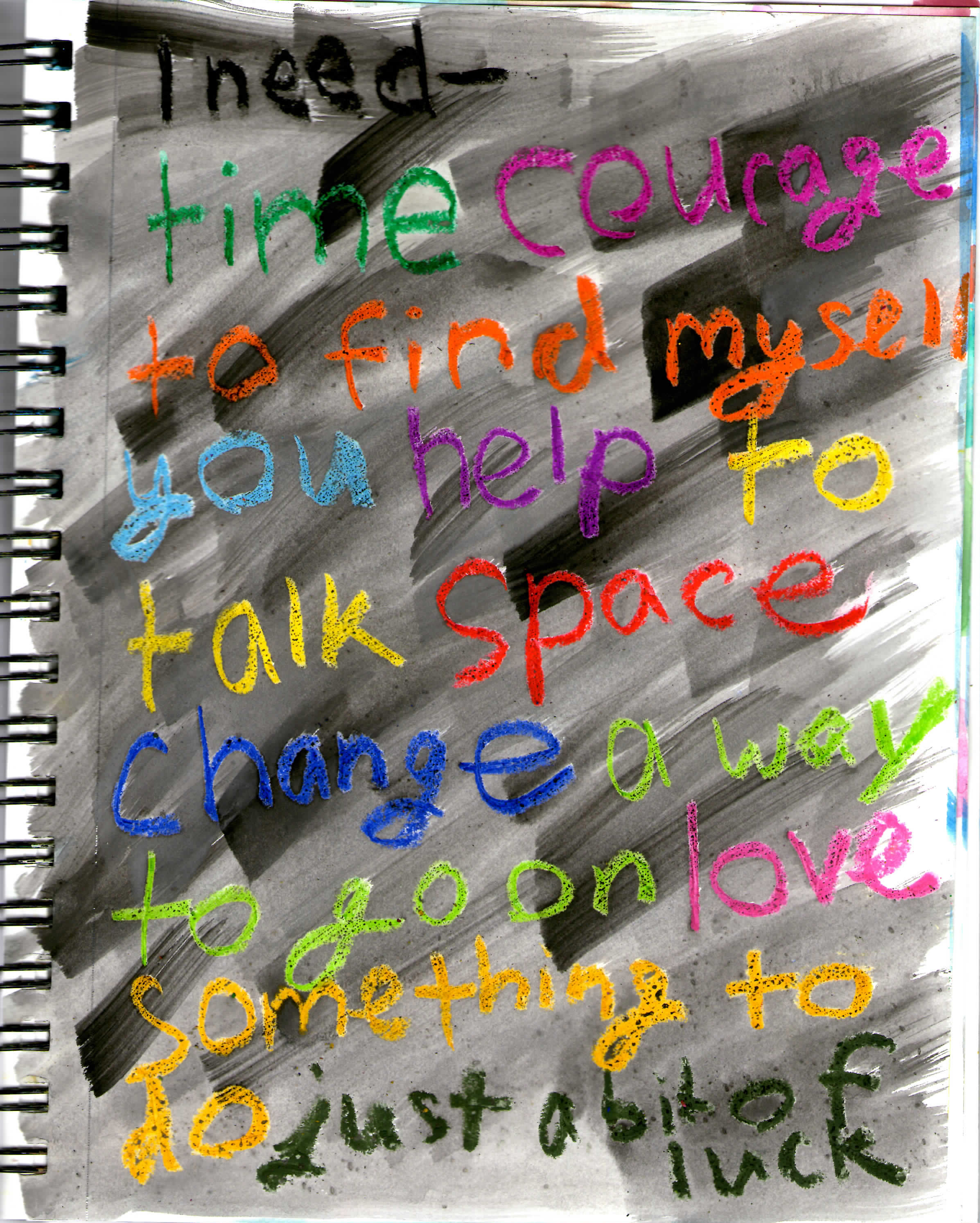
About five months ago, I wrote a post on Facebook (and on this blog) about my experience with depression and how I came to receive treatment for it. I remember feeling very triumphant as I wrote it, because I felt like my difficulties were finally over.

This turned out to not exactly be the case.

In January, perhaps precipitated by some unfortunate personal circumstances, I relapsed and have been trying, mostly unsuccessfully, to recover ever since. The months since then have been filled with a lot of self-loathing, many random bouts of crying (daily at times), and much speculation on my part as to whether or not I really belong in this world.

This is when I realized that my problems, whatever they may be, don’t simply go away when I’m not depressed. I don’t “invent” the issues that I’m unhappy about. But being healthy makes it easier to ignore the pain in the back of my mind–all the wasted opportunities, lost friends, and scarring memories that have built up over the years like dust on a windowpane. When I’m healthy, I simply don’t think about it, and consequently I’m happier. But the mockery that I’ve made of my life isn’t a figment of my imagination; it’s quite real.

~~~

I also started to realize, perhaps even more than I did when I wrote that post, how little the healthy world knows about depression. Mental illness is truly the last taboo; many people refuse to even consider dating someone who has it. Kinda makes me reconsider being so open about my experience…

Even people who would otherwise be supportive just don’t know enough. For instance, if you know your friend is a diabetic, would you offer her a piece of cake? Probably not. But would you casually make fun of your depressed friend? Unfortunately, many people would, even though teasing and jokes are things that many depressives have a lot of trouble with. (This is because depression often causes a cognitive deficit that makes people take everything–a snappy tone of voice, an odd glance, a sarcastic remark–very personally. Here’s a great guide to cognitive distortions.) I am always analyzing and picking apart things that people say to me to try to figure out if they were just teasing or not. I am terrified of the threat of rejection that these casual utterances may carry, so I am always alert, always on my best behavior.

~~~

Another thing I’m never sure of is which parts of me are depression and which are simply me. I’m a skeptic, a cynic, and generally not too big a fan of things that most people seem to really like (Exhibit A: this). I don’t fit in with my surroundings in many ways. I’m more complex, polite, caring, respectful, quiet, conscientious, serious, passionate, emotional, and sensitive than most. I’m less assertive, flaky, impulsive, cheerful, “chill,” and casual than most. This makes for a great number of personality differences between myself and most people I know. When I’m not feeling depressed, these differences fade into the back of my mind. But when I am, they come right to the front, putting up a wall between me and the rest of the world, making me feel like I’ll be an outcast for life.

~~~

One more realization–Northwestern might be the worst place in the world to be depressed. (Not that there’s really a good place for that, except perhaps the psychiatric ward of a hospital.) It’s isolating, stressful, and miserably cold from October till May. Your peers churn industriously around you like a hive of North Face-clad bumblebees while you vegetate listlessly in your shitty shoebox room and email professors, friends, student group leaders one by one and tell them that you’ve been ill and cannot come to whatever crap you’re supposed to be at that day. You eat Nutella from the jar and wonder why none of your friends care. You wonder why you expect them to care. You sleep, a lot.

Northwestern also happens to have entirely inadequate mental health services, but that’s a topic for another post. My friends and I are working to change that. But for now, this is a really, really unfortunate place to be depressed.

~~~

And that’s it, really. I’m not entirely sure where I’m going now, but hopefully it’s somewhere good.

Dillo Day: Not For Me

This just says it all, no?

[TMI Warning]

Today is Dillo Day, a Northwestern tradition that dates to 1972. It’s a music festival that happens each year on the Saturday of Memorial Day weekend. We get to see several musicians, including some very well-known ones (B.o.B. this year) for free.

Of course, because Northwestern is a college, it is only natural that Dillo Day is more known for being a drunken shitshow than a music festival. The drinking often starts before noon (or even on Friday night) and continues till everyone is semi-conscious in the wee hours of Sunday morning. Actually enjoying the music is nearly impossible, unless you also happen to enjoy being hit on and groped, pushed and stepped on, and presented with some great views of people making out or having sex in public.

And now I’ll make a confession. I find drunkenness, and drunk people, disgusting. It’s not that I merely find drunk people annoying and inconvenient. I find them, and their lifestyle choices, repulsive. I don’t understand why the hell you would want to end your night getting intimate with a toilet bowl, or why you would want to be too far gone to even remember some of the supposed “best” days of your life.

My issue isn’t so much with the alcohol itself, though my relationship with alcohol has always been sort of hard to explain. My parents are social drinkers; they can hold their alcohol well and rarely get drunk. When they do, they’re louder, more social, quicker to laugh. In other words, they’re more fun. I’ve never actually seen them get very drunk, although one summer my dad went to Israel without us to see his friends and apparently had quite a bit to drink one day. It happened to be the same day that our fridge broke down, and my mom, completely clueless in terms of household appliances, called my dad long-distance and hysterically explained the situation, her fears regarding the baby formula going bad, and so on. My dad’s response was, apparently, a hearty “I don’t give a fuck!” and a dial tone.

And that was the worst of it. I’ve never seen my parents stagger, throw up, or hand their car keys over. I’ve never seen them down multiple shots in a row. (In fact, the only time they drink vodka is at dinner parties with friends, when every shot taken comes with a toast of some sort of emotional significance. Meaningless drinking this is not.)

Consequently, my own experience with drinking has been quite different from that of most people my age. I enjoy wine, mixed drinks, flavored vodka, and champagne. I like to drink wine with my parents over dinner and I can’t imagine New Year’s Eve without champagne. I like to be a bit tipsy, enough to make things a bit cheerier, and myself a bit more bubbly. But I have never been drunk, and I don’t plan on it. (In fact, I was furious a few weeks ago when a friend of mine suggested, laughing, that my friends will “make” me get drunk on my 21st birthday. Excuse me? Nobody can “make” me put anything in my body that I don’t want to put there. Any friend who tries to force anything on my body, be it sex or drugs or alcohol or a piercing or what have you, is no friend of mine after that.)

Last night, thinking about the shitshow that today would inevitably be, I found myself wishing that I were normal, that I could have fun in the way that everyone else can. I wished I wanted to do what they do. But I’ve never been that person. I’ve always been serious and I’ve always preferred to be completely in control of myself at all times. My disdain for drinking to excess is as natural a part of me as my preference for Pepsi over Coke, or the fact that I like to sleep on my stomach and not on my back. How do you change these things?

There are no words to describe such a feeling of isolation, which is one of many reasons I don’t talk about it often. I never fails to shock me how easily I’ve accepted everything else “abnormal” about me–my diagnosis of depression, my bisexuality, my foreignness–but I cannot accept this.

And most of all, I just want to understand. I complain about these things and my friends tell me with a shrug, “That’s just how people are.” But why? Why take an opportunity like an all-day free music festival and turn it into a drunken mess you’ll barely remember afterwards? I even understand drinking and partying when you’re bored, but why on a day like this one? Why is this desire as natural for them as my aversion to it is for me? I want to understand this in a sociological and psychological sense. But I don’t.

I sound like a boring, prissy goody-goody with a stick up my ass. I know I do. But the funny thing is, I’m really not. When I’m in a genuinely good mood, which, thanks in part to my shitty environment, is not often, I’m always laughing and making jokes. I love dancing and trying to sing, exploring Chicago with friends, and frequently acting like an idiot. I’m known to occasionally skip class and go tanning on the beach, and to write my papers the night before they’re due because I was too busy hanging out with friends before. I love fun. But I hate partying. The two aren’t one and the same, you know.

So there you have it. Dillo Day is a disgusting boozefest, and it’s not for me. I guess that makes me an outsider as long as I’m at college (and possibly for quite a while longer). I don’t understand why, as a culture, we are fixated on the idea that people should be moronic and depraved until they turn 30.  I want to know why our society believes that being an idiot in your 20s is some sort of prerequisite to having a happy, successful, and meaningful life–and why everyone thinks I’ll “regret it” if I don’t follow this path. I want to know why college students are required as if by law to drink and party and smoke pot and have a lot of casual sex (another thing I really don’t enjoy), or else they’re boring and “lame.”

I’m fucking tired of being judged. It makes me really angry. Stop.

The Value of Disagreement

A photo from an Obama-McCain debate in 2008. Just to add some requisite humor to this otherwise serious post.

I am a liberal and I go to a liberal school. Sometimes this makes me feel happy and comfortable, because I have so much in common with others here in terms of politics. I can complain publicly about Americans’ lack of belief in climate change, or about something Glenn Beck said. I can ask my friends if they’ve seen the latest episode of the Daily Show or the Colbert Report. I can rant excitedly about some famous person coming out as gay, lesbian, bi, or trans. And I can do all this without worrying that I’m going to offend someone, or that someone is going to argue with me.

But two recent incidents made me ask myself if this is really such a good thing.

One was a conversation I had with a friend about a mutual friend of ours. We’re all really close and hang out a lot, but when I suggested to one that he go have a conversation with the other, he said that they don’t really have anything serious to talk about. I asked why, and he said that they always just agree on everything and there’s little to discuss.

The other was the killing of Osama Bin Laden. When this happened, my Facebook feed suddenly exploded with such a variety of opinions that I didn’t even know existed at Northwestern. Some people were screaming “USA! USA!” Others were really happy that Bin Laden was dead, but didn’t want to celebrate so gleefully. Others were ambivalent, wondering why this really mattered, or whether or not he should’ve been shot dead. Others still were furious that he’d been killed on the spot, arguing that he should’ve been tried by the American judicial system instead. Some were religious Jews or Christians, happy to have gained this victory against radical Islam. (Unfortunately, I don’t know many Muslims, but I would’ve loved to hear their perspectives.) Some were atheists or agnostics, wishing that we didn’t have these religious wars to begin with. And so on and so forth.

Immediately, tons of arguments and debates started up. I got into quite a few myself. As a result, I changed certain parts of my opinion, began to understand other parts more clearly, and generally started articulating my views a bit better. And, also, I learned a lot about many of my friends.

After that, I started to realize how much we’re missing here in terms of political dialogue. I used to be very conservative, but back then I lived in Ohio and everyone around me pretty much agreed. Now that I’m much more liberal, I’m once again surrounded by people who share my views on almost everything. Except for those times when my friends and I start getting bitchy and arguing minutiae, I rarely get to have a good political debate.

What to do about this? I honestly don’t know. I don’t know how to get more conservative or libertarian students to attend Northwestern. Like it or not, this is a liberal campus.

One related issue, however, is a bit easier to solve, and that is the tendency of people to want to shut down those who disagree. (I addressed this briefly in the previous post.) The internet makes it much easier to do this because you can literally avoid “conservative” or “liberal” websites, but I see this in play even out in the real world. When I lived in Ohio, despite being conservative, I had the uncomfortable feeling that conservatives always wanted to shut liberals up. Luckily, I didn’t have to feel guilty for long, because when I came to Northwestern I found that liberals do the exact same thing. The way we respond to alternative viewpoints is often anything but respectful and curious–it’s snarky and dismissive.

For instance, when discussing people who oppose the right to abortion, liberals like to refer to them as “anti-choice” rather than “pro-life,” which is what they call themselves. This is, in my opinion, ridiculously disrespectful. Pro-lifers place the sanctity of life above the freedom of choice, but that doesn’t mean they oppose choice. It just means they value life (and they define life as beginning at conception) more than they value choice. I disagree with this position entirely, but I respect it and can see why some people would think that way.

Similarly, conservatives will purposefully refer to Obama as “Barack Hussein Obama” (to highlight his “Muslim” middle name) or as the “Obamination” or as any number of other highly disrespectful monikers. Why? Why talk like this about the President of the United States just because he is a liberal?

This needs to stop. From both sides. Silencing the opinions of others benefits nobody. If they’re wrong, they’re wrong. If they’re right, then you should know the truth. If they’re partially right and partially wrong, you should take this opportunity to fine-tune your own views.

In fact, in order to put my money where my mouth is, from now on I’m going to seek out intelligent conservative blogs and read them. If nothing else, it’ll help me learn how to defend my own views better. Unfortunately, I don’t hear many conservative opinions here on campus, so I’m going to look for them elsewhere.

Learning How to be Happy

I’m going to go out on a limb and criticize something even more popular than the things I usually criticize–my school’s Happiness Club.

The Happiness Club is a prominent student organization at Northwestern that aims to increase happiness by planning all sorts of activities for the campus, such as kite-flying, free hot chocolate, water balloon fights, “silent” dance parties, and so on. In other words, all fun and exciting activities.

So what’s the problem?

The problem is that it’s not “happiness” that these activities are promoting; it’s momentary joy. Momentary joy is an important component of a happy life, but it’s not even close to all you need.

Let me explain. Most Northwestern students have been fed on a steady diet of stress, sleep deprivation, and SAT prep classes since before we hit puberty. The kinds of effects that such a diet inevitably has–for instance, perfectionism, fatigue, anxiety, and depression–are things that no amount of kite-flying will cure.

To put it bluntly, most people I know here (myself included) are simply not capable of living our lives in a way that’s conducive to long-term happiness and well-being. We suck at prioritizing–academics and extracurriculars come before friends and family, every time. We demand perfect grades from ourselves. We apply to only the most prestigious internships and burst into tears when we inevitably fail to get those positions. We fill our schedules to the point that we have to schedule in shower time. We don’t pause to relax, think, or meditate.

In other words, the skills that we lack–balance, mindfulness, perspective, and a healthy amount of compassion for ourselves–are exactly the things that are not being taught to us here. These are the skills that lay the foundation for a happy and meaningful life.

Of course, there are resources. CAPS (our psychological service) offers workshops, and RAs are encouraged to emphasize the need for balance and stress relief to their residents. But the people we look to and trust the  most–our peers–are often more of a negative influence than a positive one. (For instance, how do you think I feel about my own study  habits when my friend tells me she stayed up till 4 AM studying, slept for two hours, and got up at 6 to keep going?)

That’s where a group like the Happiness Club should, theoretically, come in. In addition to the undoubtedly fun activities that they already plan, why don’t they offer workshops on stress relief, meditation, or yoga? Why don’t they bring in speakers who talk about how one can be both productive and happy in college? Why don’t they encourage greater awareness of things like perfectionism, anxiety, and depression?

We need to start up a campus dialogue about these things, because there isn’t one right now. Occasionally, late at night, one of us will admit to a friend that we’re just not living the right way. But this conversation needs to happen on a larger scale. There is too much misery here. I don’t doubt that many Northwestern students are happy in some sense of the word, but they’re not as happy as they could be, because while all the adults in our lives have taught us how to live a successful life, nobody’s taught us how to live a happy one. Maybe it’s time to teach ourselves.