“There are no hot girls at Northwestern.”

The other day at a certain user-submitted news website, a new Northwestern student was asking for advice about “the party scene” at our school. He also inquires about the attractiveness of the “females” at our school (I think he means “women”), and several dudebros inform him not to get his hopes up. One writes, “No offense to the girls, but Northwestern is just not an attractive campus overall; guys and girls complain about it all the time.”

Lest you think this is just Reddit stupidity, it’s not. The alleged unattractiveness of Northwestern students is something that I’ve heard referenced many times. There’s even a related term: “Northwestern Goggles.” Urban Dictionary says that “Northwestern Goggles” is “when a female student from Northwestern University is considered “hot” only because most of her fellow students are ugly.” Dictionary db has a lengthy explanation of it too, except it references men rather than women. (Northwestern Goggles is, apparently, an equal-opportunity phenomenon.)

A student review of Northwestern at Vault.com states, “And if you’re looking for attractive male students, look elsewhere. Students develop “Northwestern Goggles” where people who, outside of NU, wouldn’t be considered dating material quickly become eligible and desirable bachelors or bachelorettes.” Campus media references the term, too. A few years back one of Daily’s sex columnists pondered this issue. And, of course, there’s a GIF.

I don’t believe the Myth of the Ugly NU Student. First of all, it just doesn’t jive with my experience at Northwestern and that of the friends that I’ve talked to. I know that’s circumstantial, but I think it’s still worthwhile to point out that some of us disagree. Some of us think that there are plenty of people at NU who look like they could be models. I can think of a number of qualities that are lacking on this campus–for instance, compassion–but attractiveness is not one of them.

Second, I’m somewhat disinclined to even consider the validity of this myth until someone designs a reliable, scientific measure of human attractiveness, applies it to representative populations of a number of universities, and shows me that Northwestern’s Attractiveness Quotient is lower than average.

And “I visited my friend at a state school once and the girls/guys there were so much hotter” does not count. That’s circumstantial evidence, and it’s also confirmation bias: we’ve all heard the Myth of the Ugly NU Student since we got here, so as soon as we get off campus we’re probably eager to try to find attractive specimens to validate our expectations.

Third, I’m not exactly sure what people hope to accomplish by constantly restating the Myth of the Ugly NU Student. While I’m not a huge believer in karma, I’m still pretty sure that it doesn’t exactly do wonders for your love life if you go around moaning about how ugly everyone at Northwestern is. And since most people do realize that beauty is subjective, “There are no hot girls/guys here” is really more a statement of “Look how Cool and Picky I am” than of any actual lack of beautiful people at Northwestern. Congratulations, you’re really Cool and Picky.

Ultimately, whether or not you find attractive members of your preferred gender(s) at Northwestern is entirely up to you. I think it’s pretty judgmental and shallow to dismiss our school with terms like “Northwestern Goggles.” If anything on this campus is ugly, it’s that.

Leaving Medill

I knocked on the office door promptly at noon. She opened the door and said, “Can you just wait a few minutes? Our teleconference is running late.” I nodded. The door shut. I waited.

Twenty minutes later, I was sitting at a round table in a large, airy office full of plants. It had two windows, one of which faced my freshman year dorm.

“So, you’re thinking about transferring out of Medill?”

“Definitely transferring.” Her eyebrows go up. “I mean, I’m a junior, and I actually decided quite a while ago, so…”

“Can you tell me a little bit about your decision? I’m not trying to dissuade you.”

~~~

I remember all those nights. Clutching my camera or my notepad or both. Trying to find a way–any way–to escape the situation.

The worst time was when I was doing my final project for the last journalism class I ever took. I went to a gathering at my brother’s apartment–an event for young adults of Jewish/Russian descent. I had to interview people–not my brother, obviously. I couldn’t do it. I couldn’t make myself talk to anybody. My throat started closing up.

My brother’s apartment was on the sixteenth floor. Would that be high enough?

I ran outside and collapsed on a bench in a park, crying and trying to catch my breath. I felt ridiculous. The Medill School of Journalism had accepted just ten percent of its applicants the year I got in. There were nine other people who had desperately wanted my spot. And now I was bawling like an idiot because I had a terrible fear of talking to strangers.

They told me it gets easier with time, that you have to just make yourself do it. They said you would stop feeling self-conscious after a while. They explained how important it is to my future career that I learn to be pushy.

It never got easier. I always ended up gasping for breath and crying.

I don’t remember how I finished that project, but somehow I did. Not long after I started having weird neurological symptoms and became more or less numb to everything. I spent the summer at home, doing almost nothing. The one thing I accomplished was starting antidepressants to undo what being in Medill had, for whatever reason, done to me.

~~~

And today, two years later, I sat in her office and answered her question.

“It just wasn’t my thing,” I said.

~~~

Two years have passed, and I’m only now filling out this paperwork, going to this meeting, and making sure that the university knows whether to give me a BS in journalism or a BA in psychology.

Part of reason for the delay was my own laziness and lack of fondness for formalities like this, but another part of it was avoidance.

I hate going into the Medill buildings. Both of them. One is very new, all sleek and shiny, with high ceilings and plush chairs and new technology. The other is its opposite, old and creaky, with a rusty fire escape winding up the back. I once climbed all the way to the top of it and sat there late at night.

They’re both beautiful. I hate them both.

In these buildings I learned how to write a lede and use AP style. I learned how to use Adobe Flash and InDesign, Final Cut Pro, and Audacity. I learned how to shoot video and record audio. I learned how to harass people who didn’t want to answer my questions until they did it anyway.

Mostly, though, I learned what it feels like to fail.

I don’t mean what they call a “Medill F,” which is what happens when you make a factual error in a piece and receive a grade of 50%. That did happen to me, as it did to virtually everyone else.

But that’s not failure. That’s just screwing up. Failure is when your mind conspires against you and keeps you from doing something you desperately want to do.

I wanted to be a journalist, but I couldn’t stop the panic attacks that I got whenever I had to actually be one.

~~~

She signed my form and made sure I knew where to take it next.

“And know that we’re always here for you, even though you’re leaving. If you ever have any questions, I’m always happy to help–even you!” She smiled and I had to smile back.

She congratulated me again for my acceptance to the psychology honors program, and I thanked her kindly.

“Good luck, my dear,” she said.

And then, less than five minutes later, it was over. I left the building and I left Medill.

~~~

It’s been two years since I took a journalism class. My video camera, voice recorder, and microphone lie abandoned in my closet back home. I still use my tripod for my own photography.

My external hard drive died suddenly over a year ago, and with it died all the articles and projects I did. If there’s a heaven for vain attempts, that’s where they are.

My new chosen profession is similar to journalism in some ways. Both journalists and therapists do a certain amount of investigation and excavation. Both live and work by a code of ethics, and both must keep secrets. Therapists, like journalists, ask questions and listen and take notes.

But that’s basically where the similarities end. Therapists don’t get to attach their names to their successes. I don’t get to point out a person who came to me barely able to get through the day and now lives happily, and say, “This is my work.” They don’t award Pulitzers to therapists. If a therapist’s name is in the newspaper, it’s probably for something bad.

And yet. My freshman year, one of my journalism professors told me a story about something she saw as a young reporter. A horrific plane crash had just happened and many were injured or dead. She was assigned to cover the story and showed up at the local hospital along with all the other reporters. The hospital staff told the reporters that there was a special room for grieving friends and family and that they must not attempt to interview the people inside.

Then someone came out of the room and sat on the floor, next to the door, with her head in her hands. My professor couldn’t bring herself to do it, but another reporter walked right up and said, “So, who’d you lose?”

I retell this story whenever people ask me why I chose psychology over journalism. It illustrates so pointedly the differences between these professions. Journalists do important work, work without which our society couldn’t function. But their allegiance is to “the people,” who “need to know.” The allegiance of a therapist is always, always to her client.

~~~

But I won’t pretend that this is a happy choice. I’m glad to have found my calling in life, but when I tell people that I “chose” psychology instead of journalism, as I told you just now, I’m not really telling it like it is.

“Choosing” means picking one thing when you are equally free to do either.

I was never free to be a journalist, because my broken brain wouldn’t let me.

Maybe if I had been, I would still have chosen psychology. Maybe not. Either way, now I’ll never know.

Most of us were raised with the idea that we can be whatever we want to be. Well, maybe that isn’t always true.

On Coercion and a Different Social Ethic

One of my favorite bloggers once wrote a post about the idea of “consent culture” as an alternative to rape culture. After describing various ways to help create a culture of consent surrounding sex, she brilliantly expands the idea to social interactions in general:

I think part of the reason we have trouble drawing the line “it’s not okay to force someone into sexual activity” is that in many ways, forcing people to do things is part of our culture in general.  Cut that shit out of your life.  If someone doesn’t want to go to a party, try a new food, get up and dance, make small talk at the lunchtable–that’s their right.  Stop the “aww c’mon” and “just this once” and the games where you playfully force someone to play along.  Accept that no means no–all the time.

This hit home with me in a very personal way. As a shy, withdrawn child who preferred to do things her own way (who, by the way, grew into a friendly, outgoing adult who still prefers to do things her own way), I experienced this from parents, friends, and total strangers on a constant basis.

Is it as bad as sexual coercion? Of course not. But social coercion can leave its own scars–of feeling inadequate, dependent, and not in control of one’s own circumstances.

Social coercion is something I try very hard to both avoid having done to me and to avoid doing to others. It fails the test that I try to live by as much as possible, which I call the Asshole Test. The Asshole Test is simple–would another person who happens to witness what you’re doing right now think you’re an asshole? If so, you’re more likely than not behaving like one. (Probably with exceptions.)

Would you want to be that person who’s always trying to strong-arm people into doing things “for their own good?” I wouldn’t.

I’ve heard plenty of arguments against this view of social coercion. Here are a few:

1. It’s for their own good. This is the most common justification I’ve ever heard people give for trying to wheedle others into doing things. “But he always orders the same dish! Shouldn’t he try something new?” “But that guy keeps looking at her and she’s too shy to go over and talk to him!” “But they never go out! They need to go to the party and have fun!”

Here’s the thing. Assuming the object of your coercion is old enough to think for themselves (I’ll get to the subject of young children later), only they know what’s best for them. You don’t. Maybe they’re working up the courage to do what you’re trying to get them to do and just need more time, or maybe they don’t want to do it at all. Regardless, it’s not for you to decide. Once someone says no, accept that that’s their answer.

2. But they’ll be glad they did it! First of all, nobody knows that from the get-go. I’ve been manipulated into doing things I ended up enjoying, and I’ve been manipulated into doing things I’ve regretted for years and years. Some of the people who pushed me to do the latter things have been some of the people I’m closest to, and even they turned out to be wrong.

Second, even if they’re glad they did it–even if they’re thanking you–that doesn’t make it right. If it did, then we’d be getting into a Machiavellian sort of friendship ethic in which the ends satisfy the means. I just can’t get on board with that.

But more importantly, it’s the precedent that’s set that matters. You’re not really doing your friend any favors, even if they end up loving whatever it is you made them do, because you’re not teaching them to do it for themselves. You’re teaching them to do it to please you, to keep your friendship, to avoid looking bad in front of you and your friends, or just simply to get you to shut up.

You’re teaching them that, ultimately, their choices have to be moderated by the people they interact with. You’re teaching them to rely on you for direction rather than on themselves. You’re teaching them a lot of negative things that you shouldn’t really want to teach your friends.

3. So what, parents can’t force their kids to eat their vegetables? This is a stupid argument. But yes, I’ve heard people use it, including some of the people who’ve responded to my post about this on Tumblr. I’ve also heard teenagers try to justify their acts of rebellion this way.

Our society–and probably most societies around the world–have already established the precedent that, sometimes, parent-child relationships can have a different dynamic from other sorts of relationships. A parent can (within reason) take away a child’s computer as a punishment. But they cannot do so to their spouse. A parent can prohibit a child from eating certain foods, but they can’t do so to a friend. And that’s not only because they’d never be able to enforce it–that’s because it would be abusive to try to control the life of another adult in such a way.

There are definitely situations, though, when things that many people think are acceptable to force children to do are simply not. Another of my favorite bloggers, Yashar Ali, handles this point beautifully in his piece “Now…Give Your Uncle a Kiss.” Yashar, Holly (the author of the “Consent Culture” piece), and I all agree that coercing children into showing physical affection for other people is wrong.

But where do you draw the line?

When I have children someday, I think I know where I’ll personally draw it. I think it’s acceptable to coerce children into doing things that are unequivocally necessary for their health and safety, such as eating vegetables or avoiding talking to strangers. I think that, within reason, it’s acceptable to coerce children into doing things that are necessary for them to have a happy, successful life, such as doing their homework and using manners.

Beyond that, though, things get hazy, and every parent must set their own boundaries.

An easy way to tell whether you’re coercing a child for the right reasons or not is to examine your own motives. If you demand a child to eat her vegetables, it’s not because you’re going to be personally offended if she doesn’t; it’s because she needs them to be healthy. If you demand a child to mingle with your guests, it’s probably because you don’t want to be embarrassed by his shyness, or because you want your guests to be impressed by how smart he is, or because your personal ideal for people is that they be outgoing. It’s not for his health, safety, or happiness.

If you are coercing a child into doing something, though, they should always know why. And no, it’s not “because I said so.” Kids are naturally curious and one should take these opportunities to teach them things. For instance, tell them what kinds of vitamins and minerals can be found in healthy food, and what these nutrients do for the body. Kids should know that even though their parents can make them do things sometimes, they’re doing these things for themselves and not for their parents.

4. But persuasion isn’t coercion. Good job, you understand the English language. But seriously, I know it’s not. It’s not rape either, as some people on Tumblr misconstrue the argument.

Persuasion is like coercion’s younger, cheerier sibling. It’s usually harmless, and healthy, secure adults can easily ignore it if they want to. But it’s irresponsible, I think, to keep trying to persuade someone to do something while placing the burden of deflecting those requests onto them. Some people have a lot of difficulty saying no. They want to make you happy, they want to keep your friendship. I talked about this a bit before.

It’s very, very hard to tell when persuasion turns into coercion. That’s why I personally avoid trying to persuade people to do things, period. You could say that if they genuinely agree with you, then they’ve been persuaded, but if they go along for other reasons, they’ve been coerced. I don’t really know. Unless you know someone extremely well, you can’t tell what’s going on in their mind, and sometimes you get it wrong even if you do know them extremely well. That’s why I try to play it safe.

And, finally, the most odious and dangerous excuse of them all: 5. But sometimes they want to be coerced. This is a bad excuse when it comes to sex, and it’s a bad excuse when it comes to social interactions.

This is where clear communication is essential. Some people really do want to be convinced to do things. Other people don’t. If you have a friend who always turns down your requests initially but then relents, why don’t you ask them why? Say, “So I’ve noticed that when I ask you if you want to do x/y/z, you always say no at first but then you change your mind. Is it because you feel pressured by me, or because you just needed some convincing?”

And then let them speak for themselves.

What I’m proposing is a different sort of social ethic. In this ethic, we not only respect people’s autonomy by not explicitly forcing them to do things, but we also free them from more subtle types of influence. That doesn’t mean we have to hide our desires and preferences, though. Instead of the “aww c’mon” and “just this once” that Holly writes about above, we say, “I wish you’d come along, but I’ll understand if you’d rather not.” Or “I think you’d like it if you tried it, but it’s totally up to you.” Or “That’s fine, maybe next time. Let me know if you change your mind.”

I think part of the reason why people have so much resistance to this sort of thinking is because we don’t like to take responsibility for things. It’s nice to think that we can just say and do whatever we want to other people and that our words and actions will have no real, lasting, and possibly negative effects on them. It’s nice to think that we’re all fully independent of each other, and that if someone says “yes” to something, it’s for one reason only–that they genuinely, from-the-bottom-of-their-hearts mean “yes.”

But there are ties that bind us to each other. Weak ties for acquaintances, stronger ties for friends, and stronger still for family and romantic partners. Respecting these ties means, among other things, recognizing the fact that you have an effect on this person, that you are not entirely independent of this person.

You don’t have to respect these ties. Unless we’re talking about sex, of course, you won’t be a rapist if you disrespect them. There are no legal consequences, and often there won’t even be any personal consequences, because not everyone recognizes when they’re being manipulated.

But that doesn’t make it right.
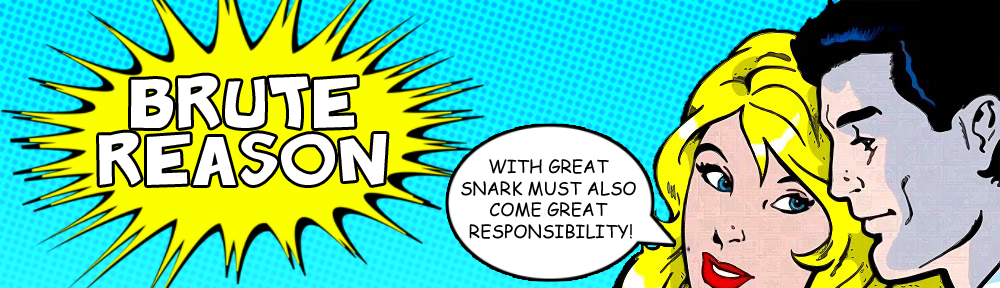
Goodbye Lexapro

[TMI Warning]

Today marks the end of an era of my life.

Today I took my last dose of antidepressants, and tomorrow, for the first time in a year and a half, I will get up in the morning and (purposefully) not take that pill again.

I went on Lexapro as a last resort in July 2010. I won’t go into all those details here since I’ve written about it before, but I’ll say that, at the time, I had no other choice. When a body has been critically injured, it enters a coma. I was in the mental version of that.

Lexapro did a lot of things to me, some expected, some not so much. I stopped crying every day and wanting to kill myself, at least for a while. I also became, according to my friends, more lively, more social, and visibly happier.

But then, there was the other stuff. Lexapro broke up the one meaningful romantic relationship I’ve had in my life. (Was it destined to break up anyway? Now I’ll never know.) It altered my values and beliefs for some time and turned me into the sort of person I would’ve hated a few months before. Now I’m back to my normal self, thankfully.

It was also a cruel helper at times. If I missed just a day of it, I’d be a wreck by nightfall. If I missed two days, the withdrawal symptoms kicked in, and they were horrible. I’d be dizzy, nauseous, barely able to walk, completely unable to explain to people why I was suddenly sick when I’d been fine just that morning. (“Sorry, I’m going through drug withdrawal” isn’t really an effective explanation for most people.) The worst symptom of antidepressant withdrawal has no official name, but depressives refer to it as “brain zaps.” They’re momentary sensations of being shocked or stunned in the head and they happen every few minutes or so, or even more often.

Theoretically, of course, there’s no need to ever miss a day of a prescribed medication, but when you factor in insurance issues, CVS’s constant fuckups, weird sleeping schedules, and other crap, it happens pretty often. I remember one awful time when I forgot to bring my medication back to school from break with me and I had to get my parents to ship it. Those were an unpleasant few days. Another time, my psychiatrist refused to renew my prescription unless I came in to see her, but I’d already be back at school by the time she had her first available appointment slot, and there was no way I could skip classes to drive six hours home to Ohio. She wouldn’t budge.

I’m not going to go into a whole condemnation of psychiatry or the pharmaceutical industry because they gave me back my life. However, I will say this: there is so, so much work to be done.

My psychiatrist prescribed me Lexapro after a nurse practitioner talked to me for ten minutes, and she for about five. She said that “academic stress” was causing my depression and that antidepressants would help me deal with it. She must’ve missed the part where I said that my depression started when I was 12 years old. She also apparently missed the glaring cognitive distortions and emotional issues I was having, and had been having for years and years. She oversimplified my problems and thus prescribed a simple remedy.

It took a while to even begin to sort out what the problem really was, and I’m still not there yet.

Some other things my psychiatrist didn’t tell me: the personality changes. The withdrawal symptoms. The fact that I was more likely than not to have a relapse (which I did). And, of course, the fact that you don’t really recover from depression. You only learn how to avoid it for bursts of time.

That was stuff I shouldn’t have had to learn through experience.

Now I look at that almost-empty bottle and I just can’t look at it with a sense of gratitude. I will never be an enthusiastic advocate of psychiatry, though I will continue fighting for the rights of patients to obtain complete information about medication and to make their own decisions.

I look forward to the end of that daily reminder of what I’ve lost. For the past year and a half, I have started every day by taking Lexapro and remembering that I’m not okay. Now I won’t have that anymore. Now I’ll be able to go half the day, maybe even an entire day, without thinking about that part of myself.

I’m not nearly naive enough to think that this is the end. For all I know, I’ll be back on the medication in a month. I’m almost certain that I’ll be back on it within the next few years.

But for now, at least, I’m done with it.

For now, the only things I’ll be taking in the morning are a multivitamin and a shower.

Normal, just like everybody else.

Days I’ve Been An Adult

[TMI Warning]

According to our culture and our legal system, I just became an adult.

That is, I just turned 21. Happy birthday to me.

Although 18 is the age of majority, 21 is the age at which we gain control over our own bodies by getting the legal right to pump them full of alcohol until we vomit everywhere and/or engage in inadvisable sexual relations.

Needless to say, I won’t be doing much of that, not on my birthday and not ever. But 21 is still an important age to me. Now I can bring a bottle of wine to a friend’s house as a gift. Now I can order a glass of champagne at a restaurant to celebrate something important.

I’m an adult today.

I’m an adult today, but I’ve been an adult many other days of my life. I want to reflect on those times now.

I was an adult on all the days I left my family behind, when I pretended that my family didn’t matter to me because that’s what adults do.

I was an adult on the day I fell in love with my best friend, and on the day when I left him two years later because it wasn’t right.

I was an adult on the day I sat clutching the phone for half an hour before finally dialing Counseling and Psychological Services.

I was an adult on the day I sat with my notebook and voice recorder, freaking because I was about to go talk to strangers, but I did it anyway.

I was an adult on the day I had my first panic attack and sat sobbing on a bench in downtown Chicago, punishing myself for all the things I couldn’t do.

I was an adult on the day I told my mom that I needed help.

I was an adult on the day my psychiatrist told my mom that I’d been cutting myself, and she turned to me and asked if it was true.

I was an adult on the day a careless driver totaled my car, with me and my little siblings inside. I jumped out of the car, my face stinging from the airbag, and carried my brother and sister off of the street, glass crunching underneath my flipflops.

I was an adult on the day I took my first dose of antidepressants, the first of many, and I was an adult on the day I decided that I didn’t need them anymore.

I was an adult on the day I turned down a paying job for the chance to volunteer in New York City.

I was an adult on the day I realized that I wanted to die, and I was an adult every single day after that, when I chose to keep living anyway.

I was an adult on the day I chose my major and my future career.

I was an adult on the day I told the world I have depression, and on every day I’ve done it ever since.

I was an adult on the day I had to tell a guy “no” for the first time, and when I realized how much worse things could’ve gone.

I was an adult on the day I had to tell my best friend what to do when I can’t stop crying.

I was an adult on the day I lost a close friend because of who I am.

I was an adult on the day I met my newborn nephew and wondered how there could be a whole person there that hadn’t even existed 48 hours ago.

I was an adult on the day I realized that I have enemies. I have enemies because I like to say what’s on my mind. That’s not a reason anyone should ever have enemies.

I was an adult on the day I realized that my little brother is growing up to be just like me, and the thought of that made me feel awful.

I was an adult on the day I realized that I could never believe in God again, and I was an adult on the day I begged Him for help anyway.

I was an adult on the day I knew that I never wanted to leave New York, and when I decided that I was going to return even if I had to crawl there all the way from Ohio.

I was an adult every day I opened up and gave someone new a chance.

I was an adult every day I sat at the kitchen table, waiting for my dad to drive me back to college, crying.

I was an adult on the day I realized that things were never going to be the same again.

And I was an adult today.

I know that anyone reading this probably thinks this is all really sad. They will probably wonder why I would choose to think about such sad things on my 21st birthday.

It’s because, sad as they are, these things give me strength. I feel prepared for an adult life because I have been an adult so many times already. While reflecting on happy memories feels nice, it doesn’t give me that feeling of inner strength, because everyone can deal with happiness. Not everyone can deal with despair.

I can.