If you’ve ever asked me that question, or wanted to, read this.
And watch out, because I’m about to get very, very real here for a few minutes.
If you’ve ever asked me that question, or wanted to, read this.
And watch out, because I’m about to get very, very real here for a few minutes.
 I’m reading a very interesting novel called The Four Fingers of Death. It’s somewhat science-fiction, with a distinctly Vonnegut-esque tone to it–very sarcastic and cynical. The story takes place in the 2020s, and the author, Rick Moody, gives several hints as to the general milieu of the future. Few people have cars as gas is very hard to come by, India and China are dominating the world, and paper books are mostly a thing of the past. One little detail that the narrator mentions several times–a detail that most readers would skim over, but that the author undoubtedly meant to make a point with–was the 8th version of the Diagnostic and Statistical Manual of Mental Disorders (DSM).
Currently the DSM is in its fourth version–DSM-IV–but the DSM-V is in the works. However, in the world in which Four Fingers takes place, the DSM-VIII has medicalized all sorts of everyday issues, such as a disdain for hygiene (“aggravated hydrophobia with hygiene avoidance”), opening a game of chess in an unusual way, being rude to waitstaff, and speaking unusually (“conversational pseudo-uremia”). What completely got me, though, was when the narrator diagnosed a new friend with “mixed caffeine obsession with chronic caffeine dependence” when–get this–the friend suggested that they meet up at a coffee shop!
The author’s point, of course, is easy to see. It’s a satire of the supposed overdiagnosis of mental disorders even today, and of the presence of useless and non-clinical “disorders” in the DSM. As in, hahaha, at the way things are going, soon we’ll call not showering a mental disorder! To this point, the narrator of the story mentions that everyone has been diagnosed with a mental disorder these days. The way he talked about the DSM–“I flip through it looking for symptoms I have yet to contract”–makes this attitude even clearer. Through his satire, Moody implies that mental illnesses are not something to be taken seriously.
Forgive me for making a big deal out of a (probably insignificant) novel, but this mindset right here–that mental disorders are just some sort of farce invented by people yearning for attention for their minuscule problems–this is what’s responsible for one of the biggest threats to adequate mental healthcare in America. I’ll attack this mindset point-by-point.
First of all, contrary to popular opinion, “everyone” does not have a mental disorder these days. I’m sure you’ve heard someone comment, perhaps after hearing of another person’s diagnosis with a disorder, something to the effect of, “Oh, lord, everyone’s popping pills for something these days!” No. Everyone is not popping pills for something these days. Many people do, at some point in their lives, take medication for a mental issue. But most psychotropic medications are meant as temporary solutions while the person works on their problems in therapy or on his/her own. People aren’t meant to take them for their whole lives.
And even if every single person in this country does, at one point or another, take psychotropic medication, that doesn’t mean much on its own. Almost everyone takes drugs for colds or headaches at some point, but nobody seriously advocates against this. I use the word “seriously” carefully here–a radical diet book I came across recently, Skinny Bitch, claims that we should basically never take medication for anything. It says, “Yeah, getting cramps totally sucks. It’s supposed to. Every month you endure cramps (without medication), you are preparing for the physical pain of childbirth. So suck it up. Stop interfering with Mother Nature.” Pardon my coarseness, but I actually nearly crapped myself when I read this. What?!
Most of us are glad that with things like modern surgical techniques, dentistry, drugs, and diagnostic tools (like x-rays and blood tests), we now live happier, healthier lives. Before these things were developed, people had 40-year lifespans and got all kinds of gruesome illnesses. Similarly, back in the good ol’ days, people with mental disorders either spent their lives in misery, got committed to mental asylums, or simply offed themselves, depending on the nature of the disorder. If we can prevent that by having “everyone pop pills,” so be it–at least until we can find a better solution.
Second, the fact that some mental disorders may be overdiagnosed does not mean that every diagnosis is illegitimate. Some parents, for instance, push for their children to be prescribed medication for ADHD in order to help them get ahead in school, even if they do not actually have ADHD. It should be noted that there are standard screening procedures for this disorder that ensure that people are diagnosed correctly. If a parent gets their child to somehow cheat the screening tests, or if an unscrupulous doctor prescribes medication even though the child doesn’t fit the diagnostic criteria, well, guess what–these people are being unethical. That does not mean that ADHD isn’t a legitimate disorder that many people–adults included–legitimately suffer from.
Furthermore, although some people probably do “imagine” their disorders and seek treatment in order to get attention, I should point out that this can only be a minority. There is nothing at all pleasant or fulfilling about spending hundreds of dollars, taking medications that give you really crappy side effects, and telling a complete stranger about the most shameful aspects of your life. This is not fun. Anyone who invents a mental illness and seeks treatment for it as a way to entertain themselves is an idiot.
I should also point out that even though some people do falsify their problems and some psychiatrists do overprescribe, this is a general trend that you can’t really apply to individual people. Unless you are a psychiatrist, you are simply not qualified to judge whether or not a particular person’s problem is “real” enough to merit treatment. Everyone told me there was “nothing wrong” with me and that I should stop being a crybaby, until it got so bad that my daydreams changed from imagining that cute guy from class asking me out to imagining which method of suicide is most effective. Don’t be the person who trivializes someone else’s illness. Just don’t do it.
Third, Moody suffers from the mistaken assumption–shared by many people–that the trend in the field of mental health is for increasingly insignificant and non-clinical problems to be classified as mental disorders. With this view in mind, it’s easy to see how the author could come up with the hypothesis that in 20 years, a disinclination to take showers could be considered a clinical disorder.
However, if there’s any trend here at all, it’s in the opposite direction. For instance, premenstrual dysphoric disorder–more commonly known as PMS–was in the DSM until the revision of the DSM-III in 1987. Much earlier, in the 19th century, women who suddenly showed a strong desire to have sex were labeled with the diagnosis of “hysteria.” The cure? An orgasm. (This diagnosis was also a catch-all term for any medical complaint made by a woman. Obviously, it’s not longer considered a disorder.)
Finally, I’m pretty sure that nobody who has this author’s opinion of the DSM has actually looked at one. I’m no DSM expert, but I’ve looked through it a number of times, and I can tell you that very few of the disorders listed in it seem trivial to me. (There are disorders that shouldn’t be there, perhaps, but for different reasons. For instance, gender identity disorder, which refers to a very strong feeling that one has been born into the wrong sex, is probably in the DSM because psychologists have assumed that it leads to a lot of distress and problems for the person who has it. Before it was possible to change one’s biological sex, that was probably true. But today, it has become clear that if a person who’s “suffering from GID” is able to change their sex, things get better. The remaining problems are caused more by society’s lack of acceptance for trans* people than by their psychological makeup.)
However, Moody is echoing the prevailing cultural sentiment that mental disorders are nothing but insignificant little problems that people have in their daily lives. If this were true, popping pills to solve these problems would indeed seem pretty silly. However, it’s not true, and unfortunately for those of us who have to struggle to find adequate mental healthcare and to get friends and family to accept and understand that struggle, people like Moody are busy spreading this misconception around through various media–in this case, a satirical novel.
Contrary to what Moody seems to think, recognized mental disorders cause significant problems in daily living, relationships, and work. Some involve hallucinations or delusional beliefs. Some involve uncontrollable episodes of panic, which are said to feel somewhat like heart attacks. Some cause people to be unable to experience pleasure from anything they do (this is called anhedonia). Some cause people to become so preoccupied with cleanliness, order, and performing particular rituals that they are literally unable to go through the day without taking care of these things. Some keep people from getting a good night’s sleep–ever. Some cause people to try to throw up every bit of food they eat, or stop eating altogether. Some cause people to want to kill themselves.
Do you see anything trivial here? I don’t.
You would think that most people have this depression thing figured out by now. Almost everyone knows at least one person who has it. And by depression, I’m referring to major depressive disorder—not feeling sad, not having the blues, not going through a breakup or divorce, not losing your job, not having PMS. Major depressive disorder.
Anyway, apparently some people still aren’t clear on how to deal with a friend or family member who’s depressed, so I’ve written this list of things not to say to them. Seriously, please don’t say these things.
Now, a disclaimer: this post was meant more for the purpose of humor (a sense of which I do, believe it or not, have) than anything else. So don’t get on my case for hating on healthy people. However, if someone you care about has depression, you might want to take my suggestions into account. Saying stuff like this only makes people with depression want to isolate themselves from you every more than they already do. Might earn you a dirty look, too.
So, now that you know what not to say to a depressed person, you might be wondering what you should say to a depressed person. Look out for a post regarding that.
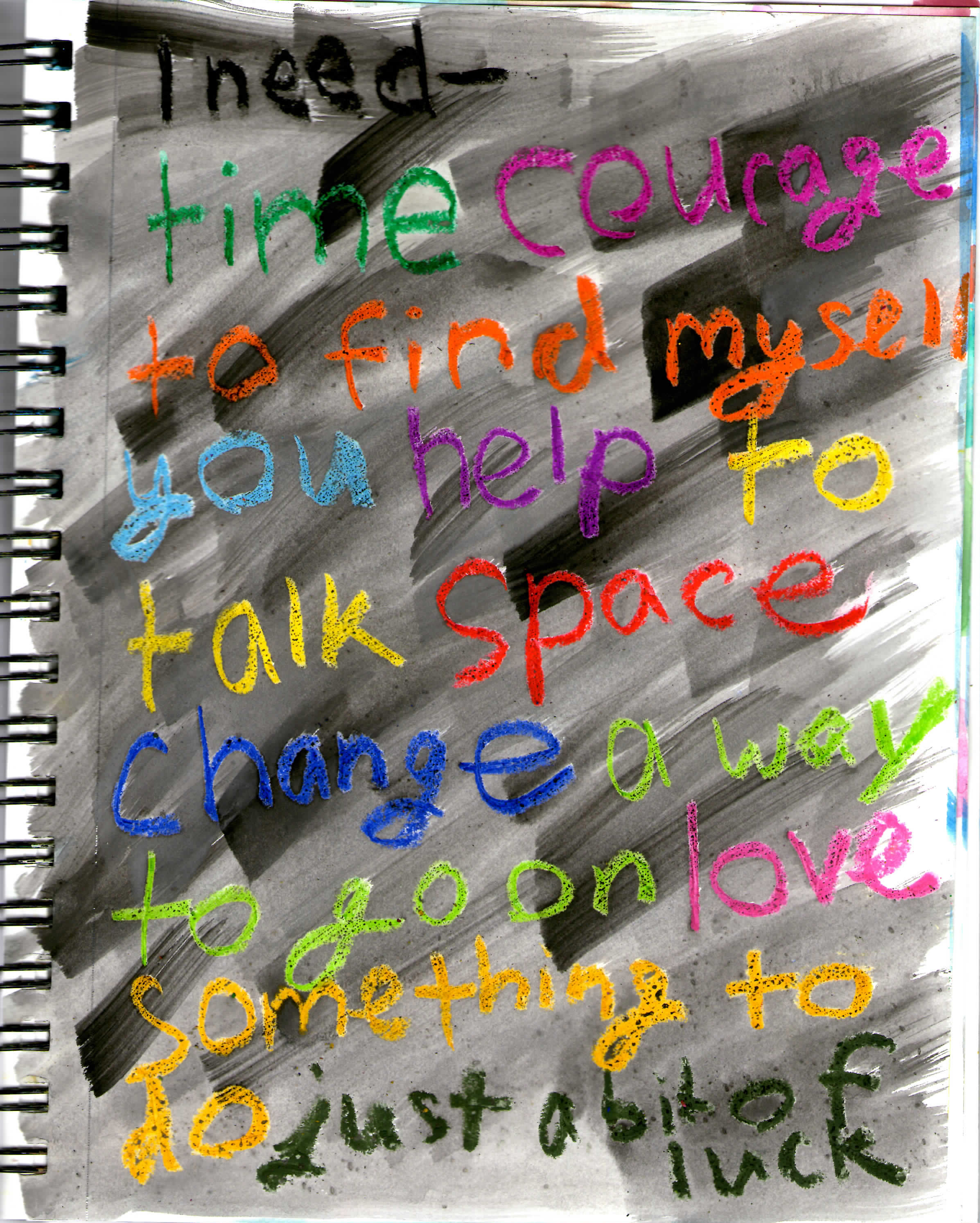
About five months ago, I wrote a post on Facebook (and on this blog) about my experience with depression and how I came to receive treatment for it. I remember feeling very triumphant as I wrote it, because I felt like my difficulties were finally over.
This turned out to not exactly be the case.
In January, perhaps precipitated by some unfortunate personal circumstances, I relapsed and have been trying, mostly unsuccessfully, to recover ever since. The months since then have been filled with a lot of self-loathing, many random bouts of crying (daily at times), and much speculation on my part as to whether or not I really belong in this world.
This is when I realized that my problems, whatever they may be, don’t simply go away when I’m not depressed. I don’t “invent” the issues that I’m unhappy about. But being healthy makes it easier to ignore the pain in the back of my mind–all the wasted opportunities, lost friends, and scarring memories that have built up over the years like dust on a windowpane. When I’m healthy, I simply don’t think about it, and consequently I’m happier. But the mockery that I’ve made of my life isn’t a figment of my imagination; it’s quite real.
~~~
I also started to realize, perhaps even more than I did when I wrote that post, how little the healthy world knows about depression. Mental illness is truly the last taboo; many people refuse to even consider dating someone who has it. Kinda makes me reconsider being so open about my experience…
Even people who would otherwise be supportive just don’t know enough. For instance, if you know your friend is a diabetic, would you offer her a piece of cake? Probably not. But would you casually make fun of your depressed friend? Unfortunately, many people would, even though teasing and jokes are things that many depressives have a lot of trouble with. (This is because depression often causes a cognitive deficit that makes people take everything–a snappy tone of voice, an odd glance, a sarcastic remark–very personally. Here’s a great guide to cognitive distortions.) I am always analyzing and picking apart things that people say to me to try to figure out if they were just teasing or not. I am terrified of the threat of rejection that these casual utterances may carry, so I am always alert, always on my best behavior.
~~~
Another thing I’m never sure of is which parts of me are depression and which are simply me. I’m a skeptic, a cynic, and generally not too big a fan of things that most people seem to really like (Exhibit A: this). I don’t fit in with my surroundings in many ways. I’m more complex, polite, caring, respectful, quiet, conscientious, serious, passionate, emotional, and sensitive than most. I’m less assertive, flaky, impulsive, cheerful, “chill,” and casual than most. This makes for a great number of personality differences between myself and most people I know. When I’m not feeling depressed, these differences fade into the back of my mind. But when I am, they come right to the front, putting up a wall between me and the rest of the world, making me feel like I’ll be an outcast for life.
~~~
One more realization–Northwestern might be the worst place in the world to be depressed. (Not that there’s really a good place for that, except perhaps the psychiatric ward of a hospital.) It’s isolating, stressful, and miserably cold from October till May. Your peers churn industriously around you like a hive of North Face-clad bumblebees while you vegetate listlessly in your shitty shoebox room and email professors, friends, student group leaders one by one and tell them that you’ve been ill and cannot come to whatever crap you’re supposed to be at that day. You eat Nutella from the jar and wonder why none of your friends care. You wonder why you expect them to care. You sleep, a lot.
Northwestern also happens to have entirely inadequate mental health services, but that’s a topic for another post. My friends and I are working to change that. But for now, this is a really, really unfortunate place to be depressed.
~~~
And that’s it, really. I’m not entirely sure where I’m going now, but hopefully it’s somewhere good.

This just says it all, no?
Today is Dillo Day, a Northwestern tradition that dates to 1972. It’s a music festival that happens each year on the Saturday of Memorial Day weekend. We get to see several musicians, including some very well-known ones (B.o.B. this year) for free.
Of course, because Northwestern is a college, it is only natural that Dillo Day is more known for being a drunken shitshow than a music festival. The drinking often starts before noon (or even on Friday night) and continues till everyone is semi-conscious in the wee hours of Sunday morning. Actually enjoying the music is nearly impossible, unless you also happen to enjoy being hit on and groped, pushed and stepped on, and presented with some great views of people making out or having sex in public.
And now I’ll make a confession. I find drunkenness, and drunk people, disgusting. It’s not that I merely find drunk people annoying and inconvenient. I find them, and their lifestyle choices, repulsive. I don’t understand why the hell you would want to end your night getting intimate with a toilet bowl, or why you would want to be too far gone to even remember some of the supposed “best” days of your life.
My issue isn’t so much with the alcohol itself, though my relationship with alcohol has always been sort of hard to explain. My parents are social drinkers; they can hold their alcohol well and rarely get drunk. When they do, they’re louder, more social, quicker to laugh. In other words, they’re more fun. I’ve never actually seen them get very drunk, although one summer my dad went to Israel without us to see his friends and apparently had quite a bit to drink one day. It happened to be the same day that our fridge broke down, and my mom, completely clueless in terms of household appliances, called my dad long-distance and hysterically explained the situation, her fears regarding the baby formula going bad, and so on. My dad’s response was, apparently, a hearty “I don’t give a fuck!” and a dial tone.
And that was the worst of it. I’ve never seen my parents stagger, throw up, or hand their car keys over. I’ve never seen them down multiple shots in a row. (In fact, the only time they drink vodka is at dinner parties with friends, when every shot taken comes with a toast of some sort of emotional significance. Meaningless drinking this is not.)
Consequently, my own experience with drinking has been quite different from that of most people my age. I enjoy wine, mixed drinks, flavored vodka, and champagne. I like to drink wine with my parents over dinner and I can’t imagine New Year’s Eve without champagne. I like to be a bit tipsy, enough to make things a bit cheerier, and myself a bit more bubbly. But I have never been drunk, and I don’t plan on it. (In fact, I was furious a few weeks ago when a friend of mine suggested, laughing, that my friends will “make” me get drunk on my 21st birthday. Excuse me? Nobody can “make” me put anything in my body that I don’t want to put there. Any friend who tries to force anything on my body, be it sex or drugs or alcohol or a piercing or what have you, is no friend of mine after that.)
Last night, thinking about the shitshow that today would inevitably be, I found myself wishing that I were normal, that I could have fun in the way that everyone else can. I wished I wanted to do what they do. But I’ve never been that person. I’ve always been serious and I’ve always preferred to be completely in control of myself at all times. My disdain for drinking to excess is as natural a part of me as my preference for Pepsi over Coke, or the fact that I like to sleep on my stomach and not on my back. How do you change these things?
There are no words to describe such a feeling of isolation, which is one of many reasons I don’t talk about it often. I never fails to shock me how easily I’ve accepted everything else “abnormal” about me–my diagnosis of depression, my bisexuality, my foreignness–but I cannot accept this.
And most of all, I just want to understand. I complain about these things and my friends tell me with a shrug, “That’s just how people are.” But why? Why take an opportunity like an all-day free music festival and turn it into a drunken mess you’ll barely remember afterwards? I even understand drinking and partying when you’re bored, but why on a day like this one? Why is this desire as natural for them as my aversion to it is for me? I want to understand this in a sociological and psychological sense. But I don’t.
I sound like a boring, prissy goody-goody with a stick up my ass. I know I do. But the funny thing is, I’m really not. When I’m in a genuinely good mood, which, thanks in part to my shitty environment, is not often, I’m always laughing and making jokes. I love dancing and trying to sing, exploring Chicago with friends, and frequently acting like an idiot. I’m known to occasionally skip class and go tanning on the beach, and to write my papers the night before they’re due because I was too busy hanging out with friends before. I love fun. But I hate partying. The two aren’t one and the same, you know.
So there you have it. Dillo Day is a disgusting boozefest, and it’s not for me. I guess that makes me an outsider as long as I’m at college (and possibly for quite a while longer). I don’t understand why, as a culture, we are fixated on the idea that people should be moronic and depraved until they turn 30. I want to know why our society believes that being an idiot in your 20s is some sort of prerequisite to having a happy, successful, and meaningful life–and why everyone thinks I’ll “regret it” if I don’t follow this path. I want to know why college students are required as if by law to drink and party and smoke pot and have a lot of casual sex (another thing I really don’t enjoy), or else they’re boring and “lame.”
I’m fucking tired of being judged. It makes me really angry. Stop.
See the line where the sky meets the sea? It calls me…
Body love, mental health, and critical theory
Care and responsibility.
Where Crunk Meets Conscious and Feminism Meets Cool
"Let me live, love and say it well in good sentences." - Sylvia Plath
Life, Liberty, and the Pursuit of Happiness Are For All Sizes
"Social adaptation has to proceed via the intellect." - Hans Asperger
Notes on fieldwork and other sundries
Social Data for the Queer Revolution...
she thinks. she says. she writes.
Meg-John Barker's website
Feminism is for everyone!
if you're afraid of socialism, you're afraid of yourself.
thoughts on sex and life
A feminist perspective about the feminist perspective
From My Eyes...
Feminism + Social Justice + Pop Culture = (???) x (Total Chaos)
Ramblings about life between young adulthood and middle age.
 Brute Reason