
Why Being Pro-Gay is More Than Just a Smart Business Move

Last Tuesday, Equally Wed magazine held a National Starbucks Appreciation Day and encouraged people to go to Starbucks to show support for their pro-gay rights stance. The event was a response to Chick-Fil-A Appreciation Day, in which droves of people went to Chick-Fil-A to celebrate their right to deny others their rights. The magazine later renamed it “National Marriage Equality Day” and invited other gay-friendly companies to participate.

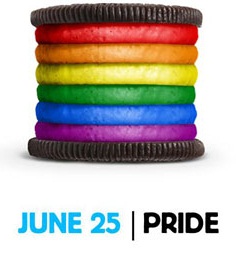
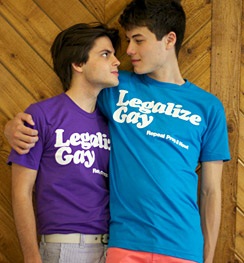
Starbucks established itself as a company that supports marriage equality earlier this year when its Executive Vice President, Karen Holmes, released a statement on behalf of the company in support of gay rights legislation in Washington state, where it’s headquartered. But it’s far from alone in taking a public stand for gay rights. For example, the Oreo cookie’s official Facebook page made news by posting this photo back in June. American Apparel–hardly a bastion of ethics otherwise–carries a “Legalize Gay” shirt. Companies frequently march in gay pride parades. And so on.

Gay rights are obviously an emotional issue for many people (myself included), and I’ve seen some very different responses to this trend of companies coming out in support of gay rights. Some people get very excited and enthusiastic about supporting these companies in return, and take this to mean that the leadership of these companies is strongly invested in gay rights. Others are extremely cynical and claim that it’s all just a business ploy and means nothing.
I think that, as it often does, the reality lies somewhere between these two extremes. Businesses never do anything–especially not anything that requires them to spend money–solely out of the goodness of their hearts (hell, businesses aren’t people, so they don’t even have hearts). But that doesn’t mean that businesspeople don’t genuinely care about certain issues and want to use their position as leaders to advance those issues.

First of all, many companies literally put their money where their mouth is when it comes to being pro-gay. They don’t merely post a picture on Facebook or sell a pro-gay t-shirt; they combine their ideological stance with tangible action. Starbucks, for instance, provides same-sex partner benefits to its employees, meaning that an employee’s partner can use their health insurance. (Pretty cool that Starbucks provides insurance even for part-time employees, too.)

Google, meanwhile, not only provides same-sex partner benefits, but even compensates its gay and lesbian employees for a tax on partner benefits that heterosexual couples do not have to pay. It also launched a campaign called “Legalize Love,” which will work to combat workplace discrimination in countries with anti-gay laws on the books.

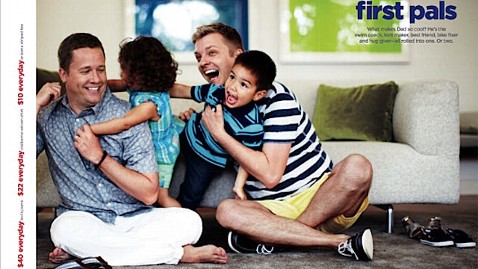
Aside from partnering with one of the most well-known queer people in the country, JCPenney has recently run ads in its catalogs that feature same-sex parents. What’s more, they did this soon after One Million Moms ran a highly-publicized boycott against them for hiring Ellen Degeneres as a spokeswoman–kind of like an extra fuck-you.

People who know more about marketing than I do seem to agree that being pro-gay is good for business. Furthermore, a study shows that even internal policies–as opposed to public actions like these–helps businesses, at least according to the businesses themselves.
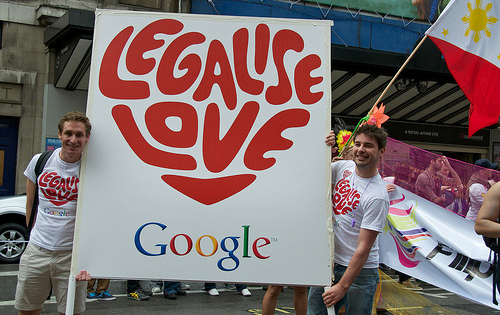
Credit: lightfran/Flickr

But what’s more important, at least to me, is that these smart business moves are also helpful to LGBT people. Even the symbolic gestures that some companies make–such as Oreo’s Facebook picture–can make a difference. If even one LGBT person comes across them on their newsfeed and feels like the world is a bit less shitty, I would consider that a good deed done.

A lot of the cynical pushback against this comes down to the mistaken assumption that there is such a thing as “true” altruism. Hypothetically, true altruism is when the person doing the altruistic act derives absolutely no benefit from it–no financial gain, no social capital, no personal sense of worth and value. The latter is, of course, an inescapable aspect of doing good things for people–doing good feels good and everyone knows that. And yet you still see people claiming that altruism is ultimately “selfish” because it feels good.

So, either there is no such thing as altruism, or our concept of “selfishness” needs to be redefined. In their support of gay rights, these companies are being “selfish” in the sense that they’re serving a few of their own interests, but they’re also being altruistic in that they’re taking up an issue they don’t have to take up–nobody asked them to do it, and a lot of good may come of it.

Finally, trends in business can be a barometer of public opinion. The reason all these companies are suddenly “jumping on the bandwagon” (as a cynic would say) and openly supporting gay rights is because they can. In prior decades, companies that lobbied for gay marriage rights or published pro-gay opinions would probably have been run out of business–or at least seen their profits severely decrease.

But today, being pro-gay is good for business. I think that’s something to celebrate.
Choosing Our Battles: A Chick-Fil-A Rant

This is an expanded version of a rant that I spontaneously posted on this blog’s Facebook page yesterday.

[Also, snark warning. Haven’t used one of those in a while!]

I’m going to talk about Chick-Fil-A again because I just can’t stop.

I keep hearing arguments that go something like this: “Yes, they donate money to icky crap. Yes, LGBT people and allies are entitled to boycott them. But then why aren’t they boycotting every other company that does unethical crap? Like Apple? Like Nike? Like McDonalds? Like Walmart? HUH?! Hypocrites!”

First of all. I’m sorry, but I can’t boycott every company in the world. Not even the best activist can do that. I can boycott some, though, and that’s exactly what I do. One reason I boycott CFA is because it is easier for CFA to just stop sending millions of dollars to bullshit organizations than it is for Apple and Nike to restructure their entire labor practices. Do they need to do this? Yes, absolutely. But it would take years or decades of public campaigns and government regulations.

Now, I’m not a labor activist or a corporate watchdog by profession. I’m a 21-year-old student who works part-time, writes a little blog part-time, and hopes to become a therapist someday. I need to choose my fucking battles.

And yes, I’m only speaking for myself here. But I think many of us who are speaking out against CFA are in a similar position. I wish we could all be full-time activists. But we can’t. So we choose our battles.

Second, let me be clear. If Apple came out and said, “Guilty as charged!” when asked about their use of child labor, I can guarantee you that the amount of protest would skyrocket. Because the problem with Dan Cathy and CFA isn’t just what they do–it’s how disgustingly, unapologetically shameless they are about it.

Sure, you could argue that opposing gay rights isn’t “as bad” as using child labor (however you managed to determine which units to measure badness in). My response would be that, while time and money are finite resources, care and concern are not. We writers and activists are perfectly capable of caring both about gay rights and child labor, trust me.

Third, there is something fundamentally different between what CFA does and what Apple, Nike, and Walmart do. The difference is this: corporations cut costs. If possible, they cut costs using unethical, shady, and borderline-illegal methods. Sure, there are a few that don’t, but many do.

The fact that this is something we can naturally expect doesn’t make it acceptable, of course. This is why we need that dreaded government regulation everyone keeps waving their hands about. So until governments crack down on the crap that Apple, Nike, and Walmart do, we can reasonably expect it to continue, because that’s the economic system that we’ve designed for ourselves.

But CFA isn’t trying to cut costs. In fact, it’s giving away huge sums of its own money. This is not a business move. This is not an attempt to keep the shareholders happy, because CFA (unlike Apple, Nike, and Walmart) is a privately-owned company with no shareholders.

No. CFA’s donations are motivated solely by its owners’ desire to impose their religious views upon this country. Full stop. That is why we protest.

One last detour to cover another related argument: “But we’ve known about CFA’s stance on gay rights for years! Why now? HMM?” First of all, people who make this argument: I applaud you for your attention to current events, politics, and charitable donations of companies whose products you consume. I, too, have known about CFA’s stance on gay rights for years, which is why I haven’t set foot in there for years. But not everyone can be so well-informed. I read the goddamn news as a hobby.

Second, better late than never. If you’re seriously trying to suggest that people shouldn’t protest against CFA because they should’ve done it earlier, your argument is the biggest failure I have ever seen. People are protesting now because of Dan Cathy’s public statements. People are protesting now because the story went viral and blew up in every media outlet imaginable. People are protesting now because it’s election season. People are protesting now because gay marriage has been in the news these days like never before.

People are protesting now as opposed to years ago for all sorts of social and cultural reasons, and those reasons do not necessarily include that the protesters are Big Hypocrites.

Both of these arguments–“But what about the other companies” and “But why now”–are intellectually dishonest, and they’re attempts to derail the conversation. If you’re trying to argue that we’re not doing enough for our cause, you might want to ask yourself what you are doing for it.

So I’m not going to mince words here. If the best argument you can muster against boycotting/denouncing CFA is YEAH WELL WHAT ABOUT ALL THE OTHER TERRIBAD COMPANIES, then guess what, your argument fails. Because I don’t see you doing anything about any of them at all.

And it really doesn’t surprise me that nobody I have seen making this argument–online or in person–has been someone who particularly cares about gay rights. Don’t care? Fine. I can’t make you. But please, get out of my way.

Oh, and trust me. Someday when I have the time and money, I am absolutely going after as many of those companies as I can. Are you going to help me?

I guess we’ll find out.

P.S. inb4 BUT FREE SPEEEEECH

Abortion and Suicide: A Spurious Link

In South Dakota, it is now legal to require doctors to tell women seeking abortions that they are putting themselves at risk for suicide.

This move is brilliant from a PR standpoint. Unlike banning certain types of abortions entirely or, say, forcing women to undergo invasive screenings that are medically unnecessary, this seems completely apolitical when you first look at it. Don’t people deserve to be informed if they may be increasing their risk for suicide? Don’t we all agree that suicide is a Bad Thing?

However, something tells me that this is actually another attempt to scare women out of (what should be) a normal, socially acceptable medical procedure.

First of all, the inconvenient truth here is that credible research consistently shows little or no link between abortion and poor mental health. One 2008 study reviewed the literature and found that the only studies that seemed to show such a link had very flawed methodology, whereas the studies that were well-designed showed no links. (Damn liberal academics!) And here’s another study that showed no such links. And here’s a thorough debunking of a study that did claim such links:

Most egregiously, the study, by Priscilla Coleman and colleagues, did not distinguish between mental health outcomes that occurred before abortions and those that occurred afterward, but still claimed to show a causal link between abortion and mental disorders.

In other words, that study actually tried to use mental health pre-abortion to confirm a hypothesis about mental health post-abortion. This is simply not how you do science. And it’s especially bad here, because according to the American Psychological Association, guess what the best predictor of mental health post-abortion is?

Across studies, prior mental health emerged as the strongest predictor of postabortion mental health. Many of these same factors also predict negative psychological reactions to other types of stressful life events, including childbirth, and, hence, are not uniquely predictive of psychological responses following abortion.

That’s right. Shockingly enough, the best predictor of mental health is, well, past mental health. And poor mental health predicts poor response to all sorts of stressful events, of which abortion is only one example. Another one being, for instance, childbirth!

Compounding the bad science here is that, unlike physical side effects,suicide isn’t something that just happens to you suddenly and without warning. People don’t just suddenly wake up one morning and decide to kill themselves. Suicidality is a complex process that involves factors like genetics, family history, environment, social support, mental illness, and life circumstances. For instance, here are some things that, according to research, actually increase one’s statistical risk for suicide:

As you can probably surmise, not all of these correlations are also causations. While mental illness and drug addiction can actually cause suicidal behavior, being intelligent and being LGBT probably cannot. In the latter case, the causative culprit seems to be (surprise surprise) institutionalized discrimination and homophobia. Before I get too off-topic, let me point out the irony in the fact that, despite this well-known risk faced by LGBT youth, I don’t see any of these pro-lifers advocating for an end to homophobia.

That’s why something tells me that nothing about this court ruling actually has anything to do with suicide prevention.

Although the court’s ruling does at least acknowledge that abortion probably doesn’t cause suicide, it nevertheless states that “conclusive proof of causation is not required in order for the identification of a medical risk.” This is probably true, but it only makes sense from a physical health standpoint. If studies show that people who get a certain elective medical procedure are much more likely to, say, experience headaches or nausea or numbness, you don’t necessarily need a causative study to conclude that there’s a reasonable chance that these symptoms were caused by the procedure (assuming, of course, that there was no illness present that might be causing them). Furthermore, there’s a difference between saying “This procedure may cause you to experience cramps and headaches” and saying “This procedure may cause you to kill yourself.”

The truth is, mental health doesn’t work that way. A person who gets an abortion might experience mental side effects because of the stress of having gotten pregnant accidentally and been forced to decide what to do, perhaps without the support of a partner or family. Furthermore, any invasive medical procedure can be stressful and worrying for many people–especially one like abortion, which is consistently portrayed as more painful and dangerous than it really is.

And this is all made even more complicated by the fact that the faulty studies in question were actually studying mental health before the abortion. Perhaps a person with poor mental health is more likely to seek an abortion in the first place–say, if they feel that they aren’t mentally capable of raising a child at the moment.

Ultimately, decisions about what to tell a patient should be left up to the people who know most: doctors (with, of course, a reasonable amount of regulation to prevent malpractice). If a doctor can tell that a person seeking an abortion is going through a lot of mental distress, then that doctor may want to gently recommend counseling and perhaps give out some hotline numbers–and training doctors to recognize signs of mental health troubles is always a good thing.

But doctors should not be mandated to fearmonger to their patients. They should especially not be mandated to serve a pro-life agenda.

[Guest Post] How I Was Indoctrinated into the Gay Agenda

My friend Seth writes about growing up with four gay uncles and how they’ve shaped his views on gay rights.

I never stood a chance.

I was indoctrinated at an impressionable young age—so young that I can’t even remember what age it was. I have four gay uncles; two related by blood, and two more because I don’t give a shit what the law says, they’re family. Regardless, it was these four who indoctrinated me, using the typical insidious and underhanded homosexual tactic of being kind, funny, upstanding and just all-around decent people. Before I knew it, I had been brainwashed into thinking that these four men were human beings just like any other, and just as deserving of my respect and love as any other member of my family.

One more poor soul lost to the gay agenda.

Of course, I can’t place all the blame on my uncles. Some must go to my father, who always loved them unconditionally, apparently considering the fact that they were his brothers more important than their sexual orientation. Still more must go to my grandparents, who failed to respond to the news that their sons were homosexual by disowning them, instead welcoming their chosen partners into the family with as much warmth and fondness as if they were heterosexual spouses. With such weak moral examples from my elders, how was I supposed to know that the proper response to having gay uncles was to shun them as abominations regardless of whether or not they had ever done anything to offend me personally?

All right. I should probably turn the snark off before it makes your computer explode.

In all seriousness, though, this is not a story of redemption, wherein the protagonist starts out thinking that all homosexuals are icky hedonistic perverts who are out to destroy our families, and then has a transformative personal experience that teaches them that, oh hey, homosexuals are actually living, complex people who are not defined by their sexuality. Those are great stories, and I’m all for them, but I was lucky. I never needed that experience. I had a chance to learn, at a young age, that the people who society considers “different” are actually…not so much. (Spoiler alert: growing up with all these gay men in the family also completely failed to turn me gay.)

Well, hooray for me and all that, but what does that mean for the big picture, the larger debate about gay rights? Not everybody is going to have the experiences I had. It would be nice if they did, but it’s understandable if your close relatives didn’t obligingly orient their sexuality in a manner that allowed you to learn an early lesson in equality. Nonetheless, my story and others like it are still a significant factor in the debate over gay rights.

Because here’s the thing: the people who want to deny homosexuals the right to get married, who want to live in a world where somebody can be fired because their employer doesn’t like their orientation, who want to “pray the gay away,” have made the debate very, very personal. This is against our religion, their arguments go. This is something that our God has told us is wrong. These are our traditional values under attack.

To which I say, if you think it’s personal for you, come spend Thanksgiving with my family sometime.

Anti-gay leaders sometimes seem honestly baffled as to why they’re losing ground in the so-called culture war, especially among the younger generations. Is it because the church’s image isn’t hip and cool enough? Is it all this media garbage, driving the young ones away from the one true faith? Is it because those godless Democrats are in office? Please. It’s a lot simpler than that.

It’s because people like me are becoming more and more common. When somebody talks to me about “the gays” or “homosexuals,” I don’t think about some flamboyant stereotype engaging in round-the-clock orgies. I think about the two uncles who run a car repair shop out in rural Colorado, with a house done up in the finest of 50s retro décor. I think of my cousin and her partner, who run a cafe that serves some of the most amazing pizza I’ve ever tasted. I think of the friend who’s a constant fixture at our college house’s game nights, dances, and movie events. I think of the uncle, not related by blood but my uncle nonetheless, who drove me home in his truck through a blizzard so that I could make it to school the next morning. (Spoiler alert: despite being alone in a truck with a young boy for nearly three hours, he utterly failed to molest me. Shocking, I know.)

These are the people I love and cherish. These are the people whose lives I want to improve. These people are my personal stake in the gay marriage debate. So if you were hoping you could win me over to the side of righteous discrimination, I’m afraid that I have to inform you that you’re too late.

I’ve been indoctrinated.

Seth Wenger is a senior neuroscience major at Earlham College and a practicing Buddhist. He can usually be found on Facebook, snarking about life, current events, and politics.

Yahoo’s New Female CEO Isn’t a Feminist: Does it Matter?

Marissa Mayer is unquestionably a badass. But she’s wrong about feminism. (Photo credit: Giorgio Montersino)

This piece was also published on In Our Words.

Yahoo! has a new CEO. Her name is Marissa Mayer and she is 37 years old, making her the youngest CEO of a Fortune 500 company.

Mayer’s accomplishments in her career are incredible and she deserves credit for them. However, to some extent, so does feminism.

Mayer was born in 1975, as the women’s movement was really starting to take off. But at the time, it was still controversial for a woman to wear pants rather than a skirt, let alone to cohabit with a boyfriend, work outside the home after marriage, and so on. However, Mayer was able to benefit from the gains of feminism: she attended college (and not just any college, but Stanford University) and became Google’s first female engineer.

On the same day that Yahoo! announced Mayer as its new CEO, Mayer and her husband announced that they are expecting a baby. In a time when pregnancy-related workplace discrimination is still very real, this is momentous. And don’t think for a moment that this happened in a vacuum.

So, does Mayer identify with feminism, given all of her achievements? Nope:

I don’t think that I would consider myself a feminist. I think that I certainly believe in equal rights, I believe that women are just as capable, if not more so in a lot of different dimensions, but I don’t, I think have, sort of, the militant drive and the sort of, the chip on the shoulder that sometimes comes with that. And I think it’s too bad, but I do think that feminism has become in many ways a more negative word. You know, there are amazing opportunities all over the world for women, and I think that there is more good that comes out of positive energy around that than comes out of negative energy.

This viewpoint seems to be very common among successful women in the U.S. these days; I’ve heard it from many of my female peers at Northwestern. Yes, women can do anything men can do; yes, women should have equal rights, but do we really need to be all, like, negative about it?

First of all, there’s a certain amount of irony here. Feministing‘s Chloe writes, “Marissa, it is too bad that feminism has become a negative word. You know what’s also too bad? Your failure to acknowledge that without feminism, you could never have become the CEO of Yahoo.”

Second, what Mayer said that she believes is exactly what feminism is. Feminism is the idea that women and men should have equal rights, and that women and men are essentially capable of the same things, despite the physical differences that may exist between them.

Beyond that, everything’s up for debate. Different feminists believe entirely different things. Some very radical, separatist feminists believe that women should choose to be lesbians and to associate only with other women. Most don’t believe that. Many feminists see feminism as a place to address related issues, like racism, homophobia, and class issues. Others don’t. Some feminists supported the Equal Rights Amendment. Others didn’t. Some feminists are angry and bitter (and, often, rightfully so). Others are cheerful and friendly. Some feminists hate men. Others love them, and still others could take ’em or leave ’em. Some feminists are lesbians. Others are straight, bisexual, or something else. Many feminists are women. Some are men. Others don’t identify as either men or women.

Despite this incredible diversity of opinions, lifestyles, and identities, many people, including those who support equal rights for women, insist on distilling feminism only into its most unpleasant stereotype. This is a classic strawman fallacy, and, the way I see it, it’s an attempt (if an unconscious one) to avoid discussing the real issues. It’s unfortunate that Mayer has chosen this path.

However, as Amanda Marcotte points out in her post at Slate, Mayer’s refusal to identify as a feminist might be the only option for a woman who wants to get ahead in the corporate world:

Women are correct to believe that direct confrontations with sexism result in people turning on the “complainer” instead of blaming the person who acted sexist in the first place….Taking that on just isn’t for everyone, even for a powerful woman who is unquestionably willing to suffer for the ultimate success of her corporation. Someone who would rather do what’s right than what’s profitable simply isn’t going to climb very high on that corporate ladder.

I would agree. Not everybody has to be Super Social Justice Warrior (although I’d like to see more people at least not hold the movement back). Given Mayer’s career goals, it makes sense that she chooses not to align herself with feminism, and I can’t blame her as an individual.

That said, I do wish she wouldn’t promote the same tired stereotypes about feminists having “a chip on the shoulder” and “negative energy.” Are there feminists like that? Yes. Is feminism itself like that? Depends on who you’d ask. I would say no, because I’m involved in countless feminist circles online and in real life, and our discussions there are fun, productive, and extremely connecting experiences. It’s certainly more “positive” than sitting around and pretending everything’s fine with the world when you don’t really feel like it is.

Of course, there’s a good chance that Mayer already knows all of this. It’s quite possible that her statement about feminism was entirely a political one, something she said to make sure that the men she’ll be leading don’t feel too threatened.

I can’t blame her for making that choice, but she shouldn’t have had to make it–because our culture should not be so militantly averse to serious (and, sometimes, uncomfortable) discussions.