
Inside the Mind of a Serial Rapist

In case it’s not obvious, MASSIVE TRIGGER WARNING for this entire post and all outgoing links. Even if you’re not a survivor, you’re going to find a lot of this extremely uncomfortable and upsetting so please take care of yourself.

r/AskReddit, a section of Reddit in which people can ask each other questions, recently had a post with this title: “Reddit’s had a few threads about sexual assault victims, but are there any redditors from the other side of the story? What were your motivations? Do you regret it?

Reddit has what I would call, bluntly, a woman problem. Reddit’s users are 74% male, first of all–the highest percentage of all the well-known social networks. Many of its subreddits, such as r/MensRights, r/Atheism, and, of course, r/AskReddit, are notorious for general misogyny, rape apologism, and, at times, even tacit (or not-so-tacit) approval of violence against women, pedophilia, child pornography.

So, nobody familiar with Reddit will be surprised at the kinds of stories and comments that this AskReddit thread has attracted. However, it’s worth talking about for several reasons, which I’ll explain later.

The thread has nearly 13,000 comments as of this writing, so I couldn’t possibly read them all. (I’m pretty sure I’d lose my mind long before I finished, anyway.) However, there’s one particular comment that I want to examine:

First off, I must say, I was at a dark and horrible place in my life, that I’ve since grown from. I’m ashamed of the person I was, if the people who I’m close to now knew who I was, I would be ruined. I’m known for being a great guy, friendly and easy to get along with, a community/political activist, a fervent volunteer in the community, and a person who rises through the ranks quickly due to successes at work. That was my mask, and I was good at it, so good that maybe I convinced myself along the line that was who I could really be, and that may of helped me change, and stop doing what I did.

I’m somewhat remorseful for what I did to those girls, but I don’t think I could ever face them to apologize. I knew what I was doing was wrong, but I had this certain insatiable thirst that brought me to do what I did. I didn’t know how to stop, and just when I thought maybe I could, I’d find myself back in my pattern, back on the hunt.

Several things immediately jump out at me. First of all–and this will be a common theme throughout the post–this person seems very invested in his positive self-image, despite his supposed remorse. He makes sure that we know that he’s known as a “great guy,” that he’s friendly and easy to get along with, etc. Second, although he says he’s ashamed of who he was back then, the rest of this suggests that that’s mostly because he wouldn’t want to be found out. The creepiest part is definitely this: “I knew what I was doing was wrong, but I had this certain insatiable thirst that bought me to do what I did.”

The post continues:

I’m a good looking guy, and I can get girls pretty easily. I’m currently married to a beautiful woman that I met during this time of my life (not someone I raped, but someone who knew my mask during this time). So, anyways, after a while it became boring to go after the sluts and sorority girls that would easily throw their cunt after you. I wanted the thrill of the chase, and that’s what led me to forcing myself on girls. I would find attractive girls that were self-conscious about their looks….Hopefully a girl who was a bit damaged, had a shitty ex-boyfriend, or family issues, came from a small shut in town, that sort of thing. So, when I showed interest in them they’d be completely enamored, they’d almost be shocked that a popular, good-looking, and well liked guy would be talking to them.

Note that, once again, he mentions his good looks and that it’s easy for him to “get girls” (present tense). His misogyny becomes apparent in his language here (“sluts and sorority girls that would easily throw their cunt after you”).

The man then describes how he would meet these girls and invite them over to watch a movie. His need to have total control over the situation is very apparent: “They would come over, and I’d always make sure it was real cold in the room, cold enough so that when we started watching the movie I’d say something about being chilly, and grab a big fleece blanket for the both of us.”

After kissing and putting his hands under their clothes (without consent, obviously):

It was then that I could turn around and get on top of her. The girls usually didn’t know how to respond. Some of them were into it, and those nights were usually consensual and boring sex, sometimes followed up by a few more nightly visits before getting the boot. However, the great nights were the ones who squirmed, ones who didn’t want to give in. I’d have to shush them down, and try to work on them slowly enough so they didn’t know what was going on until it was pretty much already happening. I’m a muscular guy, over 6′ around 200 lbs. and most of these girls may have been 125-130, really tiny and easy to pin down. To be honest, even remembering it now, the squirming always made it better, they didn’t want it to happen, but they couldn’t do anything about it. Most girls don’t say no either. They think you’re a good guy, and should pick up on the hints, they don’t want to have to say “no” and admit to themselves what’s happening.

[…]Some girls left after about 15 minutes after. Some girls would stay until the morning and then leave. A few tried to call back, maybe blaming themselves for what happened or something. I never worried too much about being caught. Everyone knew me, and I worked with the police a lot, with administrators, and campus officials. I was on first name basis with the Chancellor and the President of Student Affairs, so if anything came down to a he/she-said I figured I’d be in the clear.

Ladies and gentlemen, this is rape culture: the fact that this man knew he was unlikely to be brought to justice because he was so respected and popular at school, the fact that he admits that some of the women probably blamed themselves, the fact that he knows that they don’t say no out of fear and not because they consent.

The man later edited the post to explain that he had answered questions posed by commenters and that he was deleting this account (it had been made only for this purpose, though, anyway). He also added this:

Let me leave you with this message, you never know who someone truly is, so be careful. I’m going back to my main account to do normal reddit looking at cats and posting pictures of bacon, and I think it’s kind of funny that no one will ever know if the person they’re talking to on reddit, or someone who moderates their subreddit, is me on my main account… just food for thought.

Most of the comments to his post were very angry, and many were basically homicidal. One person said, “You are why my daughter will be armed, to deal with filth like you.” The man responded, “Teach your daughter to be a strong willed, independent woman, and hopefully she’ll never attract the type of filth I was at that point in my life.” In other words, even though he claimed to be “remorseful,” he admits that he sought out “weak” women and seems to believe that it’s women’s responsibility to be “strong willed” enough for men like him to leave them alone.

In the midst of the angry comments, though, there were many that seemed steeped in admiration–or, at least, respect. References to the OP’s “bravery” were common. Here’s one: “Thank you for sharing. This is what I came to this thread for. You are brave to talk about it. Here is an actual look into how the predator feels.” Here’s another: “I just wanna say, thank you for posting this. It seems that every other guy in this thread is trying to guilt shame you but I’m pretty sure a total of none of them could possibly empathize with you.” And another: “I admit you are a really smart guy. I bet you know it yourself and probably are ashamed of it since you used it to do this. You are also really brave for sharing this story and being here to take the generic ‘fuck you’ from the mass.”

There seems to be some confusion on the part of these commenters about what “brave” means. What’s brave is getting up the next morning after you’ve been raped, and getting up every day after that. What’s brave is telling people about your sexual assault, knowing full well that they might ask you what you were wearing and if you’d been drinking. What’s brave is trusting another person sexually after an experience like that. Using a temporary, anonymous account to tell some people on the internet about what a Big Manly Man you are is not “brave.”

As a survivor of something much less horrific than what these young women went through, but scarring all the same, I can’t see the telling of this story as “brave.” Perhaps that’s just my bias talking.

Also disturbing is the fact that many of the commenters refuse to believe the story. One even asked the OP if he’s “a female IRL trying to make a point with this.” Others laugh it off. Their disbelief reveals their privilege. Most women will tell you that there is nothing unrealistic about this story, because they have either been victimized by men like this, escaped them narrowly (as I did), or have friends who did.

Finally, and unsurprisingly, several commenters jumped to the man’s defense, explaining how “difficult” it is to be a man and to interpret women’s signals and to get women to sleep with you, period. One comment:

This isn’t rape. This is the story of a guy who studied and played the game well. He went after certain girls and worked those angles to get laid. Some people will feel this is underhanded, sleezy, wrong. Others will praise him.

[…]These girls aren’t victims. OP’s behavior may be considered unethical, immoral, and wrong but that’s only moral constructs perceived by others looking at OP. I’m not a player these days but those of you blasting him for rape need to read some player’s books and websites. He did exactly why most players do.

[…]Overall OP isn’t a rapist, he’s a player who feels bad about how good he was at the game.

Another: “What the hell. You’re NOT A RAPIST! The didn’t say no. They wanted it. You’re a player. Actually, they should thank you because that’s probably the only sex those girls will get. You gave them a life experience and you should be proud about it.” And this: “I’ve been told this by female friends – girls purposely put up a bit of a fight before sex to not seem easy, even if they want sex, and they enjoy the back and forth and having the guy ‘try’.”

And one more:

Not defending his actions, but nearly every 19 year old college kid with a dick and a heartbeat is trying to get laid, and EVERY SINGLE ONE OF THEM has some sort of game plan they employ to coerce women into advantageous situations that their female counterpart might not want to be in, or otherwise find themselves in. Whether its through physical force or mental manipulation, some game plans fail miserably and some work every time. Some guys are obviously better than others at getting what they want, and some of course cross the line.

There’s many, many more where all of these came from. There was also the comments from rape survivors, to one of which the OP responded with some explanation followed by, “Anyways, fuck off you twit.” (How about that remorse?)

I should point out that this particular man’s post, and the responses to it, are unusual for several reasons. Most of the other people who disclosed having committed sexual assault (including some women) were more remorseful and generally did it only once. Some told stories of having nearly done it but stopped themselves. And the comments on those posts are much less condemnatory, and more full of apologism and praises of the rapists’ “bravery.”

Jezebel has a post about the thread and why we should listen to the rapists’ explanations. The article makes a good point in that the thread shows many of the reasons why rape happens and goes unpunished, and the cognitive fallacies that rapists subscribe to.

However, the article fails to note the negative consequences of sharing these stories on a site like Reddit. As I mentioned, Reddit users have a tendency for rape apologism. Many of the people who confessed having committed or attempted sexual assault said that they felt terrible for what they did, but commenters told them not to feel bad. The stories of backing off rather than raping elicited lots of “Congrats, you didn’t rape her!” comments–as if that’s something worthy of a gold star. One comment to such a story reads, “Shitty situation, man. Good on you for realizing what was up and pulling yourself out of that.” Another: “You aren’t a rapist, or close really, don’t beat yourself up about it.”

In other words, men (they were almost all men) who come to this thread with genuine remorse receive dozens of comments patting them on the back for not going ahead and sticking their penis into an unwilling woman–all the other nonconsensual stuff they did leading up to that, apparently, doesn’t really matter. (Although some of these commenters insist that the women couldn’t possibly have been hurt that much by it because they weren’t “actually” raped, I can speak from experience and say that attempted rape (or rape threats, or sexual harassment) can be traumatizing too.)

Furthermore, some of the apologism is directed at men who did actually commit sexual assault, and it really scares me that these men are getting the message that what they did was “not rape.”

It’s taken me a while to write about this because it’s been difficult to come up with any takeaway other than aisfa;ifja;sdfjas;df. However, now that I’ve had a chance to think about it, I think there are a few things to glean from this.

  1. Rapists usually know what they’re doing. Although there’s a pervasive myth that rape is caused by “miscommunication” (generally, women not being “clear” enough about not giving consent), this thread and this fascinating study show that this is completely false. They know what they’re doing, most of the time. But they don’t really care. They think they “can’t stop” because having a penis just “makes” you do these things. They convince themselves that the woman would say no (or say it louder) if she really didn’t want to do it. And so on.
  2. Rapists aren’t necessarily identifiable. None of the men in this thread seem like your stereotypical stranger in a dark alley type. Many of them have the ability to be very personable and likable, and they use this ability to their advantage. (This is, by the way, a symptom of psychopathy.) So, not only is the standard victim-blamey advice for women to avoid revealing clothing, bars, parties, etc. wrong, but it’s also ludicrous to suggest that women can avoid sexual assault by avoiding “certain types” of guys. Some victimizers (of any gender) certainly do give off a creepy vibe, but not all do.
  3. Sexual assault prevention is a very, very complicated thing, and I don’t think it’s as simple as “telling rapists not to rape.” As boys and young men grow up, they learn a series of messages about gender and sexuality, just like women do. If you’re interested in this, I’d recommend reading Brad Perry’s piece in the fantastic book Yes Means Yes: Visions of Female Sexual Power and A World Without Rape. The piece is called “Hooking Up with Healthy Sexuality: The Lessons Boys Learn (and Don’t Learn ) About Sexuality, and Why a Sex-Positive Rape Prevention Paradigm Can Benefit Everyone Involved.” (Holy shit that’s a long title.) You can read it here. The piece focuses on teaching sexuality to boys in a way that prevents rape and promotes a healthy approach to women, dating, and sex. Unfortunately, right now our country is still besieged by abstinence-only sex education, which promotes rape culture in a million ways that I don’t have room to discuss here.
  4. Despite all the comments that “well everyone knows rape is bad” and therefore we should stop shaming rapists, it’s clear that there’s a sort of doublethink going on here. Yes, almost all people, except the most psychopathic perhaps, know that rape is “bad.” But many convince themselves that things that are definitely rape are not. Cognitive dissonance does scary things to people sometimes–they want what they want at all costs, but they don’t want to believe that they’re Bad People (i.e. rapists). Nope, they’re just “playing the game,” or the victim “should’ve said no (louder),” or “she wanted it anyway.”

So no. Even decades after the start of the modern women’s movement, not everyone knows what rape is. And that’s how we know that our work is not yet done.

All I know is that we need real sex education, and we need it now. We need to start it early. We need to stop believing that teaching kids about safe and healthy sex will “make” them do it. We need to stop teaching them gender roles that put women into the role of sexual gatekeepers, always needing to push their male partners off rather than being asked for consent first, and men into the role of aggressors, always needing to coerce their female partners or face losing their masculinity.

Mostly, though, we need to teach empathy in general. Because that’s lacking in our society in every possible way.

And this needs to happen now.

Note: This has been really difficult to write for many reasons, but I felt that I needed to do it. There will be extra comment moderation. Anyone who comes on here to explain to me how I “don’t understand” these men and their actions will be sent on their merry way. Thank you.

For the Last Time, You Can’t “Turn” People Gay

Credit: Office Depot

Of all the pernicious myths about homosexuality that just won’t die in our society, the idea that it’s a “choice”–and, consequently, that it’s possible to “turn” people gay–is one of the most frustrating.

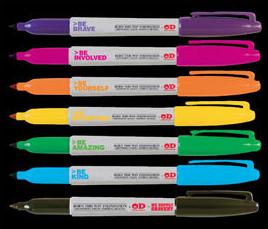
That myth got trotted out again in response to the announcement that Lady Gaga’s Born This Way Foundation is partnering with Office Depot to create a line of back-to-school products that feature empowering messages. Part of the proceeds from the sales will go to the foundation, and Office Depot has also donated $1 million to it.

The products will be stuff like post-it notes, sharpies, and bracelets that say things like “Be Brave,” “Be Yourself,” “Be Involved,” “Be Accepting,” and so on. But for the Florida Family Association, which obviously had to take a stand against this because it has the word “family” in its name, they might as well say “Be Gay,” “Be Lesbian,” and “Be a Flaming Homosexual”:

Thousands of kids who might have otherwise worked through their pubescent sexual identity issues will be inspired to accept the wrong choice based upon this unscientific, emotionally charged propaganda.

What’s brave or kind about telling thousands of sexually frustrated teens that they were Born This Way when a high percentage of them would have ended up taking the straight heterosexual path for life?

Please urge Office Depot to rescind their one million dollar pledge to Lady Gaga’s Born this Way Foundation.

Let that sink in for a moment.

First of all, I would just love to know how telling kids to “be brave” and “be yourself” is somehow telling them to be gay. Are gay people more kind, brave, accepting, involved, and amazing? If so, sign me up!

Second, when are these people going to stop clinging to the idea that homosexuality is a choice? It’s ironic that they fling around words like “unscientific” when it is precisely their stance that is unscientific. Although some people have claimed that they choose homosexuality (for instance, the so-called political lesbians of the second-wave feminist movement and, more recently, Cynthia Nixon), most LGB folks seem to disagree.

In addition, the American Psychological Association–which may know a thing or two about psychology, I’m guessing–has written that “no findings have emerged that permit scientists to conclude that sexual orientation is determined by any particular factor or factors. Many think that nature and nurture both play complex roles; most people experience little or no sense of choice about their sexual orientation.”

A corollary to the idea that homosexuality is a choice is that homosexuality can therefore be “cured.” Gay conversion therapy is touted by many anti-gay conservatives, but it has been thoroughly discredited by science. Not only does it not work, but it can also be deeply harmful. The father of modern psychiatry himself has apologized for once backing it.

So, homosexuality is not a choice. It cannot be cured. Therefore, it follows that you cannot convince someone to become gay. Even if the Office Depot products did literally command kids to be gay like I joked, and even if they wanted to be, they still couldn’t just make themselves gay.

Third, I’m not sure why groups like FFA persist in believing that there’s any reason for anyone to choose to be gay. Have they looked around lately? Same-sex couples can’t get married in most states. LGBT people are still discriminated against in countless ways as they go about their daily lives. Crap like this is still believed by many people (it hurts to link to that page). Oh, and hey, read about this horrific assault on a gay woman in Nebraska, whose attackers carved slurs into her skin.

Fourth, the fact that these conservatives oppose not only same-sex rights but also anti-bullying measures, empowering campaigns like this one, and teaching kids that gay people aren’t Evil is very telling. Extremely telling. Specifically, what this tells me is that they believe that if bullying and hate crimes are a deterrent to homosexuality, then the ends justify the means.

This viewpoint should terrify you.

That is why, when an anti-bullying bill came up in Michigan, Republicans insisted that “religiously motivated” bullying be excluded. That is why Mitt Romney has consistently opposed anti-bullying legislation. They not only think that homosexuality is a choice, but that it is such a terrible choice that whatever verbal and physical abuse you suffer as a result is justified.

On a lighter note, if homosexuality is really something that “sexually frustrated teens” choose despite the prevailing stigma and discrimination that they will face (and despite, you know, the fact that they can’t choose it), perhaps there is something very awesome about homosexuality that the Republicans just won’t admit.

That, or they’re really just grasping at straws now.

For what it’s worth, I’ll be going to Office Depot as soon as I can and buying up as many of these things as would be reasonable.

P.S. Like this blog’s page on Facebook if you haven’t already!

More Than Just a Body With a Broken Brain: Why I’m Choosing Social Work

It would be nice to be called “Doctor.”

It would be nice to be paid a very high salary and have a stable job, and to be able to produce an official piece of paper proving that I am Smart.

It would be nice to be published in prestigious journals, to receive emails from others curious about my work. It would be nice to be quoted in newspapers and magazines as an Expert.

It would be nice to be part of the elite–the less than 1% of Americans who have a doctorate.

It would be nice, but it won’t be me. At least, not for a while.

Until recently, I left unquestioned the notion that I want a PhD in clinical psychology. I just wanted it. Why? Well, it would allow me to be a therapist, which is what I want. I would get paid a lot. It would carry prestige.

But gradually my resolve started to break down and I started to wonder, Why?

I discovered that I disliked research. When I told people this, they were often shocked. But aren’t you curious? Don’t you care why people think and feel the way they do? Don’t you want to understand?

Yes, I am, and I do. I’m deeply curious. That’s why I read voraciously. And I am more than happy to read all the answers to my questions when they’re published rather than to work long days in a basement lab somewhere.

I can do research, I’m sure. But it’s not what I love, and there are others who want this much more.

The turning point came when I attended a panel of graduate students in psychology, along with an admissions person for a doctoral program in clinical psych. They all told us that when we apply for grad school, our entire resume and personal statement should discuss nothing but our research experience. Everything else I’ve done wouldn’t even matter–not the year I spent as an RA, not the three years I’ve spent as a member (and, then, a leader) in a sexual health and assault peer education group, not the summer I volunteered at a camp for at-risk kids in New York, not the initiative I started to implement a peer listening program at Northwestern, not my internship at the National Alliance on Mental Illness.

I shouldn’t even include it, they told me, because it would annoy the admissions people.

The work that I love, the lives that I hope I’ve changed–it would be an annoyance.

At first, I thought it wasn’t a big deal. Who cares what I put on my application as long as I get in?

But then I learned more. I learned that I probably wouldn’t be accepted if I admitted that my goal is to be a therapist, because they want to spend their money on someone who would bring prestige to their institution by publishing research. I realized that I would have nobody to turn to for support–no mentors–because I’d have to hide my dreams from them. I learned that clinical training in clinical psych programs is mostly lacking (ironically), so I wouldn’t be learning the practical skills that I need to help people.

And, most of all, I understood that my time in graduate school would be miserable beyond belief, because I would be living a lie, facing extreme pressure to publish or perish, and wasting at least five or six years of my life. During that time, my life would be completely on hold–I wouldn’t be able to move, work, or start a family, if the opportunity presented itself.

The future that I had once dreamed about turned into a nightmare.

It was then that I finally stopped listening to my professors–who, of course, all have PhDs–and listened instead to the friends and family I have who actually are therapists, or hoping to get there. And increasingly I understood that a masters in social work would be a better option.

MSW programs emphasize learning practical skills, and many of them have you start a clinical internship as soon as you start the program, because the best way to learn is by experience. They understand that people aren’t just isolated brains inside bodies, that circumstances affect individuals and that psychological problems aren’t always caused by faulty brain chemistry. They emphasize understanding societal inequality, working with marginalized groups, and picking up where clinical psychology leaves off.

I’ve been told that I’m “too smart” for a masters in social work, that I will be “offended” when I see how little they pay me. People who say these things must not know me very well. Although I wanted a PhD before, I’ve never really needed my career to make me feel important. I don’t need to be important. I just need to be helpful.

As for “too smart,” that’s ridiculous. The helping professions need more smart people.

The truth is that, in my hour of need, it wasn’t a man with a white lab coat and a doctorate who saved me. It was–as corny as this is going to sound–the social justice movement. That was what finally taught me that my feelings are justified, that my thoughts have merit, that my words matter.

I finally learned to see myself as more than just a body with a broken brain. I’m a whole person enmeshed in particular circumstances, and the interaction between the two has made me who I am now.

I still agree with what I’ve written before. Medication can be useful. Therapy works. Psychiatric labels are important.

But my strengths and goals require a different sort of education than what I could receive in a doctoral program, and they point me to a different sort of career than a PhD would prepare me for.

True, I’ll earn less money. There will be hard times. There will, I’m sure, be bureaucracy, budget cuts, and crappy bosses.  There will be days when I don’t love it.

But there will not be days when I’m living a lie. There will not be days when I’m sitting in an expensive lab at a prestigious university, doing work that may be meaningful, that may get published, that may be improved upon, that may someday, maybe, help someone. Maybe.

And I have nothing but respect for people who want to do that. I admire that, and maybe someday I’ll return to school for a PhD. But at this stage in my life, it’s just not for me. After all, I can always get a PhD; what I can’t do is unget one and unwaste all that time.

I don’t expect every single day to be productive, every session to help every client. But I do expect that at the end of my life I will be able to look back and know beyond a doubt that, in my own way, I changed things for the better.

That’s why I’m choosing social work.

P.S. A little disclaimer–I’m not looking for any comments on how I’m wrong about the doctoral route or why I should reconsider my decision. There’s a lot more than went into it than I could even discuss here, and there are enough Older and Wiser People trying to tell me how to live as is. Thanks. 🙂

Chikin With a Side of Homophobia: Why You Should Boycott Chick-Fil-A

The president of Chick-Fil-A, Dan Cathy, recently confirmed what most of us have known for a while–the company is virulently homophobic.

I mean, he didn’t come right out and say, “We’re a homophobic company.” But he did say, “Well, guilty as charged” when asked about Chick-Fil-A’s position on LGBT rights. He went on:

“We are very much supportive of the family — the biblical definition of the family unit. We are a family-owned business, a family-led business, and we are married to our first wives. We give God thanks for that…we know that it might not be popular with everyone, but thank the Lord, we live in a country where we can share our values and operate on biblical principles.”

There are several interesting things about this statement. First of all, Cathy claims to support “the biblical definition of the family unit.” The Religious Right seems to believe that the Bible defines marriage as a union between a man and a woman. But in fact, as this graphic humorously points out, there are various other configurations that the Bible deems acceptable, such as men having multiple wives or keeping concubines in addition to their wives. In addition, rape victims and female prisoners of war can be required to marry their rapists/captors, and a childless widow is required to marry her late husband’s brother.

So if we’re going to support “the biblical definition of the family unit” in this country, why aren’t we going all-out?

Second, Cathy proclaims that “we are married to our first wives.” Does the company discriminate against divorcees in hiring decisions? What would happen to an employee who decides to get a divorce? Is Cathy aware that divorce is a legal, accepted facet of American culture? On that last question, apparently not.

Third, Cathy seems to at least recognize that his position will draw a lot of ire when he says that “it might not be popular with everyone.” But I despise the use of the word “popular” in this context. Denying rights to people on the basis of their sexual orientation–which is what the organizations to which Chick-Fil-A donates promote, as I’ll discuss later–isn’t merely “unpopular.” It’s, you know, discriminatory. Unpopular is tie-dye and ponchos. Unpopular is crappy 70s music. When people like Cathy claim that they’re doing something “unpopular,” they make it sound like they’re bravely going against the grain, flaunting their nonconformity, in order to…deny rights to people on the basis of their sexual orientation. Edgy.

Finally, it is interesting to note that, up until now, Chick-Fil-A has denied its anti-gay position. As I’m about to show, these were just blatant lies, which ought to make you even angrier. If you’re going to be a homophobe, at the very least own it. And then, you know, change.

Now, as for Chick-Fil-A’s actual anti-gay advocacy, the facts are quite condemning. In 2009, WinShape, the charitable arm of the company, donated nearly $2 million to anti-gay groups like Marriage & Family Legal Fund (started by Chick-Fil-A senior VP Donald Cathy), Focus on the Family, and Eagle Forum.

In case you need any convincing that these are really terrible organizations, I will provide some evidence. The founder of Focus on the Family, James Dobson, supported the Federal Marriage Amendment, which, had it passed, would have made same-sex marriage unconstitutional. Besides its stance against LGBT rights, Focus on the Family also supports school prayer, corporal punishment, and creationism, and opposes abortion (duh). It also donates to the campaigns of anti-gay politicians, and it started a ministry called Love Won Out, which supports scientifically-discredited gay conversion therapy, and sold it to Exodus International, another one of Chick-Fil-A’s charity recipients.

Eagle Forum is a conservative interest group founded by noted anti-feminist and professional asshole Phyllis Schafly. Eagle Forum does way too much terrible creepy stuff for me to list here, but you can read all about it on the wiki page. Its (and Schafly’s) main claim to fame, though, is that they led the effort to defeat the Equal Rights Amendment. Although the ERA is mainly known as a women’s rights amendment, Schafly believed that it would pave the way for legalized same-sex marriage:

“ERA would make all federal and state laws sex neutral. If two men show up and say we want a marriage license and [the person] says ‘you’re both men, I’m not giving it to you,’ that would be discriminatory.”

So, two things are clear: Chick-Fil-A has given a LOT of money to these organizations (probably more in that single year than I will earn in a lifetime), and these organizations do plenty of tangible things that prevent LGBT rights from being fully realized in the United States. And not only gay rights, really–in virulently opposing abortion and supporting corporal punishment, for instance, these organizations also seek to infringe upon the rights of women and children. Actually, given their anti-divorce claptrap, they’ve managed to do the impossible and infringe upon the rights of straight white men, too. They’re equal-opportunity rights infringers!

All of this is why I think that you–yes, you–should never set foot in Chick-Fil-A again.

Now, I’m generally quite skeptical about boycotts. Unless it’s very well-organized and happens on a large scale (see: Montgomery Bus Boycott), it’s unlikely to work. One individual withdrawing their business from a company won’t make it improve its labor practices, stop stocking an offensive product, and so on.

Indeed, if we boycotted every company that does shitty things, we’d probably have to live off the grid. I buy Apple and Coca-Cola products even though I have much to criticize them for, because honestly, refusing to buy them wouldn’t do anything, and you have to pick your battles.

However, with Chick-Fil-A we have a very different situation. This is a company that gives large sums of money–money provided to it by consumers–to organizations that actively work to oppose social justice, full stop. So when you give money to Chick-Fil-A, you can be certain beyond a doubt that some of that money is going to these organizations. Collectively, we as a nation helped Chick-Fil-A send nearly $2 million to these organizations in a single year. If you support equality, you should not be okay with that.

I haven’t eaten at Chick-Fil-A in years. In high school, I wasn’t old enough to care about things like this, and besides–embarrassingly enough–my high school band had a monthly fundraiser night there. As I was raising money for my own band, I was also raising money for wingnut politicians’ campaigns and for harmful conversion therapy.

I don’t miss eating there. The food was pretty good, but the knowledge that not a cent of those two million dollars came from me is better.

P.S. If you need any more incentive to ditch Chick-Fil-A for good, I present you with this:

*Edit* This is just too good not to link to.

Outraged Beyond Your Understanding: On Listening to Minority Voices

This whole Tosh thing is making me think about how, in our culture, we discuss problems that disproportionately affect a certain group of people.

For example, one thing I noticed as I read as many articles about Toshgate (and their accompanying comments) as I could stomach is that the people defending Tosh were almost always men. There were a few women scattered in there, to be sure, but that number seemed almost negligible. In fact, there were many more men decrying Tosh than there were women defending him.

What I wonder is why this basic demographic disparity did not seem to give any of Tosh’s defenders any pause. Given that Tosh’s comment was targeted at a woman, and given that his “jokes” dealt with rape–which disproportionally affects women–shouldn’t women’s voices be given extra attention in this debate? Can men reasonably tell women how to feel about a terrible situation that they are much more likely than men to face?

Here are some more examples.

1. When the viral Kony2012 campaign sprung up this past spring, many people jumped on board despite strong criticisms from people who know what they’re talking about. Specifically, as I mentioned when I wrote about it back then, tons of African writers and activists were speaking out against the campaign and explaining how Invisible Children had misrepresented the conflict in Uganda. Yet the founders of the campaign and the people who donated to it seemed to think that they knew better how to solve the problem.

2. It would be difficult not to notice the fact that, in this country, men seem to dictate women’s reproductive rights. Most of the anti-abortion legislation being introduced all over the country is drafted by men and signed by men. The panel of witnesses testifying on the issue of mandating insurance coverage for birth control was almost entirely male. The journalists and commentators who discuss reproductive rights are overwhelmingly male. Men are obviously, ahem, part of the reproductive process and are entitled to have opinions on it. But shouldn’t the people who actually use the birth control, obtain the abortions, and birth the babies have the final say?

3. Embarrassingly enough given what century we’re living in, there are still people who insist that gay, lesbian, and bisexual folks are somehow out to “convert” everyone to homosexuality as if it were a religion, that they’re more promiscuous than straight people, that they make terrible parents, and that they’re asking for “extra” rights that others do not have (for instance, you know, hospital visitation rights–never heard of anyone who has those!). Aside from being appallingly bigoted, such people have clearly not spent any time interacting with–and, more importantly, listening to–actual LGB people.

4. And here’s an example from my own life. When I was a freshman in college, two students painted their faces black on Halloween and dressed up as African American celebrities. In other words, they wore blackface. The campus erupted in controversy, with some people decrying the costumes as racist and others wondering what all the fuss is about.

I was initially in the latter camp. I just didn’t think that this was racist. Yeah, it was kind of stupid and insensitive, but so what? People do stupid things all the time, etc. etc. Furthermore, it seemed to me that all of the students who were furious about the incident–including many African American students–were making a big deal out of nothing.

But then I realized that, to be blunt, my opinion doesn’t matter. It’s not my history that was being painfully brought up. It wasn’t my culture that was being mocked. Once I took the time to listen to the people who did have a personal stake in what happened, I understood why it was a big deal. I also realized that my ignorance about blackface and the fact that it didn’t personally offend me was not because I’m “stronger” than the people who were offended or because I’m more “rational” and “don’t take things personally.” It was simply because I’m white, and blackface wasn’t something I ever had to think about.

I’m not saying that you’re not allowed to have an opinion on an issue that doesn’t directly affect you, or that you shouldn’t share it. I’m saying that, before you solidify that opinion (and especially before you share it), you should listen to the people who are affected by the issue. You should try to figure out why they disagree with you and find out whether or not there’s anything you might be missing. Even if you don’t end up changing your mind, at least you’ve made your opinion more informed.

It’s also good to keep in mind that the members of a particular group are never a monolith. I certainly know African American students who didn’t think the blackface thing was a big deal. I read about women politicians who seek to limit their fellow women’s reproductive rights. There must’ve been Ugandans who liked the Kony2012 campaign. That’s why it’s good to familiarize yourself with all of the arguments about a particular issue before you choose what to think about it.

What seems to be lacking in our culture is the willingness to listen to the voices of people who are actually affected by the issues we’re discussing. We claim that people of color are just “playing the race card.” We claim that women just need to “learn how to take a joke.” We claim that LGBT folks just want “special rights.”

Why don’t we trust that people who belong to marginalized groups understand their own situation better than we do (or at least just as well)? Why do we assume that their interpretations are necessarily colored by a “victim mentality” or a desire to extort some sort of unearned benefits from the rest of us.

There probably are some people who think and act in ways that keep themselves feeling like victims. But they tend to be people who have been pushed down so much that they no longer know how to pick themselves up. The psychological term for that is “learned helplessness.” Experience teaches such people that none of their efforts make any difference, and even if they reach a point at which making an effort would help, they’re already convinced that it won’t. Incidentally, this acquired trait is correlated with depression. (And it is an acquired trait–people aren’t just born with it. Yes, not even women and minorities.)

In short, most people who have been dealt a fair hand in life have no reason to feel and act like victims. Those who do have probably not been dealt a fair hand. Such people don’t want extra rights or benefits that others don’t have. They want–to use that dreaded term–a level playing field.

It is also true that most people tend to act in their own self-interest. Women and minorities do have a vested interest in advocating for rights and fair treatment, because everyone does. People who oppose social justice causes tend to fixate on this as a reason not to give them said rights and fair treatment, as if wanting to improve your lot in life somehow makes you more “biased” than the rest of us.

But what these opponents ignore is that they themselves have a vested interest in ignoring the demands of women and minorities. Because it’s easier to ignore them. It’s easier not to care about what comedians say on stage because it’s “just humor” and if you don’t like it you can just walk out. It’s easier not to bother drafting, implementing, and enforcing legislation that makes workplace discrimination illegal. It’s easier to ignore racist acts on campus than to find the students responsible and discipline them. It’s easier not to think of yourself as a contributor, even a minor one, to systems like racism, sexism, and homophobia.

What I notice a lot is that, in responding to an event that has offended someone else, people tend to go, “Well I’m not offended so why should anybody else be? I don’t think this is wrong, so why should anybody else think so?” Many people, it seems, have a very limited ability to put themselves into others’ shoes, let alone walk in them. But to assume that we all think and feel the same way–or ought to–is a huge mistake.

What I’m saying can be summarized by a sentence I once found in a comment on a mostly-unrelated but excellent blog post. It goes like this:

“Those who are outraged beyond your understanding have probably been hurt beyond your experience.”

Those who are outraged beyond your understanding have probably been hurt beyond your experience.

Next time you are confused, skeptical, and dismissive towards someone else’s outrage, see if you can learn more about their experience.

***

P.S. Be awesome and like this blog’s new Facebook page.