Urban Outfitters’ Possibly-Accidental Holocaust Reference

Aside from perhaps American Apparel, there might not be any clothing retailer that people love to hate more than Urban Outfitters.

This time, UO has angered the Jewish community by selling a t-shirt that seems made to resemble the patches that Jews were forced to wear on their clothes during the Holocaust:

Credit: Urban Outfitters

The Anti-Defamation League wrote a letter to CEO of Urban Outfitters explaining the uncanny similarity to Holocaust symbolism. Although UO itself hasn’t issued any sort of statement, the company that makes the shirt, Wood Wood, has. They replaced this shirt with a plain yellow one and explained that they had never intended to make a Holocaust reference:

As some of you are aware, several news sites have been writing about our “‘Kellog’ T-shirt, which features an image of a six-pointed star, allegedly similar to the yellow badge Jews were ordered to wear by the German nazis. First of all the graphic is not the Star of David, and I can assure you that this is in no way a reference to judaism, nazism or the holocaust.

While I’m obviously glad that they apologized to anyone who may have been offended and changed the shirt, I’m a bit confused as to how this happened to begin with.

Because here’s the thing–Wood Wood is a Danish company. That’s right, from Denmark. This is the same country that made an extraordinary effort to rescue its Jewish citizens from the Holocaust. Ordinary Danish citizens helped 8,000 Jews escape to Sweden after the Nazis invaded, and over 99% of Danish Jews ended up surviving.

This is particularly poignant if you think about how differently things went in many other European countries. Only 10% of Polish Jews, 12% of German Jews, and 25% of Dutch Jews survived the Holocaust.

Anyway, the point of this brief foray in Holocaust history is to show that the people of Denmark were once willing to put their own lives in danger to save their Jewish friends and neighbors. Today, meanwhile, a Danish company is apparently unaware of the symbolism in its design and mocks the Holocaust with a $100 cotton t-shirt.

I do understand that it’s completely possible–perhaps even likely–that this was completely unintentional. After all, not everyone sees a six-pointed star and immediately thinks “Star of David,” not everybody sees a yellow color and a patch on the chest and thinks “Jude.”

And that possibility brings up some difficult questions. How far should people go to avoid accidentally using Holocaust imagery and offending a ton of Jews? Are we being “too sensitive?” (And I should point out that Jews by no means agree on this. Granted, Jews never agree on anything.)

I can’t really answer those questions. However, I will say that based on UO’s history of culturally insensitive merchandise, I’m not necessarily as willing to give them the benefit of the doubt as I might be with another retailer. Come on, “Navajo Hipster Panty”? Who signed off on that?

Furthermore, it should be noted that the decision to take the six-pointed star off of the shirt was made not by UO, but by Wood Wood. UO seems intent not to learn from any of its mistakes and to continue producing merchandise that offends people, waiting until the inevitable uproar begins to remove said merchandise from the shelves. When will this stop? And, incidentally, when will UO also stop stealing indie artists’ designs, promoting anorexia, and denying collective bargaining rights to employees?

As I mentioned, this particular story does have a happy ending. The shirt is now being sold sans Holocaust-style patch, so it’s just a plain yellow shirt. Yours for only $100 at Urban Outfitters.

Northwestern Sex Week and Conservative Hypocrisy

Northwestern’s annual Sex Week is coming up next week. Sex Week is basically exactly what it sounds like. I quote their website: “our mission is simple: we want people to start talking. Sex Week is meant to provide students with fun, provocative, and informative opportunities to explore the role of sex and sexuality in our lives. There is no religious or ideological affiliation: just an open forum to learn and discuss.”

Sounds pretty good, right?

Well, according to an organization called the Love & Fidelity Network, Northwestern Sex Week has a major problem:

Northwestern University sponsored its own Sex Week last spring, entitled “Rock her World.” Featured tips for men included how to please their female sex partners.

Despite good intentions for fun and informative sexual health education, many university programs and events lack crucial health information on the emotional and physical harms of casual sex. Health Centers readily distribute condoms as the only real safeguard against STIs (sexually transmitted infections), neglecting to encourage abstinence as a realistic and effective option. Students are not getting the health information they need. [emphasis theirs]

That’s right, our intelligent, well-informed college students are not aware that abstinence is an option. Years of Bush-mandated abstinence-only sex education, along with a heavy cultural stigma against teenage sexuality (particularly female teenage sexuality), have somehow failed to inform us of the basic fact that it is, in fact, physically possible not to have sex.

Who would’ve thought?

They continue:

The institution of marriage and the important role of the family are no longer esteemed and defended, but are instead forgotten or criticized. Students learn to question “traditional” marriage, family, and sexual norms, without being given the appropriate resources to honestly and intelligently evaluate those questions. They learn how to critique these institutions and principles, unaware that a defense exists as well.

Marriage and family are “forgotten?” I don’t know, it’s pretty hard to forget about marriage and family. All around me I see LGBTQ activists fighting for their right to get married in the first place, politicians trumpeting “family values,” and fellow students in serious relationships. I also see that Northwestern actually offers a very popular “Marriage 101” class (apparently that’s not enough to offset the debauchery of Sex Week in the eyes of the Concerned Adults over at the Love & Fidelity Network). Northwestern is also affiliated with an institution that provides family and couples’ therapy, for which I’ve helped with research in the past. This institution is named–wait for it–the Family Institute.

But no, clearly, marriage and family are completely “forgotten” at Northwestern.

According to the Love & Fidelity Network, we lack the “appropriate resources to honestly and intelligently evaluate” questions of marriage and family. Instead, all we can do is criticize and condemn them. In order to evaluate these issues “intelligently,” then, we need resources and events from this completely-unbiased-I-promise-you organization.

First of all, on behalf of Northwestern students, I’d like to thank the folks over at the Love & Fidelity Network for their concern trolling. I really don’t know where we’d be without you.

Second, I’d like to propose a radical idea–what if college students are not actually the dumb, easily brainwashed sheep that you imagine them to be, and what if they are actually capable of critical thinking and of choosing whichever path best suits them in life?

I think I hear crickets.

I want somebody to find me an example of a time when a sexually active college student received information from a conservative group like this one and said, “Wow, abstinence? I never thought of that! I’m totally going to try it now!”

Do college students at times make bad decisions about sex? Of course. They neglect to use condoms. They don’t get tested for STIs enough. They pressure someone into having sex with them. They don’t ask for what they want, or they don’t ask their partner what they want. They’re afraid to give consent, or to withhold it. They use stereotypes to try to understand someone else’s sexuality. They use alcohol to fake a feeling of confidence that they haven’t yet developed.

These are all real problems, and organizations like Sex Week are trying to combat them. These are the problems that college health centers try to solve–and I would know, because I work very closely with my own college health center on many of these issues.

These problems don’t have easy solutions, and sometimes we don’t know what the solutions are.

But you know what isn’t a solution? “Hey guys! Try abstinence! It’s super awesome I swear!”

A caveat–abstinence may be the right choice for some people. No serious sex educator would ever deny this. But the thought process that should lead someone to choose abstinence should go something like this: “You know, I don’t think I’m comfortable having sex yet. I’m going to wait until I feel like it’s right for me.” It should not go like this: “I feel like having sex would make me a slut/mean I have no morals/prevent me from finding a serious partner/make me a bad person.” But that second thought process is the one conservative groups want you to have.

How do I know? I’ll continue to quote from the Love & Fidelity Network’s website:

Today’s college students are the next generation of leaders and parents. There is a desperate need for them to be well-informed about the lifestyles and behaviors that best enable them to live responsibly, reasonably, healthily and morally. [emphasis mine]

So, abstinence = moral, sex = immoral. Surprise, surprise.

These organizations love to pretend that their agenda is based on anything other than their own personal moral codes by claiming that casual sex is “dangerous.” It would take me an entire book to dispel this myth. Maybe I’ll write it someday.

For now, let’s just examine several things that are frequently claimed as “risks” of casual sex. One is STI transmission and pregnancy, which can be almost completely prevented through condoms and other forms of contraception. An inconvenient research finding is that abstinence-centered sex education actually increases the likelihood that young adults will not use proper protection when they inevitably do have sex. (There are many sources for this; Google it.)

Another is sexual assault. Conservatives love to trot this one out, insisting that casual sex is to blame for rape on college campuses. False. Sexual assault is caused by individuals making the decision to have sex with someone else without their consent. It is also caused by a culture that lets rapists go free if their victims seemed to have been “asking for it.”

(Incidentally, why is it that sex-positive organizations and groups like Sex Week and our own campus health center are constantly advocating for victims of sexual assault, whereas conservative groups are always silent except to berate them for “dressing like sluts”? Who’s really looking out for college students’ health and safety here?)

Another “risk” is this amorphous conglomeration of emotional issues that people–fine, let’s be honest, women–apparently face if they have casual sex. In her amazing book What You Really Really Want, Jaclyn Friedman writes:

You may have heard about oxytocin. It’s a chemical that is often released during sexual stimulation. Some studies have shown that when we release oxytocin, it can intensify the feelings (both positive and negative) we have about the person we’re having sex with. Unfortunately, this chemical response has been warped into an argument by abstinence-until-marriage advocates and other social conservatives, who claim that because of this bond, women get hurt by casual sex more than men. And the argument goes further, claimed that if women form an oxytocin bond with too many people, the effect will wear off and they’ll find themselves unable to bond properly with anyone.

Please.

Friedman goes on to cite studies that show that, first of all, it’s too little oxytocin that causes problems, not too much. She also cites research showing that oxytocin is also produced in many other situations, such as playing games, petting dogs, singing in groups, yoga, talking with close friends, and even eating certain foods.

As far as I and other sex-positive writers have been able to find, there is no research actually showing that casual sex is intrinsically harmful.

What is harmful, however, is the shame we choose to burden others with when they express their sexuality in ways that we don’t personally like. And while there are definitely problems with hookup culture, hookup culture and casual sex are not the same thing.

I can go on and on showing the hypocrisy of organizations like the Love & Fidelity Network, but this post is already nearly 1,500 words long. I could talk about how this organization links to the National Organization for Marriage on its site–yes, that one. I could talk about how marriage isn’t a panacea, how many members of our society still don’t have the right to get married in the first place.

I could talk about how great sex and marriage aren’t mutually exclusive, and how nothing about Sex Week suggests that people shouldn’t get married. I could talk about how intelligent and thoughtful my peers are, and how hard they’re working to define their lives on their own terms, and how much they struggle with sex and sexuality. I could talk about how they’re doing just fine without the Love & Fidelity Network.

But all of that would take a book, or many books.

So I’ll just say this: if you’re a Northwestern student, go check out Sex Week. And if you’re not, try to appreciate the fact that we’re growing up and finding our own answers, even if they aren’t the answers you would’ve chosen for us.


I’m Not Poor: A Reflection on Class at Northwestern

[TMI Warning]

Before I came to Northwestern, not once in my life did I feel like my family didn’t have enough money.

To be sure, there have been times in my family’s history when we didn’t. Immigration–especially moving between countries and continents four times in seven years like we did–does deplete one’s financial reserves. For the first few years of my life, I shared a bedroom with my brother, who is nine years older than me. I didn’t have a bed until we rented out our first single-family house when I was nine years old. Up until then, I’d slept on a mattress.

Even now, I prefer sleeping close to the floor.

But things got rapidly better after that. We bought our first house. We bought cars. We bought kitchen appliances, leather sofas, an exercise machine, a piano. We bought a futon for my older brother to use when he comes to visit. We bought nice jewelry for my mom and for me. We bought laptops, iPhones, Kindles.

We bought things that we wanted rather than needed, because they made life more comfortable and more fun.

Even through all of this, though, we were thrifty. The afghan rugs on our floors have been it the family for years. We recycle clothes and hand them down, and readily accept hand-me-downs from others. My mom and I shop mostly at T.J. Maxx, that lifesaving discount store that sells everything from perfume to purses to pots and pans. To put me through college, my parents used their own retirement savings rather than taking out new loans. The assumption was that a Northwestern education will one day provide me with enough income to finance my own parents’ retirement, in return for their having financed my education.

~~~

Original Tall Hunter Boot--$125

In our suburb in Ohio, almost everyone is middle-class. Some of my friends had a bit more money and some had a bit less, but there were rarely huge differences. All of us went on family road trips for vacation rather than flying to other countries. None of us wore designer clothes, because even if we could afford it, there aren’t any Prada or Gucci stores in Beavercreek, Ohio. There isn’t even an H&M.

The most my girlfriends or I would ever pay for a pair of jeans was $30.

Then I came to Northwestern. My freshman year roommate unpacked and took out a laundry hamper that looked like an authentic rice bag that one might buy at an Asian market. I asked her about it, assuming she’d brought it from her native Korea.

“Oh, this? It’s only $30 at Urban Outfitters. You should get one!”

I wasn’t getting a $30 hamper for my dirty underwear. I used a $2 mesh one I’d bought at Target. Up until that day, I didn’t realize anybody would do otherwise.

During the fall of my freshman year, there was a tiny protest in which some students help up signs to bring awareness to the plight of lower-income students at Northwestern. “I didn’t get into any of my top 3 sororities,” one said. “I can’t afford a North Face,” said another.

North Face is a brand of outerwear that I’d never even heard of before I came to Northwestern. Its logo is more pervasive on our campus than Northwestern’s own. At North Face, a knee-length down coat–the sort you really need in Chicago–costs $300. My own down coat cost about $70 at T.J. Maxx.

So I couldn’t afford North Face, either.

Was I poor?

Money–and the spending of it–pervade campus culture so thoroughly that nobody notices it. Within weeks of arriving on campus, I was expected to shell out for $20 club t-shirts, $20 restaurant dinners, to say nothing of $200 textbooks. While many students, including me, have a part-time job, many do not. I met many students who had been offered a work-study allowance as part of their financial aid package but chose not to use it.

These days, I usually have two jobs at a time and use the earnings to help pay my rent, which is twice my monthly income. I can’t save very much.

Financial aid doesn’t help much. Every year my dad sends them a personal letter explaining that we have aging grandparents oversees, two small children whose childcare must be paid for, that my mom lost her job last year (she has since found a new one), that we’re still paying off a mortgage, that my family’s retirement savings are being depleted, what have you.

Sometimes they sigh and toss us an extra thousand bucks.

Last year I decided to become an RA (or CA, as they call it at Northwestern). It would be good for my resume, it would be something I’d enjoy doing, and it would help me pay for school.

Or so I thought.

Once I was accepted as a CA and received my new financial aid statement to reflect my free room and board, I noticed something odd–I no longer had a work-study allowance, and my scholarship had decreased substantially. My family would be paying the exact same amount they had been paying before.

I asked the financial aid office what had happened. “Well,” they said, “since you no longer have to pay room and board, we decreased your aid so that your expected family contribution stays the same, because that’s what you’re able to afford according to our calculations.”

“But we can’t really afford that,” I said.

“Well, that’s your expected contribution.”

They told me that they were forced to keep my expected contribution the same due to “federal law.”

I asked my new supervisors in University Residential Life for help. They told me that, as a CA, I was only allowed 10 hours of non-academic time commitments per week, so if I wanted to continue working part-time, that would have to come out of those hours. “We’re willing to work with you to help you find a non-work study job,” they said, since I no longer had a work-study allowance and most campus jobs were work-study only.

I talked to a student who’d been a CA for several years. “Well,” he said, “I guess it doesn’t really make much sense for students on financial aid to become CAs.”

I did it anyway because I didn’t want money to hold me back from a valuable experience. But I always remembered the lesson I’d learned: Northwestern wasn’t going to expend any extra effort for its “students on financial aid,” like me.

~~~

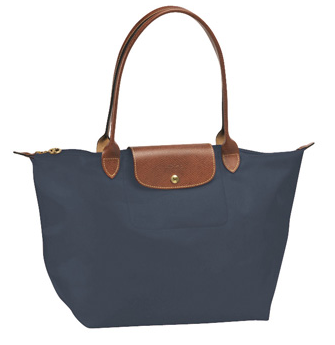
Longchamp "Le Pliage" Tote Bag--$145

I soon learned to dread being asked what I was doing for the upcoming break. Save for one memorable spring break when I’d asked my parents for a roundtrip ticket to New York City as a birthday present, I always do essentially the same thing: I go home to Ohio to babysit my siblings, making some much-needed extra money while making sure that they feel like I’m still part of their lives.

I like going home and babysitting. I miss my home a lot most of the time, and even though I have few people to see there aside from my family, I still feel the need to return regularly.

What I don’t like, though, is being obliged to ask the question in return: “And you?”

And they, usually, have capital-P Plans for their breaks. They go to Florida, California, or Las Vegas. They go to Spain, England, China, Argentina.

I had never felt this wanting before. I had always assumed that traveling to other countries was something people did once they finished their education and got jobs. I felt content with my break plans until I had to hear about those of my classmates.

Aside from traveling abroad on breaks, Northwestern students also love to study abroad. I would’ve loved to do it too, but I chose not to due to various financial and personal concerns. Yet, I often encounter students exhorting self-righteously how “everyone” should experience study abroad because it “changes your life” and “gives you perspective.”

Well, maybe it does. But everyone can’t do study abroad, because everyone can’t afford it. (Don’t talk to me about “financial aid”–I’ve already seen how that works as I attempt to finance my Northwestern education). So the rest of us will just have to get by without that particular life-changing source of perspective.

~~~

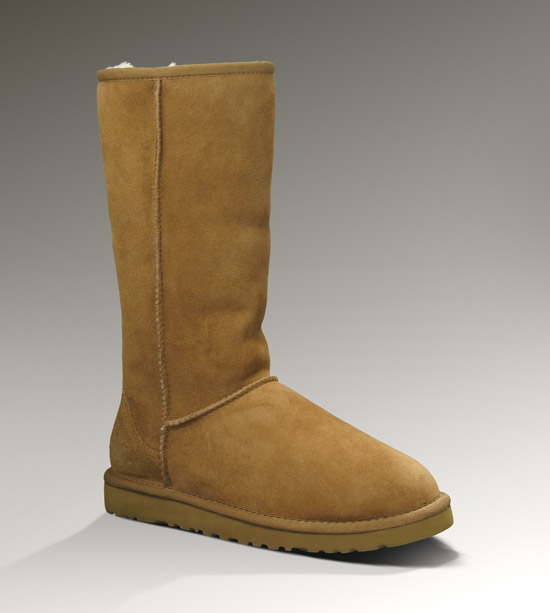
Classic Tall Ugg Boot--$200

Although I felt envy and–at times, when confronted with $30 laundry hampers–disdain, what I never felt was shame. It never occurred to me to feel ashamed of something as unchangeable, as circumstantial as how much money I have. I still don’t understand why anybody would ever feel ashamed of a situation that they had no hand in creating.

But others taught me that my shamelessness was wrong. When asked to spend beyond my means, I had no problem telling people why I couldn’t. When asked where I bought an item of clothing, I never hesitated to say that it came from eBay or the local thrift store. But the reactions were inevitably quiet, embarrassed. They’d mumble, “Oh of course, sorry, you don’t have to come,” and walk away. When they found out where I’d gotten my clothes, their eyes would widen. “Oh!” they’d say. “I wouldn’t have even guessed.” As though stylish clothes can only come from Michigan Avenue.

Whenever I get this reaction, I try to analyze it. Are they embarrassed for me, because I don’t have the money? Or are they embarrassed for themselves, because they assumed that I did? Do they drop the conversation because they don’t want me to feel bad, or because they don’t really want to know why I can’t come with them?

There is a “Northwestern Uniform,” of course. Over the seasons, it includes the following: Longchamp bags, Ugg boots, North Face jackets, Hunter rainboots, anything from Urban Outfitters and American Apparel. Sorority and fraternity letters, naturally. I don’t like any of these things, so I wouldn’t buy them even if I could.

~~~

North Face Metropolis Parka--$289

Over time, I learned not to care. I reminded myself that before college I’d never wanted for anything. I realized that the right clothing and spring break plans were never going to help me fit in at Northwestern anyway, because it’s not the sort of place where I can fit in. There might not even be a place in the world where I can fit in because I’m so weird, but since the jury’s still out, I’m still looking.

I found that there are, of course, plenty of students just like me at Northwestern. But they’re hard to see because they aren’t the ones inviting friends to restaurants, joining the Greek system (which students like me could never afford), or walking around looking like a page from Vogue.

Although it’s hard sometimes, I refuse to feel “poor.” I refuse to feel like I’m lacking anything. I refuse to feel that way because I know for a fact that, compared to most Americans, I have everything a young woman could ask for. But sometimes, I hate Northwestern for hiding that truth from us. We don’t have real diversity on this campus. If we did, I would feel rich.

~~~

Urban Outfitters Recycled Rice Bag Hamper--$30

I didn’t write this to get sympathy for not being able to afford restaurant dinners and North Face jackets. I wouldn’t want sympathy for that because, first of all, I don’t feel bad about it myself, and second, because other people can afford much less.

I wrote it because those protesters during my freshman year should’ve known better. They should’ve known that, statistically, not being able to afford North Face is normal. Being able to afford it is not.

I wrote it because I don’t feel ashamed to tell people that I spend my breaks at home with my family, and I hope that nobody else feels ashamed for that, either.

I wrote it because we don’t talk about it, and we should.

Liking Yourself and Being a Good Person–Is There a Connection?

Read this quote:

“I am now the most miserable man living. If what I feel were equally distributed to the whole human family, there would not be one cheerful face on the earth. Whether I shall ever be better I can not tell; I awfully forebode I shall not. To remain as I am is impossible; I must die or be better, it appears to me.”

If you were to take a wild guess, would you say that the person who wrote this was a productive member of society? Do you think that he or she was the type of person who helped others, who contributed meaningfully to his or her community? Was he or she a good person?

If you’re like most people (which, if you read this blog, you’re probably not, but bear with me), you’d probably answer “no” to those questions.

And you’d be dead wrong, because the author of those dismal thoughts was Abraham Lincoln.

This past weekend, my Jewish education group had its second retreat of the quarter. (I wrote about the first one here.)

One of our many discussions during the retreat was on which qualities are necessary for someone to be a good person (however one defines “good”). Some of my group’s suggestions, such as empathy, seemed completely accurate.

Some, however, did not. One student mentioned that she thinks that liking yourself is a prerequisite to being a good person, and everyone enthusiastically agreed.

I waited for her to explain. She said that you have to be fine with yourself before you can focus on being a good person to other people. She said that not liking yourself is unhealthy. (And unhealthy, by extension, must mean bad.)

I said, “What if the person you are right now just isn’t likable to you?”

She said, “Well, then you would just be bitter.”

I said, “I don’t like myself and I’m not bitter.”

She stammered, said sorry, and left the subject alone.

Here’s the thing. I would agree that genuinely liking yourself is a pretty good goal to have in terms of your own psychological development. However, I completely oppose the moralization of this quality. That is, I oppose the idea that liking yourself makes you a “good” person and that not liking yourself makes you a “bad” person. I also oppose the idea that you can’t be a “good” person unless you like yourself.

I have several reasons for opposing this concept. One is that I truly don’t believe that your opinion of yourself is strongly correlated with your treatment of others and your ability to contribute positively to society. There’s a stereotype of people who have low self-worth as selfish, miserable, and–as the girl in my group said–bitter. While it’s quite possible that not liking yourself would lead some people to be this way, it can also push people to turn outwards and do incredible things for others. Abraham Lincoln, for instance, may have been one such person.

Second, while the argument that you must like yourself in order to be a good person does not necessarily imply that liking yourself automatically makes you a good person, I think that’s something that should be examined. Once you do that, you’ll hopefully realize that there’s simply no connection. Some people who like themselves are great people. Some are horrible people. Some like themselves so much that they don’t give a crap about anyone else.

Third, there is an illness that up to a quarter of adults will experience at some point during their lives that has as one of its symptoms feeling worthless and hating yourself. That, of course, is depression. I hope I don’t have to explain why I find the suggestion that depressed people can’t be “good” people to be inaccurate, superficial, and downright offensive.

Fourth, all of this hinges on one’s personal definition of a “good person,” which was never elaborated on during our discussion. (I find that in conversations of a religious nature, these things tend to just be left undefined.) To me, a person who isn’t good is a person who has the opportunity to help others but chooses not to. A person who cannot help others due to circumstances beyond his or her control should not be labeled as “bad.” So if disliking yourself really is keeping you from helping others, that doesn’t mean you’re not a good person. It just means you have to work on your issues before you can put your goodness into action.

As I told the girl in my group, I dislike myself. There are two main reasons for that. One is that I have depression, and as I mentioned, that’s one of its symptoms. The other is that the culture I live in rejects many of my most defining traits, and it’s really, really hard to like yourself when you’re bombarded with cultural messages that tell you that you’re unlikeable.

With time, I’ll probably learn how to ignore those messages. But to suggest that I can’t be a good person right now because of them (and because of my depression) is extremely condescending. I do my best to be a good friend, daughter, sister, and leader in the Northwestern community. I have found causes that I support and advocate for them tirelessly. Because of my openness about my own experiences with mental illness, I have been able to serve as a source of information and support for many other people that I’ve met over the past few years.

Now, that’s hardly on the level of, say, Abraham Lincoln. But it’s more than a lot of other people my age do. A lot of the ones, I might add, who insist that this time of our lives is a time to “just focus on me” and “just do what I want.”

Liking yourself is great. It feels nice. But we shouldn’t confuse it with having the ability and the desire to do good.

Why Hookup Culture Sucks

This week’s Daily column.

Most people over the age of 35 would probably tell you that the college hookup culture is a terrible thing.

To them, the truth is plain to see — casual sex leads to sexual assault, has all sorts of negative psychological consequences, and is usually a sign of low self-esteem. Popular books like Laura Sessions Stepp’s Unhooked and Miriam Grossman’s Unprotected, along with countless news stories and opinion pieces, promote this viewpoint tirelessly.

I agree that the hookup culture as it currently exists is unhealthy, but not for those reasons. The way I see it, the problems writers like Stepp and Grossman identify within the hookup culture are very real, but they are not caused by casual sex itself. Rather, they’re caused by a lack of education and communication.

For instance, two possible negative consequences of hooking up — sexually transmitted infections and accidental pregnancy — could be eliminated almost entirely if people knew how to protect themselves from them. Of course, the issue of obtaining access to contraceptives is also a valid one, particularly given recent political events.

Sexual assault, too, can be curbed by educating people — and no, I don’t mean educating women not to drink too much or walk home alone. According to a 2010 study in the United Kingdom, two-thirds of people think that victims of rape are partially to blame if they initially got into bed with the rapist, and about one-fourth think that the victims are partially to blame if they dressed provocatively. It’s difficult to end rape on college campuses and in our society in general if so many people still don’t realize that rape is caused by rapists, not by revealing clothes.

Furthermore, our culture is saturated with TV shows, songs and other media that make it seem acceptable to “get” people drunk in order to make them willing to have sex, and I would not be surprised if some people take that message to heart. Of course, a drunk person cannot legally consent to sex, so people who try to get potential partners by using alcohol may not realize that they are actually making them legally unable to provide consent. A Columbia University study implicates alcohol in 90 percent of sexual assault cases on college campuses, showing that the relationship between alcohol and sex is not an entirely healthy one.

Even if the hookup is completely consensual, communication frequently gets the shaft. We’ve all seen movies like “The Notebook,” which usually climax with two people having sex for the first time without uttering a single word. Yet the sex still manages to turn out fantastic. I hate to rain on the parade, but that’s not really how it works. Sure, there’s a chance you’ll go to a party one night and meet someone who just happens to like having sex the exact same way you do, but it’s a pretty small chance.

Those lucky people can probably skip the rest of this column, but the rest of us should remember that you can’t get what you want if you don’t ask for it.

Unfortunately, expressing yourself clearly isn’t easy when you’re slurring your words, which brings me right to my next point: In order for hooking up to be safe and fun, we need to stop depending on alcohol as a social lubricant. According to a study done at Syracuse University, nearly two-thirds of hookups involve alcohol. Though drinking can be great for letting go of inhibitions, it also tends to make people less willing and able to speak up when something’s not right and to treat others with respect.

Respect might seem like an outdated word to use, but I hope it isn’t. I’m sure there are people out there who truly don’t care whether or not their hookup partner respects them, but I think most people do.

One common justification I hear from people who like to hook up is that, “It’s okay if they use me, because I’m using them too.” That is a terrible way to look at it. Just because you’re only spending one night with someone doesn’t mean you should treat him or her like an object.

Besides, the hookup can’t be that enjoyable if each person is simply “using” the other’s body, because sex requires a certain amount of teamwork.

Luckily, Northwestern does not ignore these issues. This past fall, the Essential NU program for freshmen was revamped to include an updated presentation on sexual health and assault. Staged in the form of a play, it emphasized the need for open communication between sexual partners and for challenging the cultural scripts that lead to both bad sex and rape. But this is a conversation that we need to have more often than just once a year during freshman orientation.

Though we do discuss issues like this on occasion — such as in meetings and events planned by organizations like College Feminists, Sexual Health & Assault Peer Educators, and Rainbow Alliance — they need to be higher up on the agenda.

Unlike the authors who write books with titles like “Unhooked” and “Unprotected,” I don’t think that casual sex is intrinsically wrong, unhealthy, or dangerous. I do think, however, that most of us are going about it the wrong way. For those people who want no-strings-attached sex, hookup culture could be a great thing — just not the hookup culture that we currently have.