
The Art of Looking Good

When I’m applying for jobs or scholarships, I’m often reminded to twist the wording on my resumes, cover letters, and applications (not even to mention interviews) to make myself and my experiences look better than they actually are.

I’ve never really stopped to think about how this makes me feel, but I’ll do so now.

Lying is unethical, in my opinion. So is intentionally misrepresenting the truth, which is what you do when you “word things differently,” as they say. I’ve just realized how shameful it is in my mind that being employable and successful in our society is based on our ability to paint ourselves in brighter hues than we really deserve to be painted in.

This summer, I’ll be volunteering at a summer camp for kids in Washington Heights, a neighborhood in Manhattan, where I’ll probably be doing stuff like arts and crafts with them. The idea of the camp is to promote health and mental wellness, though I don’t see how that’s really what I’m doing. I’ll basically be playing games with some kids from the city. But how will it go on my resume? “Volunteered at a day camp for underprivileged children of recent immigrants in north Manhattan, teaching them about health and mental wellness.”

Yeah, something like that.

And I’ll probably mention something about how I turned down a job that would’ve paid me $2,600 for this opportunity.

And here’s the kicker—nobody’s going to ask me what I actually did with these kids. Nobody’s going to go check five or ten years down the line to see if any of my interventions actually did any good in preventing them from developing illnesses like diabetes and depression. Nobody’s going to ask these kids if they enjoyed their time with me. Chances are, nobody’s even going to ask for a recommendation from my supervisor.

But I still get to put this crap on my resume like it’s such an amazing thing that I did. Me, privileged white girl from Ohio, helping these poor little immigrant children learn how to stay healthy, all for no pay. Commuting an hour there and back each day from Queens! In the summer heat! Oh, and working for my parents for a whole month after that to pay them back for sending me there.

This is what I call the art of looking good. It’s how we get into schools like Northwestern and get the sort of jobs that we’ll all be getting afterwards. Playing this game makes me sick. The thought that I, a person who loves to write and understands the power of words, am twisting them around so casually to get ahead in life, disgusts me.

I’m not naive enough to opt out of this game, because I do want to be successful in life, and clearly that’s what it takes these days. But I play this game halfheartedly, and I protest against it and buckle under its weight every agonizing step of the way.

I wish I could’ve written on my college application that, you know what, the prestigious internship I did in Israel the summer before senior year of high school was awful. I learned nothing except that I hate doing scientific research and I hate religion. I also learned that the sacrifices I made to be able to go there were all for nothing. I didn’t make any friends there. I did learn a bit about my native country, but not much, and nothing I couldn’t have learned by touring the country with my dad, which would’ve been significantly more fun.

But that’s not at all what I wrote on my college application, or else I very well might not be sitting in this Northwestern dorm right now.

Nobody wants to hear about my failures, no matter how much they taught me. Like when they ask you about your weaknesses in a job interview, they don’t really want to know that sometimes the amount of work you have makes you cry, or that sometimes you check Facebook at work, or that several times you accidentally made a comment to a coworker that might be interpreted as racist. They want to know that you have some minuscule barely-significant flaw, but don’t worry, you’re working on it!

Likewise, if I end this summer feeling like I accomplished nothing with these kids, nobody wants to know that, so that’s not what’ll go on my resume. My resume will say that I taught. I helped. I volunteered. Never, ever will it say that I failed. Even if I do.
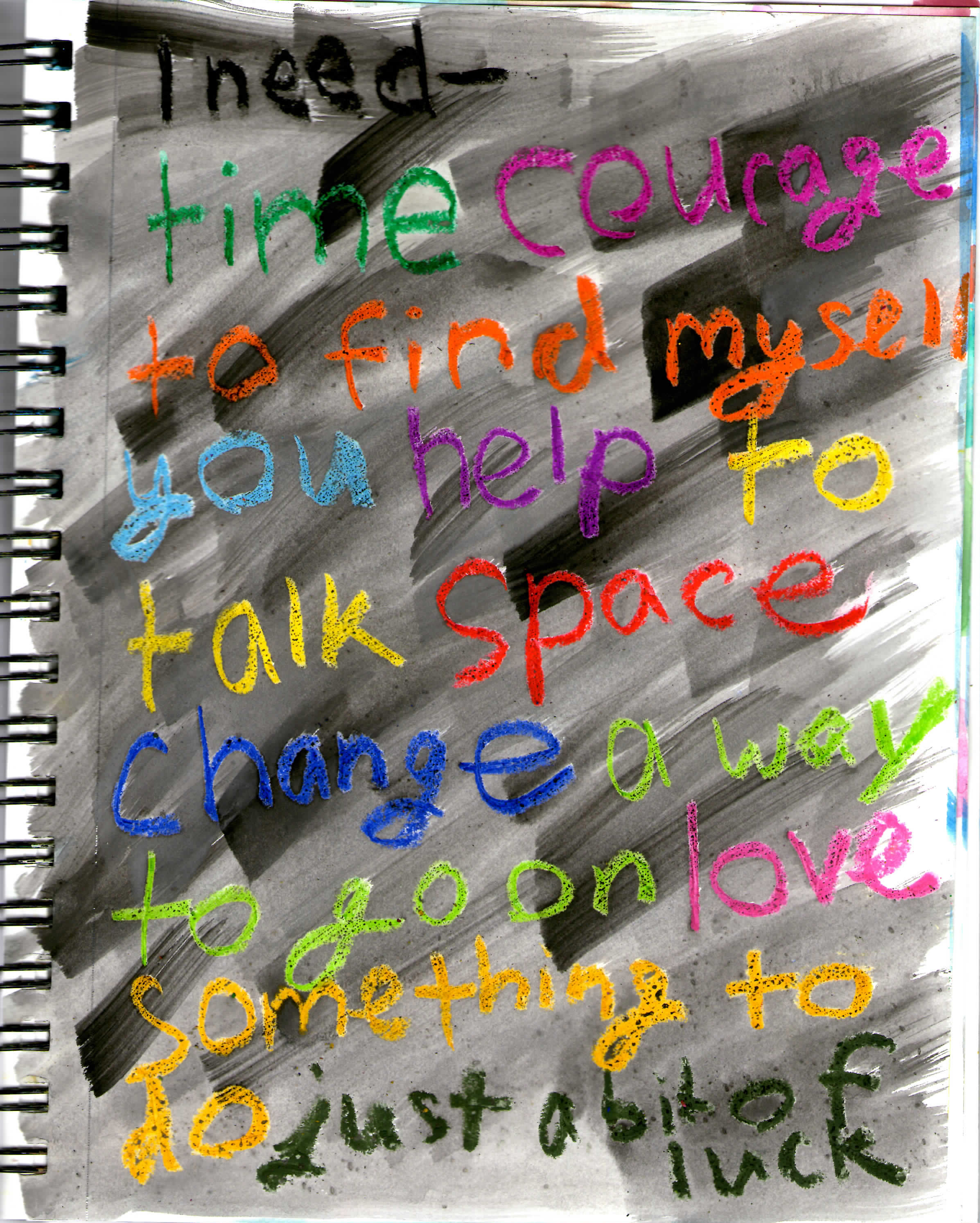
Some Thoughts on Depression

[TMI Warning]

About five months ago, I wrote a post on Facebook (and on this blog) about my experience with depression and how I came to receive treatment for it. I remember feeling very triumphant as I wrote it, because I felt like my difficulties were finally over.

This turned out to not exactly be the case.

In January, perhaps precipitated by some unfortunate personal circumstances, I relapsed and have been trying, mostly unsuccessfully, to recover ever since. The months since then have been filled with a lot of self-loathing, many random bouts of crying (daily at times), and much speculation on my part as to whether or not I really belong in this world.

This is when I realized that my problems, whatever they may be, don’t simply go away when I’m not depressed. I don’t “invent” the issues that I’m unhappy about. But being healthy makes it easier to ignore the pain in the back of my mind–all the wasted opportunities, lost friends, and scarring memories that have built up over the years like dust on a windowpane. When I’m healthy, I simply don’t think about it, and consequently I’m happier. But the mockery that I’ve made of my life isn’t a figment of my imagination; it’s quite real.

~~~

I also started to realize, perhaps even more than I did when I wrote that post, how little the healthy world knows about depression. Mental illness is truly the last taboo; many people refuse to even consider dating someone who has it. Kinda makes me reconsider being so open about my experience…

Even people who would otherwise be supportive just don’t know enough. For instance, if you know your friend is a diabetic, would you offer her a piece of cake? Probably not. But would you casually make fun of your depressed friend? Unfortunately, many people would, even though teasing and jokes are things that many depressives have a lot of trouble with. (This is because depression often causes a cognitive deficit that makes people take everything–a snappy tone of voice, an odd glance, a sarcastic remark–very personally. Here’s a great guide to cognitive distortions.) I am always analyzing and picking apart things that people say to me to try to figure out if they were just teasing or not. I am terrified of the threat of rejection that these casual utterances may carry, so I am always alert, always on my best behavior.

~~~

Another thing I’m never sure of is which parts of me are depression and which are simply me. I’m a skeptic, a cynic, and generally not too big a fan of things that most people seem to really like (Exhibit A: this). I don’t fit in with my surroundings in many ways. I’m more complex, polite, caring, respectful, quiet, conscientious, serious, passionate, emotional, and sensitive than most. I’m less assertive, flaky, impulsive, cheerful, “chill,” and casual than most. This makes for a great number of personality differences between myself and most people I know. When I’m not feeling depressed, these differences fade into the back of my mind. But when I am, they come right to the front, putting up a wall between me and the rest of the world, making me feel like I’ll be an outcast for life.

~~~

One more realization–Northwestern might be the worst place in the world to be depressed. (Not that there’s really a good place for that, except perhaps the psychiatric ward of a hospital.) It’s isolating, stressful, and miserably cold from October till May. Your peers churn industriously around you like a hive of North Face-clad bumblebees while you vegetate listlessly in your shitty shoebox room and email professors, friends, student group leaders one by one and tell them that you’ve been ill and cannot come to whatever crap you’re supposed to be at that day. You eat Nutella from the jar and wonder why none of your friends care. You wonder why you expect them to care. You sleep, a lot.

Northwestern also happens to have entirely inadequate mental health services, but that’s a topic for another post. My friends and I are working to change that. But for now, this is a really, really unfortunate place to be depressed.

~~~

And that’s it, really. I’m not entirely sure where I’m going now, but hopefully it’s somewhere good.

The Value of Disagreement

A photo from an Obama-McCain debate in 2008. Just to add some requisite humor to this otherwise serious post.

I am a liberal and I go to a liberal school. Sometimes this makes me feel happy and comfortable, because I have so much in common with others here in terms of politics. I can complain publicly about Americans’ lack of belief in climate change, or about something Glenn Beck said. I can ask my friends if they’ve seen the latest episode of the Daily Show or the Colbert Report. I can rant excitedly about some famous person coming out as gay, lesbian, bi, or trans. And I can do all this without worrying that I’m going to offend someone, or that someone is going to argue with me.

But two recent incidents made me ask myself if this is really such a good thing.

One was a conversation I had with a friend about a mutual friend of ours. We’re all really close and hang out a lot, but when I suggested to one that he go have a conversation with the other, he said that they don’t really have anything serious to talk about. I asked why, and he said that they always just agree on everything and there’s little to discuss.

The other was the killing of Osama Bin Laden. When this happened, my Facebook feed suddenly exploded with such a variety of opinions that I didn’t even know existed at Northwestern. Some people were screaming “USA! USA!” Others were really happy that Bin Laden was dead, but didn’t want to celebrate so gleefully. Others were ambivalent, wondering why this really mattered, or whether or not he should’ve been shot dead. Others still were furious that he’d been killed on the spot, arguing that he should’ve been tried by the American judicial system instead. Some were religious Jews or Christians, happy to have gained this victory against radical Islam. (Unfortunately, I don’t know many Muslims, but I would’ve loved to hear their perspectives.) Some were atheists or agnostics, wishing that we didn’t have these religious wars to begin with. And so on and so forth.

Immediately, tons of arguments and debates started up. I got into quite a few myself. As a result, I changed certain parts of my opinion, began to understand other parts more clearly, and generally started articulating my views a bit better. And, also, I learned a lot about many of my friends.

After that, I started to realize how much we’re missing here in terms of political dialogue. I used to be very conservative, but back then I lived in Ohio and everyone around me pretty much agreed. Now that I’m much more liberal, I’m once again surrounded by people who share my views on almost everything. Except for those times when my friends and I start getting bitchy and arguing minutiae, I rarely get to have a good political debate.

What to do about this? I honestly don’t know. I don’t know how to get more conservative or libertarian students to attend Northwestern. Like it or not, this is a liberal campus.

One related issue, however, is a bit easier to solve, and that is the tendency of people to want to shut down those who disagree. (I addressed this briefly in the previous post.) The internet makes it much easier to do this because you can literally avoid “conservative” or “liberal” websites, but I see this in play even out in the real world. When I lived in Ohio, despite being conservative, I had the uncomfortable feeling that conservatives always wanted to shut liberals up. Luckily, I didn’t have to feel guilty for long, because when I came to Northwestern I found that liberals do the exact same thing. The way we respond to alternative viewpoints is often anything but respectful and curious–it’s snarky and dismissive.

For instance, when discussing people who oppose the right to abortion, liberals like to refer to them as “anti-choice” rather than “pro-life,” which is what they call themselves. This is, in my opinion, ridiculously disrespectful. Pro-lifers place the sanctity of life above the freedom of choice, but that doesn’t mean they oppose choice. It just means they value life (and they define life as beginning at conception) more than they value choice. I disagree with this position entirely, but I respect it and can see why some people would think that way.

Similarly, conservatives will purposefully refer to Obama as “Barack Hussein Obama” (to highlight his “Muslim” middle name) or as the “Obamination” or as any number of other highly disrespectful monikers. Why? Why talk like this about the President of the United States just because he is a liberal?

This needs to stop. From both sides. Silencing the opinions of others benefits nobody. If they’re wrong, they’re wrong. If they’re right, then you should know the truth. If they’re partially right and partially wrong, you should take this opportunity to fine-tune your own views.

In fact, in order to put my money where my mouth is, from now on I’m going to seek out intelligent conservative blogs and read them. If nothing else, it’ll help me learn how to defend my own views better. Unfortunately, I don’t hear many conservative opinions here on campus, so I’m going to look for them elsewhere.

Sex, Morals, and Academic Freedom

A fucksaw.[First, some backstory–this post concerns a controversial event at Northwestern in which the professor for a class called Human Sexuality held an optional live demonstration that showed a man penetrating a woman with a sex toy. The story, which was first reported by our campus newspaper (the Daily Northwestern), quickly blew up and was featured in media outlets all over the world, including the front page of the Chicago Tribune. Here are the NYT and CNN articles on it.

Second, I wrote this piece for the blog of Northwestern Sex Week, an annual event that I’m on the planning committee of. Here’s the original post.]

Much has already been written about the infamous Professor Bailey and the optional sex-toy demonstration he held for his Human Sexuality class. I’m going to throw my hat in the ring.

First of all, I’m not in the class and did not witness the demonstration. From what I’ve heard, I’m not sure that it would’ve had educational value for me, personally. That said, I am a member of SHAPE (Sexual Health and Assault Peer Educators) and the Sex Week committee, and therefore, I already know quite a bit about sex. And yes, I know that women have g-spots and can potentially ejaculate. I also know that the range of human sexualities and sexual proclivities is virtually limitless, and that each individual views and experiences sex differently.

However, not everybody realizes this. For much of my adolescence, I didn’t either. Like some of the people I’ve met here at Northwestern, I freely labeled others’ sexual behaviors as disgusting, weird, abnormal, pathological. I didn’t realize how wrong this perspective was. The impression I get of Professor Bailey’s class and this demonstration is that they aim to eradicate this perspective. To that end, I can only endorse them both with complete confidence.

Second, even supposing that this demonstration had no educational value for anyone–which I highly doubt–we enter dangerous territory when we advocate banning something simply because we, as individuals, do not see its value. This is especially true in the academic realm. The concept of intellectual freedom does not exist to protect someone’s right to claim that the sky is blue; it exists to protect someone’s right to challenge existing norms and assumptions. It does not exist just to protect my English professor’s right to interpret a Dickens novel in a particular way; it exists to protect a human sexuality professor’s right to teach controversial material to his students. Even if Professor Bailey’s demonstration ultimately taught nothing, he should have the right to try unorthodox teaching styles, just like he has the right to conduct unorthodox research. Even if he failed, he has learned. That’s what academic life is all about.

I am also disappointed to read the numerous online comments from Northwestern alumni claiming that, because they disagree with this demonstration, they will no longer be donating money to Northwestern. This is, to put it bluntly, incredibly selfish and narrow-minded. In my opinion, one donates to an institution to support its overall mission, not because one agrees with every policy, every professor, every class, and every lecture. I, for instance, do not agree with some of the things that Northwestern faculty and administrators do–quite a lot of things, actually. Yet you can be sure that after I graduate, I will be donating money to this amazing school, probably for the rest of my life.

Third, this entire controversy, in my opinion, was started by a campus media given to sensationalism. With the media firestorm that has ensued, you would think that there had been some high-profile complaint from a student or parent, some allegation that the demonstration deeply disturbed a student–something. To my knowledge, there was not. In the article that broke the story, the Daily Northwestern failed to quote even a single person, student or otherwise, who had been offended or displeased by the presentation. Yet the article’s headline referred to this event as a “controversy.”

Finally, I would like to challenge all those who oppose this demonstration on moral grounds. Professor Bailey himself said it perfectly in his statement of apology:

Those who believe that there was, in fact, a serious problem have had considerable opportunity to explain why: in the numerous media stories on the controversy, or in their various correspondences with me. But they have failed to do so. Saying that the demonstration “crossed the line,” “went too far,” “was inappropriate,” or “was troubling” convey disapproval but do not illuminate reasoning. If I were grading the arguments I have seen against what occurred, most would earn an “F.” Offense and anger are not arguments.

Students were warned multiple times of the graphic nature of the presentation, and told that they were free to leave at any time. The individuals who staged and participated in the demonstration were all consenting adults. The course itself involves watching videos of people having sex, and no controversy has arisen because of that. The course, and this demonstration, involves an act that is as normal and natural as breathing, eating, and sleeping. Like Professor Bailey, I have yet to find a convincing argument for why this should not have happened that does not hinge on personal values, and that does not seek to impose one’s personal values on others.

In short, the fact that Professor Bailey was forced to apologize for the world’s closed-mindedness is tragic. And it means that we, the Sex Week committee, have our work cut out for us this year.

Let’s not forget that there was a time when you couldn’t say the word “pregnant” on television. There was a time when discussing sexuality in a classroom setting would’ve been impermissible. There was a time when a play like the Vagina Monologues could never have been staged in public, and there was a time when Sex Week could never have happened on a university campus.

Apparently, there is also a time when demonstrating the use of a sex toy on a consenting woman in front of a hundred consenting adults is unacceptable, too. That time is now. But we should remember how strange–how silly–yesterday’s taboos seem to us today.

Northwestern Doesn’t Care About its Students

Evanston, Illinois, which is where I go to school, has a stupid housing ordinance that states that no more than three unrelated people may live together in a house or apartment. It’s intended to ensure proper upkeep because, apparently, people who aren’t related to each other don’t care about the state of their housing, whereas people who are related do. (???)

Anyway, up until now, Evanston has not been enforcing the rule. But now it’s going to. Hundreds of Northwestern students will be evicted this summer because they live in houses or apartments with more than three unrelated people.

And today, the Daily Northwestern reports that the Northwestern administration will not attempt to lobby Evanston’s city government regarding this issue despite the fact that it directly affects so many students.

The Assistant Dean of Students’ response? Students should move farther away from campus.

Let me give you some background on Evanston. Although it’s obviously safer than some Chicago neighborhoods, there were eight homicides in Evanston in 2010 compared to just one in 2009–something that the University and the city police don’t seem to be too concerned about. Every couple of weeks, the entire University community receives an email alert regarding a crime that has just been committed on or near campus–muggings, assaults, break-ins, you name it. Last year, a man attempted to assault a woman in one of our academic buildings.

And with all this, the University administration thinks students should move even farther away from campus, risk even longer walks home in the dark, and live even further apart from other students–all to avoid getting off of its ass and lobbying against an outdated and useless rule.

Landlords, too, will be hurt by the enforcement of this law. The first Daily article I linked to mentions the fact that many of these houses and apartments really aren’t of the quality that families moving to a supposedly wealthy place like Evanston would be looking for. Many of the houses for rent near campus used to be for sale–until their owners realized that nobody’s going to buy them. Without students to fill these houses and apartments, many of them would probably be left empty.

Furthermore, Evanston officials have stated that the reason they’re starting to enforce the ordinance is to crack down on student parties. First of all, that won’t work–the number of people living in an apartment doesn’t determine whether or not those students have a party; that’s preposterous. In fact, if people have to live with fewer roommates, they may be more likely to throw parties so that more people come over.

Also, as the Daily article mentions, having students live in concentrated areas makes it easier for the police to patrol those areas. If students start living miles away from campus and having parties there, not only will that piss off even more Evanston residents who otherwise wouldn’t have had to deal with it, but it will also make it harder for the police to stop the parties.

But, most importantly–at least, to me–the hope of stopping college students from partying (something that’s never going to happen anyway) is not worth jeopardizing their safety. Evanston isn’t a small town in Ohio. It’s a city that’s located close to a major metropolitan area. It has very real crime issues. I am shocked that for how much money I’m paying to go here, the Northwestern administration won’t stick up for its students and battle this ridiculous ordinance. Instead, it’s asking us to move farther away from campus, dilute the sense of community that is already so fragile at this school, and expose ourselves to a greater risk of becoming the victims of crime.

I should’ve invested my $200,000 wiser.

[Update] Several of my friends have pointed out that this ordinance was probably originally enacted in order to prevent minorities (who ostensibly have lower incomes and would benefit from being able to share houses or apartments with other people) from moving into Evanston. I’m still looking for a credible source confirming this, but if it’s true–and it probably is–then that’s just one more reason to repeal the law. If the city of Evanston is using a racist law to attempt to control student partying, that is ridiculous. Not to mention that the law probably does disproportionately affect minorities.