When I Knew It Was Over

When I was a little kid, my favorite dreams were the ones in which I got something new–a toy I’d been wanting, some really cool gadget. (Kids are acquisitive that way.) I would wake up grasping for my new possession and feeling a tremendous sense of injustice at the fact that I couldn’t keep it after the dream was over.

Right now, I’m still dreaming the dream, hoping I never wake up and lose what I’ve just gotten.

My depression kind of has its own saga. I’ve had it since I was 12. It got much worse when I went to college. I got diagnosed and started taking anti-depressants and it got better. Then it got worse again despite the anti-depressants. Then I said fuck it to the anti-depressants and went off of them. There were a few good days in there in spite of that, to be sure, but it was always there.

That is, until a few days ago.

It’s well-known that depression can spontaneously remit sometimes, but I wasn’t expecting it to happen to me. Just a few short weeks ago I was strongly considering going back on anti-depressants and dreading the long, lonely summer ahead. I’d had many bad episodes recently, too many.

But then they started decreasing in frequency. I didn’t even notice what had happened until, ironically, an evening when I was sad. I had put on some sad music and was sitting around lamenting the uselessness of one of my romantic endeavors. There’s no chance in hell it’ll go anywhere, but I really like the person in question, and this sucks.

And then it suddenly hit me–I was sad like normal people are sad. I wasn’t crying, I wasn’t wondering why I’m such a failure in life and why everybody hates me and why I’m so ugly and useless. I wasn’t planning a lifetime alone and lonely. I wasn’t going down the list of every single person I’ve spoken to recently, analyzing our last conversation, and scanning it for clues showing that they actually secretly hate me.

I was just sitting around, kind of blue, listening to sad music, regretting the fact that this Thing isn’t going to work out, but hoping that someone else will come along soon. Like a normal person. A healthy person.

And that’s when I knew it was over.

The weekend after that–this past weekend–felt entirely new to me. All the colors were brighter, my senses were sharper. Little hurts rolled right off of my skin like water. I woke up in the morning looking forward to the day, whereas for the past year and a half, I’ve woken up every day thinking, “Fuck, another day.”

I could be happy sometimes when I was depressed, but only if I had a concrete, immediate reason. Now I don’t need one. I can be happy just because, sometimes. I can be happy just because I’m alive.

There are a few reasons why this might’ve happened now. Summer started and the academic stress went away. The weather is good. I can be outside now, go to the beach, take walks, explore the city, have a life outside of my tiny room. My friends freed up, too, and suddenly I started having plans with them all the time. It became possible to text someone in a moment when I was feeling down and have plans an hour later.

Besides that, I fell for someone for the first time in ages. Although that person is completely unavailable to me in more ways than one, it was a reminder that there really are people out there with whom I can feel a connection, despite my cynicism about these things. Nothing’s going to happen here, but I’ve already learned more from one unrequited crush than I have from the past year and a half of dating.

The final thing is that I started writing again. By which I mean, really writing–writing fiction–and not just these blog posts and the various other expository pieces that I do. I restarted a novel that I thought up two years ago but then stopped writing because I thought I wasn’t mature enough to write it. It’s a lofty project; its themes include grief, depression, suicide, marital discord, friendship, betrayal, love, and figuring out what the hell to do with your life. It doesn’t seem like an uplifting thing to write, but it is, and writing it once again has made all the difference.

For the first time in a while, I can be at ease alone. Whereas before I hated myself so much that I dreaded being left alone with myself for more than an hour or two, now my mind is a welcome presence. It writes stories for me, it promises me a bright and happy future. It points out birds and clouds and other things I used to ignore. It steers me towards my cheerful playlists, not my brooding ones.

I’m writing this now not just to share it with others, but because, as with coveted toys of my childhood dreams, I’m trying desperately to hold onto this feeling before the dream ends. Because it will. It always does. And when it does, I’ll no longer be able to understand how I could’ve ever written this.

And I’ll reread it and try to understand. I’ll remember to see my friends and to write more and to stay open to the possibility that someone will come along and change my entire life.

I’ll read this and remember.

So goodbye, depression. Until next time.

“F*ck the Bourgeoisie”: In Which I Infiltrate a Socialist Gathering

Yesterday some friends took me to the annual conference co-sponsored by the Center for Economic Research and Social Change and by the International Socialist Organization. The conference is called, quite simply, Socialism 2012.

Now. I am not in any way, shape, or form a socialist. However, I’ve always been curious why that particular political affiliation carries such a stigma, especially in the United States. I’ve met quite a few people over the years who sympathize with Marx or with other socialist thinkers and keep those sympathies meticulously secret.

In my own life, socialism has been presented to me as Very Very Bad and Very Stupid. I have parents from the former Soviet Union, after all. Whatever value socialism may or may not hold, I will never, ever begrudge them for hating it, because it (however inadvertently) turned so many people’s lives into a living hell all over the world.

(Yes, yes, I know that wasn’t “real” socialism. But it’s pretty hard for people to stay objective when their friends and family are dying, so I’m not going to be the asshole who minimizes their suffering by telling them that.)

That said, I generally prefer to learn and experience things for myself. I don’t buy for a second the argument that one should stay away from these things for fear of being “brainwashed,” which I’ve heard many times before. In fact, I’m actually pretty insulted when people tell me that. I think everyone should know by now that if there’s only one thing I’m good at, it’s thinking for myself.

So, let it be known that I did not come back from this conference a changed woman. I’m not any more a socialist today than I was two days ago.

What I do have is a new appreciation for socialists and for the spaces they create. It must be nice to belong to a collective like socialism. Everyone there seemed to know each other, and I saw people from all walks of life–young people like me, middle-aged respectable-looking people, aging college professors. There were people of all shapes and colors. Tons of queer people. People with various interesting hairstyles. Aside from the issue of their politics, I felt somewhat at home.

I went to a talk on Marxism and queer theory, which, amazingly, I understood most of. While this is nothing all that different from something I might come across in a class at school, there is nonetheless something special about the fact that hundreds of people got together to talk about this on a Friday night. Not for a grade. Not for their resume. Certainly not for social approval, since going to a conference on socialism is pretty far down on the list of things people do to fit in.

The most amazing part of it, to me, was that I had entered the sort of space that I consider sacred–a space in which “serious” discussion is the norm, not the exception. A space in which it’s normal, upon first meeting someone new, to ask them about their views on a particular political issue. A space in which nobody thinks you’re weird if you’re checking out the bookstore and freaking out with your friends about all the great books you’re finding. A space in which politics is something to get emotional about, something to loudly, clearly express your emotions about, whether by cheering, clapping, hissing, booing, shaking your head, snapping your fingers, or putting your fist up in the air.

And I, who have been told ever since childhood to “calm down” and “stop getting so emotional about it” and “go get a life,” felt comfortable among these people with whom I otherwise disagree quite strongly.

That disagreement, which lurked beneath my consciousness for most of the time I was there, surfaced strongly during a break between talks, when people were chanting. Most of the chants were exactly of the sort that you’d expect–one amusing one went like this: “One, two, three! Fuck the bourgeoisie! Four, five, six! Fuck the bourgeoisie!” And so on.

But then there was a chant that repeated the word “Intifada” over and over. I don’t remember exactly how it went because I tend to block these things from memory somewhat. I’m Israeli by birth, and Israel is something I almost never write about for various personal reasons. My stance on the issue is even-keeled and probably in line with that of most American liberals and progressives and so on. That said, I will tell you that it is incredibly alienating and deeply painful to hear a room full of people chanting something that, to you, could mean the deaths of friends and family. I know that’s not what it means to Palestinians. And it’s especially not what it means to white American socialists. But that is what Intifada means to me.

I know where they’re coming from. I’m quite well-versed in the “terrorist as freedom fighter” line of thought. They’re entitled to their opinion as I am to mine. But shouting something like this seems gauche and callous, like chanting “USA! USA!” when America invades another country, or like gathering to watch a public execution as entertainment. I’m choosing to believe, though, that these people are well-intentioned and believe that what they are chanting about is some convoluted form of peace.

This is not a political statement. This is not a statement about equivalency, who’s right and who’s wrong, whose land it is, who committed more war crimes and human rights violations, etc. This is a statement that is entirely moral: I believe it’s wrong to glorify killing innocent people, no matter to what end.

And, just for the record, I’ve been in countless pro-Israel spaces before, including an AIPAC conference, and I’ve never heard an equivalent sort of chant there. I’m sure it happens, but I’ve never seen it. And when it does happen, whatever the setting, I would find it as disgusting and wrong as I found this Intifada chant.

In any case, I was determined not to let that spoil the whole evening. It was a reminder, though, that it’s not only my lack of socialist politics that ultimately makes me unwelcome there. It’s something as incidental as the circumstances of my birth.

It would be nice if, someday, I find a group with this sort of energy and passion that I do actually agree with. But I’ve long given up seeking a spiritual, political, or cultural home anywhere.

For now, it’s enough to occasionally go to things like this–and things like Pride and Occupy Chicago and Friday night Shabbat dinners–and witness other people experiencing that feeling that I want so badly for myself.

How I Learned to Stop Worrying and Love the B’s

College students seem to love this poster, perhaps because it reminds us to calm the fuck down. Did you know it was originally created by the British government during WWII to keep citizens calm in the event of an invasion? How’s that for perspective.

A few weeks ago, our final grades for spring quarter were posted online. This usually happens on the Monday evening after the end of the quarter, and you see people posting Facebook statuses about their grades all night.

I used to be one of the people who’d sit there refreshing Caesar or at least checking my Facebook newsfeed so that I would know my grades the second they were handed down from above like a court decision. When you work for something for ten weeks, you want to know the results immediately.

But this time, I didn’t check my grades right away. In fact, I still haven’t checked them. And I’m not going to until the next time I need to update my resume.

It’s not that they were going to be extra crappy this quarter or anything. It’s not that I need good grades any less than I did before. Nothing changed, except that, one day not long before the quarter ended, I realized that grades had started to rule my life.

This is a long story, and one that will be familiar to anyone who’s attended a school like Northwestern. This story involves panic attacks, hours on the phone with one’s parents, Red Bull, and contrite emails to professors. It involves checking the average GPAs at all the top grad schools and choosing classes based on how likely you are to get an A in them. At times, it involves sacrificing education–true education–for a false feeling of accomplishment.

There are many episodes in this series. There was the time I sat in the snow winter quarter of freshman year and bawled before going back into Tech, finding the computer lab, and dropping a class for the first time. There was the time I told my mom I was going to just become a housewife after graduation (a housewife without a husband?). There was the time I seriously considered just moving to Israel and joining the army. There were the times–yes, unfortunately, that’s plural–when I did something self-destructive.

All that, because of a number.

One of the most insidiously dangerous things about the culture at Northwestern (indeed, probably at most elite schools, but I can only speak for this one) is how driving yourself crazy over grades and schoolwork becomes normalized. If a normal, average, non-Northwestern person saw me a few weeks ago–when I was freaking out and crying because I might do poorly on my Hebrew final which might give me a B in the class which might lower my GPA substantially enough which might prevent me from getting into graduate school which might prevent me from having something to do after I graduate–that person’s reaction would probably be horror and pity.

But a fellow student at Northwestern would just nod their head and smile and perhaps suggest that I get drunk this weekend to forget all about it.

While it’s great to have people who understand what we’re going through, I think it’s hazardous to our mental health that we have such an echo chamber of academic anxiety. Because any informed adult will tell us that this is all ridiculous. You’re not going to be screwed for life just because you failed one class at some point in college. You’re not going to be turned down from every job just because you only got a C in calculus. It just won’t happen. These are lies we sell to ourselves when we’re (understandably) worried and uncertain about the future.

I wish I had a crystal ball that could tell me exactly how it’s all going to work out–whether I’ll go to grad school right after college, which one I’ll go to, which degree I’ll get, where I’ll live, who I will be.

But I don’t. And in the meantime, I want to live my life.

It’s entirely possible that right there in my Caesar account, unbeknownst to me, is a grade so horrendous that I actually will get rejected from grad school. So I’ll go get a job until I can get into grad school. And if I can’t get a real job, I’ll go volunteer and work part-time until I can get a real job. It’ll work out, even if I might have to live paycheck-to-paycheck for a while.

Of course, it’s impossible to aspire to go to grad school and yet completely not care about your grades. I need to care about them and keep them as high as I can, and I think it’s natural to worry occasionally that they’re not good enough.

But this constant catastrophizing of every single exam, paper, and assignment?

That needs to go. I can’t live like that.

More to the point, living in a state of anxiety probably doesn’t do wonders for my academic performance anyway.

Regardless of my grades, everything will be okay and life will eventually work out.

Update: And because I can’t write a post without including something political and sociological, read this.

I’m Not Poor: A Reflection on Class at Northwestern

[TMI Warning]

Before I came to Northwestern, not once in my life did I feel like my family didn’t have enough money.

To be sure, there have been times in my family’s history when we didn’t. Immigration–especially moving between countries and continents four times in seven years like we did–does deplete one’s financial reserves. For the first few years of my life, I shared a bedroom with my brother, who is nine years older than me. I didn’t have a bed until we rented out our first single-family house when I was nine years old. Up until then, I’d slept on a mattress.

Even now, I prefer sleeping close to the floor.

But things got rapidly better after that. We bought our first house. We bought cars. We bought kitchen appliances, leather sofas, an exercise machine, a piano. We bought a futon for my older brother to use when he comes to visit. We bought nice jewelry for my mom and for me. We bought laptops, iPhones, Kindles.

We bought things that we wanted rather than needed, because they made life more comfortable and more fun.

Even through all of this, though, we were thrifty. The afghan rugs on our floors have been it the family for years. We recycle clothes and hand them down, and readily accept hand-me-downs from others. My mom and I shop mostly at T.J. Maxx, that lifesaving discount store that sells everything from perfume to purses to pots and pans. To put me through college, my parents used their own retirement savings rather than taking out new loans. The assumption was that a Northwestern education will one day provide me with enough income to finance my own parents’ retirement, in return for their having financed my education.

~~~

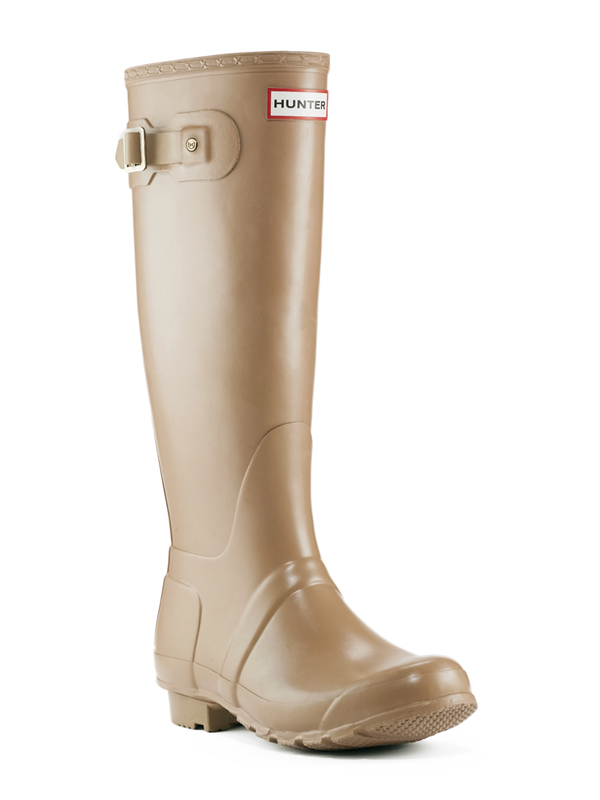
Original Tall Hunter Boot--$125

In our suburb in Ohio, almost everyone is middle-class. Some of my friends had a bit more money and some had a bit less, but there were rarely huge differences. All of us went on family road trips for vacation rather than flying to other countries. None of us wore designer clothes, because even if we could afford it, there aren’t any Prada or Gucci stores in Beavercreek, Ohio. There isn’t even an H&M.

The most my girlfriends or I would ever pay for a pair of jeans was $30.

Then I came to Northwestern. My freshman year roommate unpacked and took out a laundry hamper that looked like an authentic rice bag that one might buy at an Asian market. I asked her about it, assuming she’d brought it from her native Korea.

“Oh, this? It’s only $30 at Urban Outfitters. You should get one!”

I wasn’t getting a $30 hamper for my dirty underwear. I used a $2 mesh one I’d bought at Target. Up until that day, I didn’t realize anybody would do otherwise.

During the fall of my freshman year, there was a tiny protest in which some students help up signs to bring awareness to the plight of lower-income students at Northwestern. “I didn’t get into any of my top 3 sororities,” one said. “I can’t afford a North Face,” said another.

North Face is a brand of outerwear that I’d never even heard of before I came to Northwestern. Its logo is more pervasive on our campus than Northwestern’s own. At North Face, a knee-length down coat–the sort you really need in Chicago–costs $300. My own down coat cost about $70 at T.J. Maxx.

So I couldn’t afford North Face, either.

Was I poor?

Money–and the spending of it–pervade campus culture so thoroughly that nobody notices it. Within weeks of arriving on campus, I was expected to shell out for $20 club t-shirts, $20 restaurant dinners, to say nothing of $200 textbooks. While many students, including me, have a part-time job, many do not. I met many students who had been offered a work-study allowance as part of their financial aid package but chose not to use it.

These days, I usually have two jobs at a time and use the earnings to help pay my rent, which is twice my monthly income. I can’t save very much.

Financial aid doesn’t help much. Every year my dad sends them a personal letter explaining that we have aging grandparents oversees, two small children whose childcare must be paid for, that my mom lost her job last year (she has since found a new one), that we’re still paying off a mortgage, that my family’s retirement savings are being depleted, what have you.

Sometimes they sigh and toss us an extra thousand bucks.

Last year I decided to become an RA (or CA, as they call it at Northwestern). It would be good for my resume, it would be something I’d enjoy doing, and it would help me pay for school.

Or so I thought.

Once I was accepted as a CA and received my new financial aid statement to reflect my free room and board, I noticed something odd–I no longer had a work-study allowance, and my scholarship had decreased substantially. My family would be paying the exact same amount they had been paying before.

I asked the financial aid office what had happened. “Well,” they said, “since you no longer have to pay room and board, we decreased your aid so that your expected family contribution stays the same, because that’s what you’re able to afford according to our calculations.”

“But we can’t really afford that,” I said.

“Well, that’s your expected contribution.”

They told me that they were forced to keep my expected contribution the same due to “federal law.”

I asked my new supervisors in University Residential Life for help. They told me that, as a CA, I was only allowed 10 hours of non-academic time commitments per week, so if I wanted to continue working part-time, that would have to come out of those hours. “We’re willing to work with you to help you find a non-work study job,” they said, since I no longer had a work-study allowance and most campus jobs were work-study only.

I talked to a student who’d been a CA for several years. “Well,” he said, “I guess it doesn’t really make much sense for students on financial aid to become CAs.”

I did it anyway because I didn’t want money to hold me back from a valuable experience. But I always remembered the lesson I’d learned: Northwestern wasn’t going to expend any extra effort for its “students on financial aid,” like me.

~~~

Longchamp "Le Pliage" Tote Bag--$145

I soon learned to dread being asked what I was doing for the upcoming break. Save for one memorable spring break when I’d asked my parents for a roundtrip ticket to New York City as a birthday present, I always do essentially the same thing: I go home to Ohio to babysit my siblings, making some much-needed extra money while making sure that they feel like I’m still part of their lives.

I like going home and babysitting. I miss my home a lot most of the time, and even though I have few people to see there aside from my family, I still feel the need to return regularly.

What I don’t like, though, is being obliged to ask the question in return: “And you?”

And they, usually, have capital-P Plans for their breaks. They go to Florida, California, or Las Vegas. They go to Spain, England, China, Argentina.

I had never felt this wanting before. I had always assumed that traveling to other countries was something people did once they finished their education and got jobs. I felt content with my break plans until I had to hear about those of my classmates.

Aside from traveling abroad on breaks, Northwestern students also love to study abroad. I would’ve loved to do it too, but I chose not to due to various financial and personal concerns. Yet, I often encounter students exhorting self-righteously how “everyone” should experience study abroad because it “changes your life” and “gives you perspective.”

Well, maybe it does. But everyone can’t do study abroad, because everyone can’t afford it. (Don’t talk to me about “financial aid”–I’ve already seen how that works as I attempt to finance my Northwestern education). So the rest of us will just have to get by without that particular life-changing source of perspective.

~~~

Classic Tall Ugg Boot--$200

Although I felt envy and–at times, when confronted with $30 laundry hampers–disdain, what I never felt was shame. It never occurred to me to feel ashamed of something as unchangeable, as circumstantial as how much money I have. I still don’t understand why anybody would ever feel ashamed of a situation that they had no hand in creating.

But others taught me that my shamelessness was wrong. When asked to spend beyond my means, I had no problem telling people why I couldn’t. When asked where I bought an item of clothing, I never hesitated to say that it came from eBay or the local thrift store. But the reactions were inevitably quiet, embarrassed. They’d mumble, “Oh of course, sorry, you don’t have to come,” and walk away. When they found out where I’d gotten my clothes, their eyes would widen. “Oh!” they’d say. “I wouldn’t have even guessed.” As though stylish clothes can only come from Michigan Avenue.

Whenever I get this reaction, I try to analyze it. Are they embarrassed for me, because I don’t have the money? Or are they embarrassed for themselves, because they assumed that I did? Do they drop the conversation because they don’t want me to feel bad, or because they don’t really want to know why I can’t come with them?

There is a “Northwestern Uniform,” of course. Over the seasons, it includes the following: Longchamp bags, Ugg boots, North Face jackets, Hunter rainboots, anything from Urban Outfitters and American Apparel. Sorority and fraternity letters, naturally. I don’t like any of these things, so I wouldn’t buy them even if I could.

~~~

North Face Metropolis Parka--$289

Over time, I learned not to care. I reminded myself that before college I’d never wanted for anything. I realized that the right clothing and spring break plans were never going to help me fit in at Northwestern anyway, because it’s not the sort of place where I can fit in. There might not even be a place in the world where I can fit in because I’m so weird, but since the jury’s still out, I’m still looking.

I found that there are, of course, plenty of students just like me at Northwestern. But they’re hard to see because they aren’t the ones inviting friends to restaurants, joining the Greek system (which students like me could never afford), or walking around looking like a page from Vogue.

Although it’s hard sometimes, I refuse to feel “poor.” I refuse to feel like I’m lacking anything. I refuse to feel that way because I know for a fact that, compared to most Americans, I have everything a young woman could ask for. But sometimes, I hate Northwestern for hiding that truth from us. We don’t have real diversity on this campus. If we did, I would feel rich.

~~~

Urban Outfitters Recycled Rice Bag Hamper--$30

I didn’t write this to get sympathy for not being able to afford restaurant dinners and North Face jackets. I wouldn’t want sympathy for that because, first of all, I don’t feel bad about it myself, and second, because other people can afford much less.

I wrote it because those protesters during my freshman year should’ve known better. They should’ve known that, statistically, not being able to afford North Face is normal. Being able to afford it is not.

I wrote it because I don’t feel ashamed to tell people that I spend my breaks at home with my family, and I hope that nobody else feels ashamed for that, either.

I wrote it because we don’t talk about it, and we should.

Goodbye Lexapro

[TMI Warning]

Today marks the end of an era of my life.

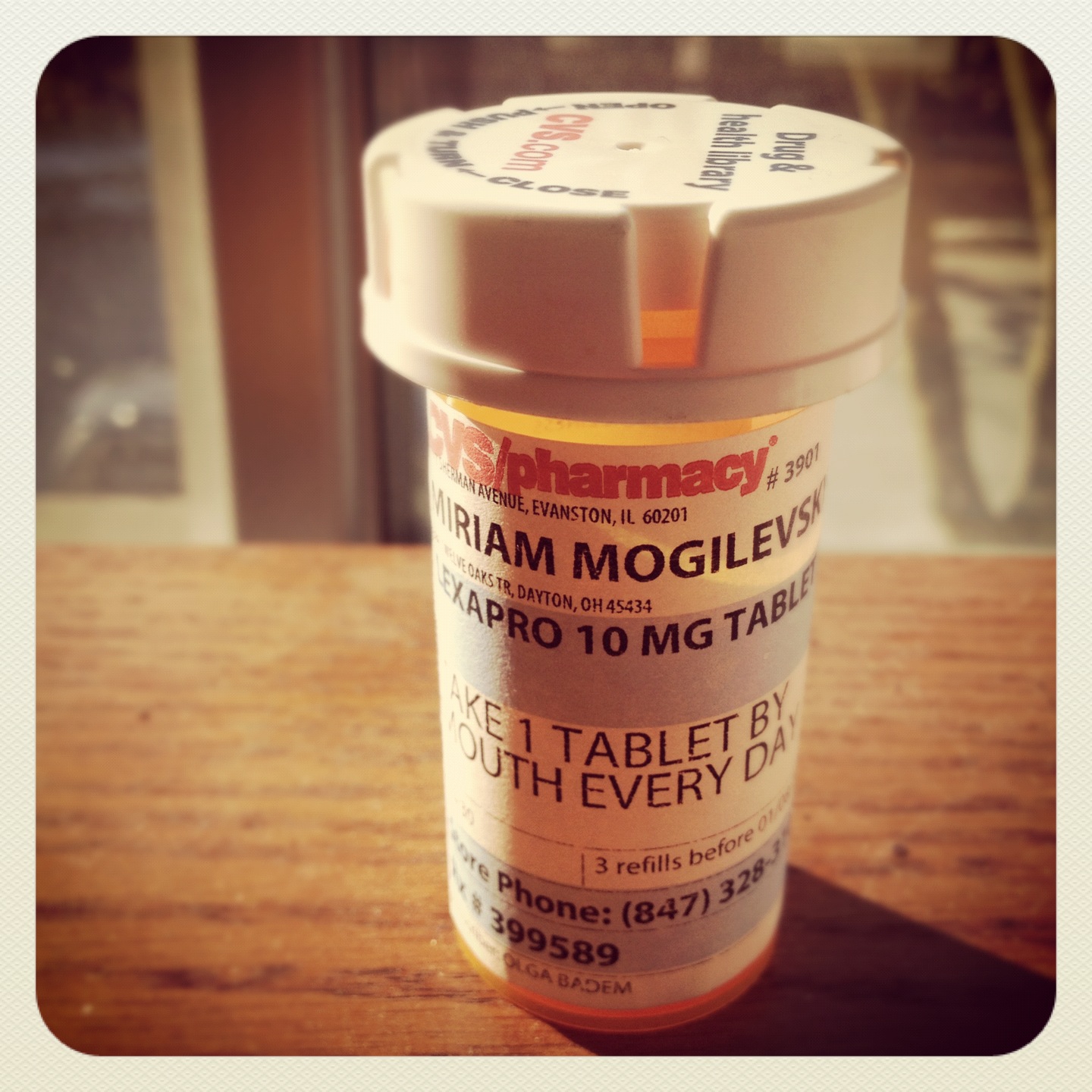
Today I took my last dose of antidepressants, and tomorrow, for the first time in a year and a half, I will get up in the morning and (purposefully) not take that pill again.

I went on Lexapro as a last resort in July 2010. I won’t go into all those details here since I’ve written about it before, but I’ll say that, at the time, I had no other choice. When a body has been critically injured, it enters a coma. I was in the mental version of that.

Lexapro did a lot of things to me, some expected, some not so much. I stopped crying every day and wanting to kill myself, at least for a while. I also became, according to my friends, more lively, more social, and visibly happier.

But then, there was the other stuff. Lexapro broke up the one meaningful romantic relationship I’ve had in my life. (Was it destined to break up anyway? Now I’ll never know.) It altered my values and beliefs for some time and turned me into the sort of person I would’ve hated a few months before. Now I’m back to my normal self, thankfully.

It was also a cruel helper at times. If I missed just a day of it, I’d be a wreck by nightfall. If I missed two days, the withdrawal symptoms kicked in, and they were horrible. I’d be dizzy, nauseous, barely able to walk, completely unable to explain to people why I was suddenly sick when I’d been fine just that morning. (“Sorry, I’m going through drug withdrawal” isn’t really an effective explanation for most people.) The worst symptom of antidepressant withdrawal has no official name, but depressives refer to it as “brain zaps.” They’re momentary sensations of being shocked or stunned in the head and they happen every few minutes or so, or even more often.

Theoretically, of course, there’s no need to ever miss a day of a prescribed medication, but when you factor in insurance issues, CVS’s constant fuckups, weird sleeping schedules, and other crap, it happens pretty often. I remember one awful time when I forgot to bring my medication back to school from break with me and I had to get my parents to ship it. Those were an unpleasant few days. Another time, my psychiatrist refused to renew my prescription unless I came in to see her, but I’d already be back at school by the time she had her first available appointment slot, and there was no way I could skip classes to drive six hours home to Ohio. She wouldn’t budge.

I’m not going to go into a whole condemnation of psychiatry or the pharmaceutical industry because they gave me back my life. However, I will say this: there is so, so much work to be done.

My psychiatrist prescribed me Lexapro after a nurse practitioner talked to me for ten minutes, and she for about five. She said that “academic stress” was causing my depression and that antidepressants would help me deal with it. She must’ve missed the part where I said that my depression started when I was 12 years old. She also apparently missed the glaring cognitive distortions and emotional issues I was having, and had been having for years and years. She oversimplified my problems and thus prescribed a simple remedy.

It took a while to even begin to sort out what the problem really was, and I’m still not there yet.

Some other things my psychiatrist didn’t tell me: the personality changes. The withdrawal symptoms. The fact that I was more likely than not to have a relapse (which I did). And, of course, the fact that you don’t really recover from depression. You only learn how to avoid it for bursts of time.

That was stuff I shouldn’t have had to learn through experience.

Now I look at that almost-empty bottle and I just can’t look at it with a sense of gratitude. I will never be an enthusiastic advocate of psychiatry, though I will continue fighting for the rights of patients to obtain complete information about medication and to make their own decisions.

I look forward to the end of that daily reminder of what I’ve lost. For the past year and a half, I have started every day by taking Lexapro and remembering that I’m not okay. Now I won’t have that anymore. Now I’ll be able to go half the day, maybe even an entire day, without thinking about that part of myself.

I’m not nearly naive enough to think that this is the end. For all I know, I’ll be back on the medication in a month. I’m almost certain that I’ll be back on it within the next few years.

But for now, at least, I’m done with it.

For now, the only things I’ll be taking in the morning are a multivitamin and a shower.

Normal, just like everybody else.