
The Friend Zone is a Myth

This week’s Daily Northwestern column.

As Valentine’s Day approaches, many of us are probably thinking the same thing : Dating is hard.

And it is, especially in college. People who look for serious relationships (as opposed to casual dating or hookups) face plenty of challenges, such as jam-packed schedules, breaks away from campus, study abroad semesters, plenty of temptation, and, of course, the constant specter of graduation.

Some might say that friendship is another one of those challenges. The concept of the “friend zone” isn’t a new one. On UrbanDictionary.com, where it was the “Word of the Day” back in October 2011, “friend zone” is defined as “What you attain after you fail to impress a woman you’re attracted to. Usually initiated by the woman saying, ‘You’re such a good friend.'”

Despite the gendered definition that UD provides, I’ve heard both girls and guys claim that their crush rejected their advances because they were “just such a good friend” or because they “didn’t want to ruin the friendship.”

I think the friend zone concept is mostly bunk. First of all, the fact that many relationships do start off with the couple being good friends shows that friendship itself isn’t exactly a cold shower.

Second, the friend zone seems like a convenient (if well-intended) excuse that people use when a friend whom they see as nothing more expresses romantic interest. After all, it’s never pleasant to have to tell a good friend that, for whatever reason, you just don’t see them as boyfriend/girlfriend material. And often people might not know the reason for that lack of connection: Maybe they just didn’t click with the person, or there wasn’t chemistry, or whatever you want to call it.

In such a situation, it makes sense that someone would say something like, “I just don’t see you as more than a friend.” And it makes sense that the person they’re rejecting would conclude that the friendship is the problem.

But it’s not. The problem is the person just doesn’t like them that way.

Of course, some people do choose not to date a friend they have feelings for because they don’t want to jeopardize the friendship. However, such people are probably simply valuing friendship over romance for the moment, and that’s their choice — it doesn’t mean becoming their friend was a bad idea.

Sometimes the friend zone explanation arises when a person puts a lot of energy into being a good friend to someone they’re interested in and gets frustrated when their emotions aren’t reciprocated. Since humans are wired to find patterns, the natural assumption is that the friendship caused their crush not to like them back.

However, as important as it is, being a good friend doesn’t entitle you to someone’s romantic attention. In fact, nothing entitles you to that.

It makes me sad when I see advice columns in women’s magazines exhorting them not to act like good friends to the men they like for fear of getting “friend zoned.” These columns generally advise women not to do anything overly friendly, such as worrying about a guy’s health or listening to him talk about his problems. Caring actions like these might prompt the dreaded “You’re such a good friend” comment.

However, unless you’re looking for the most casual of flings, friendship first makes a lot of sense — it allows you to get to know the person well before getting too invested, it helps them understand your boundaries, and it allows you to make sure that both of you are looking for the same thing from each other.

Especially at our age, people vary a lot in terms of the sorts of sexual and/or romantic relationships they’re looking for. Some just want to hook up, some want to date several people, some want an exclusive partner until distance forces them to separate, and others are looking for something serious and long-term. Getting to know a potential partner as a friend first is a great way to prevent hurting each other when you discover that your goals diverge.

Besides, if it never develops into anything more, having a new friend never hurts anyone.

This Valentine’s Day, ignore the cliched advice and go with your gut. People are either going to like you, or they’re not. But they’re more likely to like you if you treat them well.
Northwestern Will Survive Without the Keg (Or: Actions Have Consequences)

[Snark Warning]

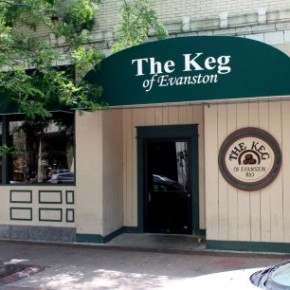
The Northwestern community is abuzz this week with the news that the Keg, Evanston’s trashiest, craziest, collegiest bar, has had its liquor license revoked for continually allowing underage drinking. The loss of the license means that the Keg can no longer sell alcohol, meaning that its demise is probably imminent.

Naturally, Northwestern students (many of whom admit to never even having visited the Keg) are enraged. They see the license revocation not only as the end of a place they like to frequent (“like” being used only in the vaguest sense here), but as yet another tyrannical attempt by the city government to disrupt the Northwestern way of life.

I must admit that if my life revolved around drinking, I might see some sense in that view. But then again, I might not, given how many bars, frats, and off-campus apartments there are around me–and the latter two usually don’t even charge, let alone card.

In a perfect world, the Keg wouldn’t be closing. Why? Because the legal drinking age would be 18, just like the age of consent, enfranchisement, and conscription. In that perfect world, our culture would pay enough attention to mental health that people wouldn’t need alcohol to relax or socialize, meaning that binge drinking would be much less common.

But, clearly, we don’t live in that world yet, and for now, as in the future, we are obligated to follow the laws created by our elected government. The Keg’s ownership has proven over and over that it does not take the issue of underage drinking seriously, and it should not be permitted to flagrantly violate the law as it currently stands.

In one of the very few intelligent responses to this news that I have seen from NU students, my fellow columnist at the Daily Northwestern points out that closing the Keg will not stop underage drinking. That is correct. Nothing can stop underage drinking among college students aside from lowering the drinking age.

However, not revoking the Keg’s liquor license despite its violations of federal law send the message that we value profit and fun over law enforcement. Nowhere in the Constitution are we guaranteed the right to drink alcohol without any reasonable limits. What we are guaranteed, however, is a government with the power to make and enforce laws.

(My friend and fellow blogger Michael also writes about why revoking the Keg’s liquor license is not the evil tyrannical anti-capitalist move that some students seem to think it is.)

Furthermore, while closing the Keg will not prevent underage drinking, neither will ticketing speeders prevent speeding, or cleaning up litter prevent littering. yet both must be done for the sake of a fair and orderly society.

Many NU students, of course, don’t look at it this way and have no desire to. They react like a toddler reaching for her fifth piece of candy and having it taken away. In fact, they reacted by creating a fake Twitter account for Evanston mayor Elizabeth Tisdahl. Read it and weep.

(The fake Twitter account is partially a nod to the fact that the Keg’s “unofficial” Twitter was, according to students, the reason for its untimely demise, as Tisdahl pointed out the references to underage drinking in the satirical tweets. However, students who pretend that the Keg is closing due to a fake Twitter account are creating a straw man. It’s closing because of constant, documented violations of the law.)

Anyway, one of the writers over at the blog Sherman Ave responds to the attacks on Tisdahl with much more punch than I could ever muster:

Also, if you are attacking Mayor Tisdahl you are an idiot. You may not think you are an idiot, but you are. I’m sorry, but anyone who scapegoats an elected official for enforcing the law deserves the title of idiot. And that’s that.

For what it’s worth, I applaud Tisdahl for doing something “uncool,” since that’s something that many Northwestern students are apparently incapable of.

I’ve also seen a lot of comments from other students bemoaning the fact that the Keg’s closing means that their social lives are, for all intents and purposes, dead. I don’t know how many of these are “ironic” as opposed to genuine, but I do know that “irony” is a defense frequently trotted out by people who have been caught saying something idiotic.

If any of those comments do have any truth to them, I have only this to say–if your entire social life consists of getting wasted in a grimy bar, that is really sad.

Finally, and perhaps most irritatingly, many students are reacting to the closure of the Keg as though some irrevocable, unique part of Northwestern culture is gone. An article to this effect was even published at North by Northwestern.

People. Seriously. Seedy bars where you can get piss-drunk are a dime a dozen. Go to any college town in the country and you’ll see that.

For people like me, who observe what most call “college life” only from the sidelines, the Keg’s imminent closure is both a cause of celebration and, well, of consternation. The former for obvious reasons, and the latter because it’s quite disappointing to see one’s fellow students ranting and raving over the closing of some dumb bar as though they’ve just gotten rejected from their favorite country club or something.

For now, though, I’ll leave you with this hilarious take on the Keg’s closure from Sherman Ave. Don’t watch if you’re easily offended.

Alternative Student Break: Helping Rich Kids Feel Good About Themselves Since 2007

This is my column for the Daily Northwestern this week.

This week, students from all over Northwestern will be applying for Alternative Student Break, a program that sends students to other parts of the country or the world to do volunteer work for a week. ASB is popular because it’s so hard to find anything negative about it. Traveling! Helping poor people! Making friends! What’s not to like?

I’ll concede that ASB is a great learning experience and a good way to bond with other NU students. It’s important to make yourself aware of the difficulties people and communities face elsewhere in the United States and in the world. However, I’d stop short of viewing ASB as some grand act of charity, which is the way that many students seem to view it.

First of all, as volunteer work goes, it’s not cheap. Domestic ASB trips usually cost at least several hundred dollars while Hillel’s trip to Cuba this spring costs a whopping $2,900. That’s probably twice as much as I’ve ever had in my bank account, and I’m comfortably middle-class.

It seems that many NU students assume that several hundred bucks for a spring break trip is small change. After all, chances are that many of the students who will spend their spring break on ASB in Kansas City or Pittsburgh will have friends vacationing in Paris, Madrid or the Caribbean. But given that you could just as easily volunteer at no cost right here in Chicago (not exactly free of its own problems) or in your hometown, one really has to wonder about the sense of paying to volunteer elsewhere.

More troubling than ASB’s price tag is the implicit assumption it makes about service work: that it’s something wealthy people do for poor people. This assumption may seem like common sense at first; after all, what are poor people supposed to do? Help themselves?

Yes and no. I do believe that those with the resources to help improve their society should do so. Sometimes it’s the richer people who have the time and money to do things like march in protests, call their representatives in Congress, donate to charity and go on ASB trips. But I think that the highest level of helping is to help others help themselves, and sometimes that means making a commitment that lasts much longer than a week. It means becoming a mentor to a child at risk of dropping out of school or volunteering at a job skills training center for unemployed people. It means starting a ripple effect by helping people raise themselves up, so that they will keep rising long after you’re gone.

Although throwing money at problems rarely helps, there are still ways to use money to help people improve their own lives. Microlending, which has really taken off in recent years, involves giving small loans to people in developing countries who want to start their own business and make it out of poverty. Loans can be as small as $25 and Kiva.org, one of the most well-known microlending websites, boasts of about a 99 percent loan repayment rate. It’s like giving to charity, except you get your money back.

But I get it. Giving some money to a stranger across the world doesn’t make nearly as cool of a story as spending a week rehabilitating abused animals. Nobody’s going to gaze at you in adoration because you gave $100 to a man in Tajikistan so he can buy seed and fertilizer for his farm. But that doesn’t mean you won’t have done a really important thing.

If you’re interested, NU even has its own microlending organization. It’s called LEND and it supports Evanston businesses. If I had several extra hundred dollars lying around, I’d invest it in this organization or in a Kiva loan. After all, when you take an ASB trip, a substantial amount of the fee you pay goes towards things like travel, lodging and food. What if you took all that money and invested it directly? Such an investment means that all the money you have to spend goes right to the people who need it most.

Just as ASB neglects the long-term view, it neglects the roots of societal problems, such as discrimination, ignorance and bad government policies. Are ASB programs helpful? Sure, to a certain extent, they are. But they treat the symptoms rather than the disease. The houses you build during your week on ASB may help people, but they do nothing to solve the problems that made those people homeless.

NU is quite an apolitical campus, but it still boggles my mind that many NU students love helping poor people so much but take so little interest in the government policies that keep those people poor. The sorts of changes our society would need to make to end poverty and make ASB trips unnecessary are much more far-reaching — and perhaps less compelling. These changes take years, and they include things like educating yourself and others, talking to members of Congress, starting campaigns and teaching your own children to vote intelligently and with empathy.

This is why I feel that ASB is really more about the students than about the people and communities they’re helping. It’s more about the students’ experience, their desire to learn about others, their need to feel helpful. To put it less charitably, it’s a way for rich kids to feel good about themselves.

I’m not saying people shouldn’t go on ASB trips. Go ahead and go. Have a great time. But always remember that your responsibility to the world doesn’t end after a week of building houses or tutoring kids.

Memo to Northwestern Students: You’re Not Cool

This is the guide we wish we had before we came to our schools. It will tell you everything you need to know about social life, party scene, and even some academics (those of us who get in to these schools need to stay at them) if you are a normal girl that happens to be smart enough to get into a top university. It’s biased, it’s blunt, and many people will be offended…but those people shouldn’t be reading this in the first place.

This, ladies and gentlemen, is when you know beyond a doubt that whatever follows is going to be absolute drivel.

The preceding quote is from a new anonymous blog called “We are the We.” Like College ACB but without the community, “We” prides itself on being the one and only voice of campus social life. Tellingly, the blog only covers a few campuses for now, and mine is one of them. The tagline? “Top schools, normal girls.”

Let’s take a look at what We has to say about life at Northwestern:

Typically fluctuating between SigEp, Lodge, Pike and SAE, every freshman girl learns within the first couple days that your chances of joining a Top Tier sorority in the winter instantly increase by being seen and associated with by Top Tier boys, and are fucked if you mess around with some girl from a Top Tier’s ex.

~~~

The amount of hook up overlaps solely from freshman year could put state schools to shame, and by sophomore year most best friends have hooked up with generally the same exact people. Though girls complain about the lack of options, they have no problem picking the guy their roommate hooked up with the night before as their prey.

~~~

The longer you’re at Northwestern, the more you realize there are some students who truly don’t deserve to be walking within a 15 mile radius of the campus you worked your ass off the first 18 years of your life to attend. It’s no surprise that like most elite schools, it’s possible for some dumbasses to slip through the cracks, but now we actually have to, like, deal with them.

~~~

Shocking new revelation just in: girls in college love to drink. Though there are still a few high-and-mighty girls unwilling to get shitfaced with everyone else, the majority of females find a few nights a weeks to make an appearance at a frat, bar, or Greek event. You’ll learn in the first few days on campus that NU students have a relatively set schedule for going out, and you’re bound to get a “Keg tonight?” text on Mondays and Saturdays or a “Deucin’?” one on Thursdays from guys or friends.

Had enough? I sure have.

The Northwestern depicted in this blog is catty, superficial, judgmental, uninterested in any sort of learning, and, I’m proud to say, has nothing to do with the lives we actually live at this school. I’m sure there are people here that this describes to a T, but despite claiming to be “everything you need to know” about campus life, the blog falls hilariously short of describing us.

The assumptions and prejudices catalogued here are too many to list. First, the idea that people who are “unwilling to get shitfaced” are just too “high-and-mighty.” False. It might surprise some people to know that non-drinkers (or moderate drinkers, really) might actually have other things to do with their lives besides drink–imagine that! Maybe that’s beyond the scope of We writers’ collective imaginations, but I assure you that it is true.

Beyond that, one has to pick through a cesspool of “men are x, women are y” tropes in order to understand what We is trying to say about Northwestern social life. Men are douchey players. Women are nasty sluts. Etc., etc.

I’ll give the writers props for recognizing, as they do in the quote with which I opened this post, that they’re going to offend people. But then they refuse to take responsibility for being so abhorrent by claiming that people who get offended “shouldn’t be reading this in the first place.” Why the hell not? Is it the secret diary of Northwestern’s “elite?” If so, they might want to make it a bit more private.

In a section titled “Who are ‘the we’?”, the writers say, “We know what we are talking about. Trust us. We are anonymous for a reason, but this reason is not because we are not legit.”

Don’t worry everyone, they’re legit! I shouldn’t have worried. Of course, they don’t elaborate on this mysterious reason for which they’re choosing to stay anonymous, but my guess is that it has something to do with the fact that nobody likes nasty, shallow people who post hateful bullshit on the internet. Were these writers to use their real names, their precious social lives would probably suffer.

I also took issue with the blog’s tagline: “Top schools, normal girls.” First of all, define “normal,” and explain why “normal” is preferable to whatever its antonym is. If by “normal” they mean “statistically mainstream,” they’re simply wrong. The majority of NU students do not belong to a Greek organization, for instance, and most of those who do, belong to what stuck-up cretins like We refer to as “lower-tier” houses. Meaning, as I understand from my friends in the Greek system, houses that are more concerned with having fun and making friends than with high school-esque notions of “popularity.”

Similarly, most Northwestern students drink in moderation or not at all, and relatively few have lots of casual sex. Those who do tend to hook up with friends or acquaintances rather than strangers at bars or frat parties. Does this make them less “cool?” Apparently. But nobody who lives the life they want is going to care.

And if by “normal” We means “desirable,” well, all I can say is that they need a serious attitude adjustment.

The last thing that pisses me off about this blog is the name. “The We.” This conjures up an image of a ruling class of socially skilled and designer jeans-clad heiresses who preside over the campus like royalty. “We” implies that these writers speak for all of us. Well, they don’t. Count me the fuck out of this “we,” because it has nothing to do with me or anybody I know at Northwestern.

It never fails to amuse me that some Northwestern students are so desperate to project their Mean Girls-ish vision of social life onto our school. People. You’re not cool. Stop trying to be cool. The harder you try, the more idiotic you look, and the more you forget what you actually came here for.

Nobody at this school is “normal” in any sense of the word. We are abnormal by definition. We’re some of the brightest students in the nation. Letting loose and forgetting that every once in a while is great, but creating a whole blog to showcase your superficiality to the entire world is just not.

College Freshmen Need a Class on Mental Health

This is the second installment of my weekly column for the Daily Northwestern. Check it out in its original here.

As college students, we’re intimately acquainted with stress. Everyone feels it, often on a daily basis. We juggle classes, jobs, extracurriculars and social lives, and the stress we feel means we’re pushing ourselves to succeed. However, for increasing numbers of students, the stress has become unbearable.

Here are some statistics for you.

According to a study of 200,000 students, only about half of college students say they have “above average” mental health, which is unusual since people tend to overestimate how above average they are. (Google “Lake Wobegon Effect” or “illusory superiority” if you’re curious.) In 1985, it was 64 percent.

According to an Associated Press and mtvU survey, one-third of college students say they use drugs or alcohol to relax. One-fifth say they feel stress all or most of the time.

Feelings of stress only increase as we progress through college. According to the mtvU survey, almost 30 percent of freshmen say they’ve felt so stressed that they didn’t know how to pull out of it. By sophomore year, almost 60 percent of students say so.

Ten percent of college students say they’ve considered suicide just in the past year. For Northwestern, that means 900 undergraduates.

What are we supposed to do with this information? Making college easier obviously isn’t an option. But I don’t think it’s okay for things to be the way they are.

I propose that freshmen be required to take a class about mental health and stress management. Perhaps it could count as a distribution credit for ethics and values or social and behavioral sciences. This class should cover the basics of dealing with stress, sleeping well and knowing when to get help. It should be taught by personable faculty members or by Searle or CAPS staff. It should provide time for discussing students’ difficulties as they experience them, sharing each other’s coping strategies and perhaps some meditation lessons. It could be — dare I say it? — fun.

Why should this class be required? Well, for starters, because most students can’t predict whether or not they’re going to experience debilitating levels of stress someday. And because, when given the choice, people like to pretend they’re perfect and don’t need any help with personal problems like stress management. And because Northwestern requires students to learn about math, art and writing, but not about something that could one day save their lives.

A class like this could have benefits that reach far beyond its syllabus. Since class sections would have to be small to facilitate the right environment, students would make friends and get to know a faculty member. Unlike most academic courses, a class like this would jumpstart discussions about deep, personal topics and forge closer friendships than any other class could. Forming connections with professors is one of the best ways to ensure a good college experience, and it’s often hard for freshmen since they have to take large classes. Sharing rather personal things with each other brings people together, and students would come to realize that, despite what it may look like, they’re not the only ones who feel overwhelmed sometimes.

As we love to remind each other and ourselves, we’re all adults here. Our culture doesn’t emphasize mental health; it emphasizes productivity and perfection, so stress management isn’t something we learn unless we make the effort. As we start college, we’re at one of the most vulnerable points of our lives — freshmen have to adjust to an increased workload, a new physical environment, different social norms, greater financial stress and homesickness. We’re used to thinking of stress as something unavoidable, a necessary evil that we have to live with to do well in college. A class like this may not cure us of stress entirely, but it could make our years at NU happier, healthier and more productive.