[Guest Post] Rebuild America! Become a Narc!

Sometimes it’s very helpful to have friends who know things you don’t. That’s why I gladly accepted my friend Brian’s offer to write a rant about drug policy–namely, about no knock raids.

Just over a year ago was the 40 year anniversary of America’s great unsung job program. Like that great majestic albatross known as Medicare, it has led to the provision of medical care to tens of thousands that might not have otherwise bought, or even afforded health insurance. And well before any 90’s Heritage Foundation wonks even mouthed the words “individual mandate.”

It’s produced new jobs both in the private sector through privatized prisons and drug screening; it’s strengthened government employee unions in ways that it would take 20 Scott Walkers to undo, and it has spurred huge innovations that econometricians have trouble measuring even today, in the era of Big Data.

But you don’t realize it, because you don’t give Richard Nixon enough credit. It’s okay though. I’m here to show you the enduring impact of that oft pilloried Chief Executive. After all, it was Tricky Dick himself who uttered that famous phrase, “We’re all Keynesians now.” The relevant concept here is the multiplier effect, which you could probably read all about from Paul Krugman or some other reasonable economist. (Feel free to open up some tabs of his NYT columns now).

I can almost hear some of you out in the intarweb groaning, “But Brian, what about the broken window fallacy?!” To which I say, can it really still be a fallacy if it’s way, way more complex than broken windows?

So, what’s this wondrous dynamo of employment, healthcare, and innovation?

THE WAR ON DRUGS!

Let us look at an everyday occurrence in this venerable effort to a Drug Free World: the no knock raid.

So what did you see there? If all you saw was dead dogs, traumatized families, and perforated persons, you really to think about it in a wider context. First, there were all those tough, dutiful SWAT teams. All that elite training cost money. And have you ever seen a team tumble out of an ordinary police cruiser? Nope. Special trucks for them too. Are they hydrids? Probably not, yet. And don’t forget about all that distinctive armor. Have you seen the prices for that gear? Now do you see the job creation? Maybe not, as we haven’t even seen all this hardware in action yet!

As much as some of you dear readers on this blog may be skeptical of gun rights, you cannot deny that gun manufacturing is a proud (and exporting) American industry when it is working towards arming the folks in blue. And if that video was any indicator, no raid would be complete without discharging those guns a few times in the quest to wipe heroin, methamphetamine, cocaine, marijuana, ecstasy, LSD, and sundry other illicit substances from the nose, eyes, mouth, and elbows and other administrable points of our great nation.

But to the real action: those tense seconds and minutes that make for gripping COPS footage. First there’s the entry. Damaging those doors and locks in the course of making a dramatic appearance means more money to hardware stores to furnish repairs.

And who comes running to the door? If the Humane Society of the United States is to be believed, 39% of American households have a dog. And if we presume that “raided by SWAT teams” and “owns a dog” are independent events, then up to about 2 in 5 raids could involve a dog reaching the police first. So there’s cremation and doggy life insurance in play.

Since there’s always the possibility of someone transitioning from living to deceased in the course of the SWAT team’s kinetic action, human life insurance and final medical expenses also crop up, as well as funeral services. And what goes on at a funeral? Somber dress clothes, so dry cleaning. Bouquets to be laid on casks and gravestones, thus payments to florists are rendered. The family and friends of the deceased would also have to pay for the burial. And what goes on at funerals? Crying. Which means lots of tissues. And how does one get to a funeral? If going to a college across the street from a Catholic cemetery has taught me anything, you get to a funeral in a procession. So there’s more gasoline purchased right there.

But what if the family and friends of the recently living, partial witness of the raid are upset about what transpired in the servicing of a drug warrant? They might file a lawsuit against the police, which means more money to America’s legion law firms, stimulating the economy one 6 minute interval at a time.

Now I’m sure some of you are saying “What if I don’t have a dog?” “What if the police don’t discharge their firearms in the direction of me or my family?” “What if it all goes peaceably and according to the plans of those Top. Men. and Women?” “What if no arrests are even made?”

Stay tuned, for next week is part 2, when we’ll stretch our scope both before and long after the raid is completed.

Brian Kuczynski is a developing economics junkie who tries to teach too much through the medium of chess. When he isn’t devouring comics and Stephenson, he’s intravenously dependent on Reason.com.

Yahoo’s New Female CEO Isn’t a Feminist: Does it Matter?

Marissa Mayer is unquestionably a badass. But she’s wrong about feminism. (Photo credit: Giorgio Montersino)

This piece was also published on In Our Words.

Yahoo! has a new CEO. Her name is Marissa Mayer and she is 37 years old, making her the youngest CEO of a Fortune 500 company.

Mayer’s accomplishments in her career are incredible and she deserves credit for them. However, to some extent, so does feminism.

Mayer was born in 1975, as the women’s movement was really starting to take off. But at the time, it was still controversial for a woman to wear pants rather than a skirt, let alone to cohabit with a boyfriend, work outside the home after marriage, and so on. However, Mayer was able to benefit from the gains of feminism: she attended college (and not just any college, but Stanford University) and became Google’s first female engineer.

On the same day that Yahoo! announced Mayer as its new CEO, Mayer and her husband announced that they are expecting a baby. In a time when pregnancy-related workplace discrimination is still very real, this is momentous. And don’t think for a moment that this happened in a vacuum.

So, does Mayer identify with feminism, given all of her achievements? Nope:

I don’t think that I would consider myself a feminist. I think that I certainly believe in equal rights, I believe that women are just as capable, if not more so in a lot of different dimensions, but I don’t, I think have, sort of, the militant drive and the sort of, the chip on the shoulder that sometimes comes with that. And I think it’s too bad, but I do think that feminism has become in many ways a more negative word. You know, there are amazing opportunities all over the world for women, and I think that there is more good that comes out of positive energy around that than comes out of negative energy.

This viewpoint seems to be very common among successful women in the U.S. these days; I’ve heard it from many of my female peers at Northwestern. Yes, women can do anything men can do; yes, women should have equal rights, but do we really need to be all, like, negative about it?

First of all, there’s a certain amount of irony here. Feministing‘s Chloe writes, “Marissa, it is too bad that feminism has become a negative word. You know what’s also too bad? Your failure to acknowledge that without feminism, you could never have become the CEO of Yahoo.”

Second, what Mayer said that she believes is exactly what feminism is. Feminism is the idea that women and men should have equal rights, and that women and men are essentially capable of the same things, despite the physical differences that may exist between them.

Beyond that, everything’s up for debate. Different feminists believe entirely different things. Some very radical, separatist feminists believe that women should choose to be lesbians and to associate only with other women. Most don’t believe that. Many feminists see feminism as a place to address related issues, like racism, homophobia, and class issues. Others don’t. Some feminists supported the Equal Rights Amendment. Others didn’t. Some feminists are angry and bitter (and, often, rightfully so). Others are cheerful and friendly. Some feminists hate men. Others love them, and still others could take ’em or leave ’em. Some feminists are lesbians. Others are straight, bisexual, or something else. Many feminists are women. Some are men. Others don’t identify as either men or women.

Despite this incredible diversity of opinions, lifestyles, and identities, many people, including those who support equal rights for women, insist on distilling feminism only into its most unpleasant stereotype. This is a classic strawman fallacy, and, the way I see it, it’s an attempt (if an unconscious one) to avoid discussing the real issues. It’s unfortunate that Mayer has chosen this path.

However, as Amanda Marcotte points out in her post at Slate, Mayer’s refusal to identify as a feminist might be the only option for a woman who wants to get ahead in the corporate world:

Women are correct to believe that direct confrontations with sexism result in people turning on the “complainer” instead of blaming the person who acted sexist in the first place….Taking that on just isn’t for everyone, even for a powerful woman who is unquestionably willing to suffer for the ultimate success of her corporation. Someone who would rather do what’s right than what’s profitable simply isn’t going to climb very high on that corporate ladder.

I would agree. Not everybody has to be Super Social Justice Warrior (although I’d like to see more people at least not hold the movement back). Given Mayer’s career goals, it makes sense that she chooses not to align herself with feminism, and I can’t blame her as an individual.

That said, I do wish she wouldn’t promote the same tired stereotypes about feminists having “a chip on the shoulder” and “negative energy.” Are there feminists like that? Yes. Is feminism itself like that? Depends on who you’d ask. I would say no, because I’m involved in countless feminist circles online and in real life, and our discussions there are fun, productive, and extremely connecting experiences. It’s certainly more “positive” than sitting around and pretending everything’s fine with the world when you don’t really feel like it is.

Of course, there’s a good chance that Mayer already knows all of this. It’s quite possible that her statement about feminism was entirely a political one, something she said to make sure that the men she’ll be leading don’t feel too threatened.

I can’t blame her for making that choice, but she shouldn’t have had to make it–because our culture should not be so militantly averse to serious (and, sometimes, uncomfortable) discussions.

[Guest Post] Runway Rising: Perks and Challenges of a Socially Conscious Fashion Company

Hey everyone! In this guest post, my friend Danielle writes about fashion, mental health, and running a socially conscious business.

To all fans and readers of Brute Reason,

I am Danielle Kerani, CEO/Founder of the knit fashion company AK Kerani and a fellow student at Northwestern with Miriam.

When Miriam first asked me to write a guest blog for Brute Reason, I was both flattered and excited. I have become a huge fan of this blog, mainly because of the bravery it takes to so openly confront anxiety and depression. Having struggled myself with these issues, I know how much of an internal battle it can be. For many months you can be stuck in a cycle of believing you are better only to let yourself down. And this cycle continues until you grow strong enough to realize that your depression is not only a pest that sticks to you. It is your twisted lover that you hate but from which you cannot part. And when you realize that you, not your depression, are the one keeping yourself from a healthy life, only then can you cast the ring into the fire.

Miriam requested that I talk about the seeming paradox of running a socially conscious fashion business. I created AK Kerani last summer in honor of my uncle, Atindra Kumar, who had passed away in June. Since then it has grown from a simple online platform to a vibrant small business selling high quality handmade products to promote knitting as a therapeutic activity for those struggling with anxiety and depression.

At this time, I knew just as well as I do now that the media, fashion-related media being one of the worst, is very conducive to anxiety. Fashion ads don’t merely attempt to persuade us into buying pretty and trendy clothes and accessories. They often seem to be rooted in a deeper manipulation, telling us that our worth lies not in our inherent value as people, but in our ability to represent society’s standard of sexuality. Seeing the adulation that models in ads appear to receive, we get thrown into loops of self-centered anxiety. If adopting the identities of these figureheads is the key to our happiness, why not starve our bodies and souls to be like them? Having partaken in all of these mindsets, I was able to see how all encompassing the media has become, such that nobody in the world, no matter what career path or lifestyle they choose to pursue, is completely immune to its influence.

I hope that AK Kerani can represent a different kind of world – one in which fashion is a means of individual expression and inspires us to love the world and its gifts. We don’t need to hate the world like helpless martyrs when we have a large part to play in whether this cycle stops or continues. I believe that one day, fashion can represent many pathways of real diversity, beauty and sexuality as opposed to one pathway of twisted, photo-shopped lust.

The main challenge of running AK Kerani is to figure out what place our company holds in the entertainment industry, the fashion industry and in society. Are we mainly in business to sell high quality fashion products? Or is our main goal to promote our socially conscious mission? Is there a way that these two elements of our business can intertwine perfectly? Or will one always come out on top? Ultimately, I often find myself struggling with one complex issue: How does AK Kerani battle the trends of the current fashion media without somewhat playing into the current industry enough to gain influence? If we don’t create traditionally appealing visuals to interest potential consumers, how will we ever be able to shout out our mission to a large crowd of ears?

We want to believe that the fashion industry can be a tool for social change. We want those who hear our mission to understand that hurting, starving and demeaning ourselves are not the only ways with which we can fight our anxieties. In hopes of counteracting these common reactions, AK Kerani will set up programs in hospitals and mental health institutions to give those struggling with anxiety not only an employment opportunity through knitting for us, but also a refreshing outlet for feelings they thought they could never control.

There is nothing wrong with looking appealing and celebrating the gifts that we all have been given. Pretty eyes, luscious hair and sculpted legs were never the problem. The problem is the significance that we ascribe to them. The problem is that we have been conditioned to believe that these attributes mean happiness, success and even love. And often, we force ourselves to relinquish all of these things in favor of pursuing the unattainable goal of a skewed perfection.

Though I have become way healthier at handling my own struggles with self image, disordered eating and overall anxiety, I have often wondered if the media’s damage is too pervasive to allow those of us who grew up with it to be completely healed. At times I am tempted to give up. If I am guilty of the same struggles my company condemns, how can I truly lead it to victory? And then I realize that humanity is not about being perfectly healed. It’s about struggling through adversity so that the light shines even brighter than it would have had you never fallen. We will always find ways to struggle, hate and doubt. An improved media, no matter how reformed and supportive, would not change that. But nor do we want it to. Because what we are striving for is reality – for the media to see us truly as we are and proudly represent it. And this can happen at anytime in any place as long as we learn to uphold different values – ones that seek to encourage instead of discourage.

Knitting, writing, and spastically experimenting with social media for AK Kerani have all taught me that success and health lie on an ambiguous continuum. To work out the kinks of a broken society and media, we must rebuild the confidence that we have lost piece by piece under its influence. And though we might think in grandiose terms picturing a new world, this world can only be achieved if we all commit to a slow and repetitive, but rewarding process of healing, row by row–one stitch at a time.

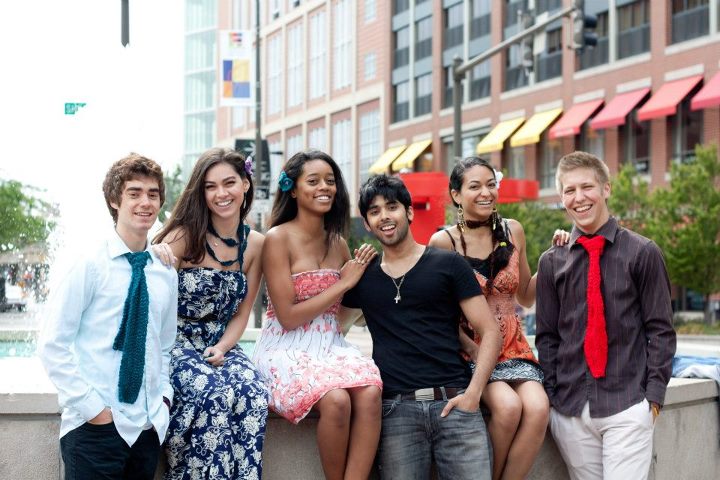
AK Kerani models (photo credit: Priscilla Liu)

Danielle Kerani is a native New Yorker who only just recently started appreciating the all-black stereotype: both in clothing and coffee.  Danielle is a junior journalism major at Northwestern University and is the Founder/CEO of the knit fashion company AK Kerani. In her free time, Danielle is a singer/songwriter, a blogger, a distance runner and a huge fan of exploring cool places with her boyfriend Jang, taking walks with her mom, and having crazy adventures with her super quirky friends. 

Sunday Link Roundup

I haven’t been doing much reading lately because I’ve had no internet in my apartment. But it’s back! And so’s my weekly link roundup.

1. Clarisse Thorn writes about an example of rape in the pickup artist community. Pretty harrowing.

2. Turns out Amelia Earhart had an open marriage! Here’s a letter she wrote to her husband, George Putnam, about it.

3. Of course some idiot has to blame the Aurora shootings on the fact that Americans should “place a higher value on God.”

4. Zinnia Jones, on people who claim to support gay rights but insist on eating at Chick-Fil-A anyway. (I also wrote about this a little while ago.)

5. Natalie Reed wrote this lengthy (but worthwhile) post on trigger warnings. I haven’t used one on this blog until my most recent post, but I may reconsider.

6. On labels. This blog is about demisexuality specifically, but the points this post makes apply to any “nonstandard” label that someone may choose to describe themselves with.

7. How to learn not to be a racist. Required reading, this.

8. You don’t have to understand someone and their experience in order to be respectful. It’s similar to this piece that I wrote a while back, but takes a slightly different angle.

Inside the Mind of a Serial Rapist

In case it’s not obvious, MASSIVE TRIGGER WARNING for this entire post and all outgoing links. Even if you’re not a survivor, you’re going to find a lot of this extremely uncomfortable and upsetting so please take care of yourself.

r/AskReddit, a section of Reddit in which people can ask each other questions, recently had a post with this title: “Reddit’s had a few threads about sexual assault victims, but are there any redditors from the other side of the story? What were your motivations? Do you regret it?

Reddit has what I would call, bluntly, a woman problem. Reddit’s users are 74% male, first of all–the highest percentage of all the well-known social networks. Many of its subreddits, such as r/MensRights, r/Atheism, and, of course, r/AskReddit, are notorious for general misogyny, rape apologism, and, at times, even tacit (or not-so-tacit) approval of violence against women, pedophilia, child pornography.

So, nobody familiar with Reddit will be surprised at the kinds of stories and comments that this AskReddit thread has attracted. However, it’s worth talking about for several reasons, which I’ll explain later.

The thread has nearly 13,000 comments as of this writing, so I couldn’t possibly read them all. (I’m pretty sure I’d lose my mind long before I finished, anyway.) However, there’s one particular comment that I want to examine:

First off, I must say, I was at a dark and horrible place in my life, that I’ve since grown from. I’m ashamed of the person I was, if the people who I’m close to now knew who I was, I would be ruined. I’m known for being a great guy, friendly and easy to get along with, a community/political activist, a fervent volunteer in the community, and a person who rises through the ranks quickly due to successes at work. That was my mask, and I was good at it, so good that maybe I convinced myself along the line that was who I could really be, and that may of helped me change, and stop doing what I did.

I’m somewhat remorseful for what I did to those girls, but I don’t think I could ever face them to apologize. I knew what I was doing was wrong, but I had this certain insatiable thirst that brought me to do what I did. I didn’t know how to stop, and just when I thought maybe I could, I’d find myself back in my pattern, back on the hunt.

Several things immediately jump out at me. First of all–and this will be a common theme throughout the post–this person seems very invested in his positive self-image, despite his supposed remorse. He makes sure that we know that he’s known as a “great guy,” that he’s friendly and easy to get along with, etc. Second, although he says he’s ashamed of who he was back then, the rest of this suggests that that’s mostly because he wouldn’t want to be found out. The creepiest part is definitely this: “I knew what I was doing was wrong, but I had this certain insatiable thirst that bought me to do what I did.”

The post continues:

I’m a good looking guy, and I can get girls pretty easily. I’m currently married to a beautiful woman that I met during this time of my life (not someone I raped, but someone who knew my mask during this time). So, anyways, after a while it became boring to go after the sluts and sorority girls that would easily throw their cunt after you. I wanted the thrill of the chase, and that’s what led me to forcing myself on girls. I would find attractive girls that were self-conscious about their looks….Hopefully a girl who was a bit damaged, had a shitty ex-boyfriend, or family issues, came from a small shut in town, that sort of thing. So, when I showed interest in them they’d be completely enamored, they’d almost be shocked that a popular, good-looking, and well liked guy would be talking to them.

Note that, once again, he mentions his good looks and that it’s easy for him to “get girls” (present tense). His misogyny becomes apparent in his language here (“sluts and sorority girls that would easily throw their cunt after you”).

The man then describes how he would meet these girls and invite them over to watch a movie. His need to have total control over the situation is very apparent: “They would come over, and I’d always make sure it was real cold in the room, cold enough so that when we started watching the movie I’d say something about being chilly, and grab a big fleece blanket for the both of us.”

After kissing and putting his hands under their clothes (without consent, obviously):

It was then that I could turn around and get on top of her. The girls usually didn’t know how to respond. Some of them were into it, and those nights were usually consensual and boring sex, sometimes followed up by a few more nightly visits before getting the boot. However, the great nights were the ones who squirmed, ones who didn’t want to give in. I’d have to shush them down, and try to work on them slowly enough so they didn’t know what was going on until it was pretty much already happening. I’m a muscular guy, over 6′ around 200 lbs. and most of these girls may have been 125-130, really tiny and easy to pin down. To be honest, even remembering it now, the squirming always made it better, they didn’t want it to happen, but they couldn’t do anything about it. Most girls don’t say no either. They think you’re a good guy, and should pick up on the hints, they don’t want to have to say “no” and admit to themselves what’s happening.

[…]Some girls left after about 15 minutes after. Some girls would stay until the morning and then leave. A few tried to call back, maybe blaming themselves for what happened or something. I never worried too much about being caught. Everyone knew me, and I worked with the police a lot, with administrators, and campus officials. I was on first name basis with the Chancellor and the President of Student Affairs, so if anything came down to a he/she-said I figured I’d be in the clear.

Ladies and gentlemen, this is rape culture: the fact that this man knew he was unlikely to be brought to justice because he was so respected and popular at school, the fact that he admits that some of the women probably blamed themselves, the fact that he knows that they don’t say no out of fear and not because they consent.

The man later edited the post to explain that he had answered questions posed by commenters and that he was deleting this account (it had been made only for this purpose, though, anyway). He also added this:

Let me leave you with this message, you never know who someone truly is, so be careful. I’m going back to my main account to do normal reddit looking at cats and posting pictures of bacon, and I think it’s kind of funny that no one will ever know if the person they’re talking to on reddit, or someone who moderates their subreddit, is me on my main account… just food for thought.

Most of the comments to his post were very angry, and many were basically homicidal. One person said, “You are why my daughter will be armed, to deal with filth like you.” The man responded, “Teach your daughter to be a strong willed, independent woman, and hopefully she’ll never attract the type of filth I was at that point in my life.” In other words, even though he claimed to be “remorseful,” he admits that he sought out “weak” women and seems to believe that it’s women’s responsibility to be “strong willed” enough for men like him to leave them alone.

In the midst of the angry comments, though, there were many that seemed steeped in admiration–or, at least, respect. References to the OP’s “bravery” were common. Here’s one: “Thank you for sharing. This is what I came to this thread for. You are brave to talk about it. Here is an actual look into how the predator feels.” Here’s another: “I just wanna say, thank you for posting this. It seems that every other guy in this thread is trying to guilt shame you but I’m pretty sure a total of none of them could possibly empathize with you.” And another: “I admit you are a really smart guy. I bet you know it yourself and probably are ashamed of it since you used it to do this. You are also really brave for sharing this story and being here to take the generic ‘fuck you’ from the mass.”

There seems to be some confusion on the part of these commenters about what “brave” means. What’s brave is getting up the next morning after you’ve been raped, and getting up every day after that. What’s brave is telling people about your sexual assault, knowing full well that they might ask you what you were wearing and if you’d been drinking. What’s brave is trusting another person sexually after an experience like that. Using a temporary, anonymous account to tell some people on the internet about what a Big Manly Man you are is not “brave.”

As a survivor of something much less horrific than what these young women went through, but scarring all the same, I can’t see the telling of this story as “brave.” Perhaps that’s just my bias talking.

Also disturbing is the fact that many of the commenters refuse to believe the story. One even asked the OP if he’s “a female IRL trying to make a point with this.” Others laugh it off. Their disbelief reveals their privilege. Most women will tell you that there is nothing unrealistic about this story, because they have either been victimized by men like this, escaped them narrowly (as I did), or have friends who did.

Finally, and unsurprisingly, several commenters jumped to the man’s defense, explaining how “difficult” it is to be a man and to interpret women’s signals and to get women to sleep with you, period. One comment:

This isn’t rape. This is the story of a guy who studied and played the game well. He went after certain girls and worked those angles to get laid. Some people will feel this is underhanded, sleezy, wrong. Others will praise him.

[…]These girls aren’t victims. OP’s behavior may be considered unethical, immoral, and wrong but that’s only moral constructs perceived by others looking at OP. I’m not a player these days but those of you blasting him for rape need to read some player’s books and websites. He did exactly why most players do.

[…]Overall OP isn’t a rapist, he’s a player who feels bad about how good he was at the game.

Another: “What the hell. You’re NOT A RAPIST! The didn’t say no. They wanted it. You’re a player. Actually, they should thank you because that’s probably the only sex those girls will get. You gave them a life experience and you should be proud about it.” And this: “I’ve been told this by female friends – girls purposely put up a bit of a fight before sex to not seem easy, even if they want sex, and they enjoy the back and forth and having the guy ‘try’.”

And one more:

Not defending his actions, but nearly every 19 year old college kid with a dick and a heartbeat is trying to get laid, and EVERY SINGLE ONE OF THEM has some sort of game plan they employ to coerce women into advantageous situations that their female counterpart might not want to be in, or otherwise find themselves in. Whether its through physical force or mental manipulation, some game plans fail miserably and some work every time. Some guys are obviously better than others at getting what they want, and some of course cross the line.

There’s many, many more where all of these came from. There was also the comments from rape survivors, to one of which the OP responded with some explanation followed by, “Anyways, fuck off you twit.” (How about that remorse?)

I should point out that this particular man’s post, and the responses to it, are unusual for several reasons. Most of the other people who disclosed having committed sexual assault (including some women) were more remorseful and generally did it only once. Some told stories of having nearly done it but stopped themselves. And the comments on those posts are much less condemnatory, and more full of apologism and praises of the rapists’ “bravery.”

Jezebel has a post about the thread and why we should listen to the rapists’ explanations. The article makes a good point in that the thread shows many of the reasons why rape happens and goes unpunished, and the cognitive fallacies that rapists subscribe to.

However, the article fails to note the negative consequences of sharing these stories on a site like Reddit. As I mentioned, Reddit users have a tendency for rape apologism. Many of the people who confessed having committed or attempted sexual assault said that they felt terrible for what they did, but commenters told them not to feel bad. The stories of backing off rather than raping elicited lots of “Congrats, you didn’t rape her!” comments–as if that’s something worthy of a gold star. One comment to such a story reads, “Shitty situation, man. Good on you for realizing what was up and pulling yourself out of that.” Another: “You aren’t a rapist, or close really, don’t beat yourself up about it.”

In other words, men (they were almost all men) who come to this thread with genuine remorse receive dozens of comments patting them on the back for not going ahead and sticking their penis into an unwilling woman–all the other nonconsensual stuff they did leading up to that, apparently, doesn’t really matter. (Although some of these commenters insist that the women couldn’t possibly have been hurt that much by it because they weren’t “actually” raped, I can speak from experience and say that attempted rape (or rape threats, or sexual harassment) can be traumatizing too.)

Furthermore, some of the apologism is directed at men who did actually commit sexual assault, and it really scares me that these men are getting the message that what they did was “not rape.”

It’s taken me a while to write about this because it’s been difficult to come up with any takeaway other than aisfa;ifja;sdfjas;df. However, now that I’ve had a chance to think about it, I think there are a few things to glean from this.

  1. Rapists usually know what they’re doing. Although there’s a pervasive myth that rape is caused by “miscommunication” (generally, women not being “clear” enough about not giving consent), this thread and this fascinating study show that this is completely false. They know what they’re doing, most of the time. But they don’t really care. They think they “can’t stop” because having a penis just “makes” you do these things. They convince themselves that the woman would say no (or say it louder) if she really didn’t want to do it. And so on.
  2. Rapists aren’t necessarily identifiable. None of the men in this thread seem like your stereotypical stranger in a dark alley type. Many of them have the ability to be very personable and likable, and they use this ability to their advantage. (This is, by the way, a symptom of psychopathy.) So, not only is the standard victim-blamey advice for women to avoid revealing clothing, bars, parties, etc. wrong, but it’s also ludicrous to suggest that women can avoid sexual assault by avoiding “certain types” of guys. Some victimizers (of any gender) certainly do give off a creepy vibe, but not all do.
  3. Sexual assault prevention is a very, very complicated thing, and I don’t think it’s as simple as “telling rapists not to rape.” As boys and young men grow up, they learn a series of messages about gender and sexuality, just like women do. If you’re interested in this, I’d recommend reading Brad Perry’s piece in the fantastic book Yes Means Yes: Visions of Female Sexual Power and A World Without Rape. The piece is called “Hooking Up with Healthy Sexuality: The Lessons Boys Learn (and Don’t Learn ) About Sexuality, and Why a Sex-Positive Rape Prevention Paradigm Can Benefit Everyone Involved.” (Holy shit that’s a long title.) You can read it here. The piece focuses on teaching sexuality to boys in a way that prevents rape and promotes a healthy approach to women, dating, and sex. Unfortunately, right now our country is still besieged by abstinence-only sex education, which promotes rape culture in a million ways that I don’t have room to discuss here.
  4. Despite all the comments that “well everyone knows rape is bad” and therefore we should stop shaming rapists, it’s clear that there’s a sort of doublethink going on here. Yes, almost all people, except the most psychopathic perhaps, know that rape is “bad.” But many convince themselves that things that are definitely rape are not. Cognitive dissonance does scary things to people sometimes–they want what they want at all costs, but they don’t want to believe that they’re Bad People (i.e. rapists). Nope, they’re just “playing the game,” or the victim “should’ve said no (louder),” or “she wanted it anyway.”

So no. Even decades after the start of the modern women’s movement, not everyone knows what rape is. And that’s how we know that our work is not yet done.

All I know is that we need real sex education, and we need it now. We need to start it early. We need to stop believing that teaching kids about safe and healthy sex will “make” them do it. We need to stop teaching them gender roles that put women into the role of sexual gatekeepers, always needing to push their male partners off rather than being asked for consent first, and men into the role of aggressors, always needing to coerce their female partners or face losing their masculinity.

Mostly, though, we need to teach empathy in general. Because that’s lacking in our society in every possible way.

And this needs to happen now.

Note: This has been really difficult to write for many reasons, but I felt that I needed to do it. There will be extra comment moderation. Anyone who comes on here to explain to me how I “don’t understand” these men and their actions will be sent on their merry way. Thank you.