
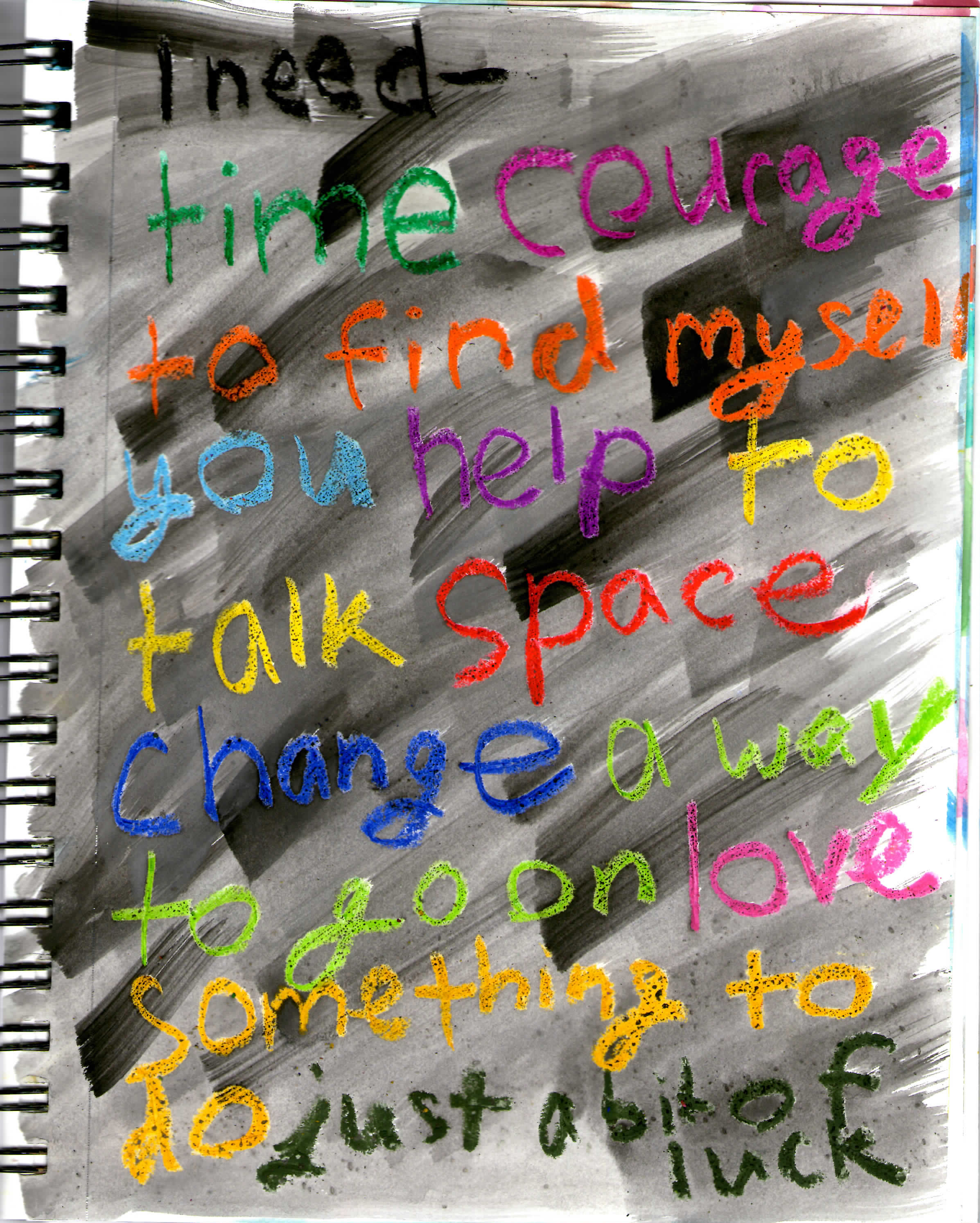
Some Thoughts on Depression

[TMI Warning]

About five months ago, I wrote a post on Facebook (and on this blog) about my experience with depression and how I came to receive treatment for it. I remember feeling very triumphant as I wrote it, because I felt like my difficulties were finally over.

This turned out to not exactly be the case.

In January, perhaps precipitated by some unfortunate personal circumstances, I relapsed and have been trying, mostly unsuccessfully, to recover ever since. The months since then have been filled with a lot of self-loathing, many random bouts of crying (daily at times), and much speculation on my part as to whether or not I really belong in this world.

This is when I realized that my problems, whatever they may be, don’t simply go away when I’m not depressed. I don’t “invent” the issues that I’m unhappy about. But being healthy makes it easier to ignore the pain in the back of my mind–all the wasted opportunities, lost friends, and scarring memories that have built up over the years like dust on a windowpane. When I’m healthy, I simply don’t think about it, and consequently I’m happier. But the mockery that I’ve made of my life isn’t a figment of my imagination; it’s quite real.

~~~

I also started to realize, perhaps even more than I did when I wrote that post, how little the healthy world knows about depression. Mental illness is truly the last taboo; many people refuse to even consider dating someone who has it. Kinda makes me reconsider being so open about my experience…

Even people who would otherwise be supportive just don’t know enough. For instance, if you know your friend is a diabetic, would you offer her a piece of cake? Probably not. But would you casually make fun of your depressed friend? Unfortunately, many people would, even though teasing and jokes are things that many depressives have a lot of trouble with. (This is because depression often causes a cognitive deficit that makes people take everything–a snappy tone of voice, an odd glance, a sarcastic remark–very personally. Here’s a great guide to cognitive distortions.) I am always analyzing and picking apart things that people say to me to try to figure out if they were just teasing or not. I am terrified of the threat of rejection that these casual utterances may carry, so I am always alert, always on my best behavior.

~~~

Another thing I’m never sure of is which parts of me are depression and which are simply me. I’m a skeptic, a cynic, and generally not too big a fan of things that most people seem to really like (Exhibit A: this). I don’t fit in with my surroundings in many ways. I’m more complex, polite, caring, respectful, quiet, conscientious, serious, passionate, emotional, and sensitive than most. I’m less assertive, flaky, impulsive, cheerful, “chill,” and casual than most. This makes for a great number of personality differences between myself and most people I know. When I’m not feeling depressed, these differences fade into the back of my mind. But when I am, they come right to the front, putting up a wall between me and the rest of the world, making me feel like I’ll be an outcast for life.

~~~

One more realization–Northwestern might be the worst place in the world to be depressed. (Not that there’s really a good place for that, except perhaps the psychiatric ward of a hospital.) It’s isolating, stressful, and miserably cold from October till May. Your peers churn industriously around you like a hive of North Face-clad bumblebees while you vegetate listlessly in your shitty shoebox room and email professors, friends, student group leaders one by one and tell them that you’ve been ill and cannot come to whatever crap you’re supposed to be at that day. You eat Nutella from the jar and wonder why none of your friends care. You wonder why you expect them to care. You sleep, a lot.

Northwestern also happens to have entirely inadequate mental health services, but that’s a topic for another post. My friends and I are working to change that. But for now, this is a really, really unfortunate place to be depressed.

~~~

And that’s it, really. I’m not entirely sure where I’m going now, but hopefully it’s somewhere good.

Coming Home

[TMI Warning]

This weekend I went home to Ohio, where my family lives. I hadn’t been home since winter vacation (I spent spring break in New York) so the time seemed ripe for a visit.

The drive was spectacular in that unspectacular way. I took the Megabus, sat on the upper level, and spent whatever time I didn’t spend sleeping looking out the window at the Midwestern landscape. I watched as it changed from the industrial utilitarianism of Chicago and northwestern Indiana to the vast fields, punctuated by lonely farmhouses and islands of fluffy deciduous trees, that I grew up with.

When I got to Ohio, I was stunned by how green it was. Green trees, fields, and shrubs stretched in every direction. I was reminded of how I felt three years ago, when I came home from a summer in Israel–I felt like I’d never seen so much of one color in my life.

Coming home has a certain routine. I greet my family, especially my little brother and sister, whose screams of “Mashaaaaa!” (my Russian name) are always followed very closely by screams of “iPaaaaaaaad!” (my iPad is possibly their favorite thing about me). Then I go through the house and take an inventory of everything that has changed since I was last there. My sister has a new car seat, a much bigger one. There are new drawings and school projects and children’s books lying around. My dad has been cleaning out the little closet under the stairs.

My room, though, is just as I left it, more of a museum than a space where someone actually lives. Every time I’m home, I make changes to it, because that’s the only way I can continue to believe that someone actually inhabits it. Usually I box up some relics of my old life and put them in the closet. This time was no exception.

Yet it’s impossible to avoid the reminders of the fact that I don’t belong here anymore. The first thing my dad said upon seeing me was that my outfit (leggings, boots, and a long, non-revealing top–de rigueur in Chicago) was an “outrage.” He repeated this point several times, saying that just because I could wear something in Chicago doesn’t mean I can wear it in Ohio. Then he said I look like a slut.

This was far from the first time I’ve felt this way here. Come to think of it, I’ve always felt painfully out of place in this little suburb. I was one of very few foreign-born students in my high school, and one of even fewer Jews. I didn’t know anyone else who had ever visited Israel, let alone lived there. I looked different, dressed different, talked and acted different.

I was the subject of much speculation and well-meaning humor. I’ve been called such epithets as “commu-Jew,” “Russian spy,” and “weird Jewish Russian flute player.” I’ve been asked all sorts of naive questions; ranging from the innocent, such as, “Have you ever tried wearing your hair straight?” (Yes, I have. It’s ugly. I am Jewish and my hair is meant to be curly) and “Which church do you go to?” (Um, actually, I don’t go to any church); to the simply ridiculous, such as, “Do they have cars in Israel?” (Yes, Israel has come a long way since biblical times).

(Or, as an addendum–do I like bagels? Do I like vodka? Do I party a lot? How much can I drink? How much can my parents drink? Do my parents belong to the Russian mafia? Are they spies? Political refugees? Do they keep nukes in the basement? Will my dad beat up any guy I bring home? And while we’re at it, why didn’t the Jews accept Jesus Christ as the Messiah?)

I also found myself struggling to explain my developing identity to those around me. Whenever I tried to tell my friends about my life in Israel, I was generally met with blank stares, because many of the people I knew had never even traveled outside of the United States, and some had never even left Ohio or the Midwest. When discussing my travel plans, I usually encountered dumbfounded confusion as to why I would ever want to go to “that place,” since American media tends to portray Israel as a war-torn wasteland. One friend’s mom, a well-meaning woman who treated me like family, asked me to consider not going to Israel anymore because, and I quote, “We want you to be safe with us.”

Everything I’ve mentioned above, I generally took in stride, often even with a laugh. But sometimes the ignorance drifted subtly (or not-so-subtly) into prejudice. A boy in my third-grade class called me a “stupid Jew” (an experience now shared, sadly, by my nine-year-old brother). When a high school friend jokingly insulted me and I got a bit defensive, he smugly suggested that perhaps my defensiveness has to do with my Israeli nationality. Somewhat more disturbingly, a close friend in high school began to tell me once that her mom considers me egotistical–here I wondered, How? She’s hardly even talked to me–but then my friend inserted the explanatory qualifier–because I’m Jewish.

Oh, okay then. Makes perfect sense now.

Whether harmless and funny or crude and prejudiced, the way people interpreted and responded to me when I lived in Ohio could only have told me one thing–you don’t belong here.

Chicago is a different story. People mostly couldn’t care less which country my passport comes from or which type of religious congregation I attend (or, in fact, whether or not I attend one at all, which by the way, I don’t). When I tell friends about my time in Israel, they say “That’s really cool” and tell me about studying in Argentina or traveling through China. Although prejudice of various sorts still exists, even here, I don’t know which is rarer–someone deciding that I’m “egotistical” because of my ethnicity, or feeling like enough of a smart-ass to tell me that their mother thinks so. For the first time in my life, I’ve met people my own age who share  bits and pieces of my culture, and my identity has become even stronger because of it.

And yet…and yet. How I love coming back to Ohio. I miss the greenness and simplicity of it, the friendliness of the people, the lack of noise and traffic. Sometimes I even miss the prevalence of lawn gnomes and pickup trucks. I love escaping the pace of the city, and the police sirens screaming past my window at all hours of day and night. And the girls in heels and sunglasses looking down their noses at me, and the men who try to say things to me on the street.

In Ohio I don’t have to feel bad that my shoes are from eBay and my perfume is from T.J. Maxx–because so is everyone else’s. Even the extra pounds on my body seem to melt away when I’m home, because the “fashionable” waifishness I encounter every two steps at Northwestern is, needless to say, very rare back home.

In Ohio, in other words, I’m a big fish in a small pond.

I used to hate Ohio and especially Beavercreek, the suburb where I lived. They represented everything I hated about the United States–the stifling conservatism, the ethnocentricity, and, on a less serious note, the complete and utter lack of things to do. But over time I’ve grown to appreciate this leafy town. It is, in its own small-minded way, comforting, familiar, and serene.

I’m coming home, I’m coming home
Tell the world I’m coming home
Let the rain wash away
All the pain of yesterday
I know my kingdom awaits
And they’ve forgiven my mistakes
I’m coming home, I’m coming home
Tell the world that I’m coming

Mea Culpa

mea cul·pa. Latin. through my fault; my fault (used as an acknowledgment of one’s responsibility).

Apologies have an interesting social function. I think that many people underestimate their power because they don’t necessarily “fix” the harm that was done, but in my opinion that’s an overly simplistic view of things.

Many people have trouble saying sorry. Some think that an apology is unnecessary if the harm done was accidental or unavoidable. (Possibly they also argue that accidental implies unavoidable.) Others think that there is no need to apologize if they believe they behaved correctly and that the other person should not have been offended or upset. There are also people who don’t believe in apologies because they don’t actually “fix” anything. And still others–the largest group, I believe–simply don’t like the feeling of apologizing, so they avoid it altogether.

But why? Maybe because apologizing puts you in a vulnerable position. It forces you to admit, implicitly or otherwise, that you were wrong. It forces you to confront the fact that your actions sometimes have unexpected negative consequences and that people often see your actions very differently than you do. It also opens up the possibility that the other person will reject your apology, and nobody likes rejection.

I definitely used to belong to this group of people. I hated apologizing. It felt crappy and even after I did it, I still felt like the other person was going to hold a grudge.

I’ve grown up since then, though, and now I give out apologies like some people give out hugs. I apologize for everything that I might’ve done wrong, from accidentally cutting someone off as we’re walking into a classroom to not answering a friend’s text in a timely way to seriously upsetting someone. I apologize even for things that many people don’t think require an apology. And it feels great. I feel like my respect and consideration is a gift, but unlike the gifts you buy, I can give out as much of this one as I want.

From this, and from the pain I feel when others don’t extend me the same courtesy I extend to them, I’ve started slowly figuring out exactly what the function of apology in human society is. It’s a social lubricant–and I don’t mean in the same way alcohol is. It’s a social lubricant in the sense that it keeps relationships going smoothly and provides a way for people to let each other know that they care about and respect each other. An apology rarely fixes the problem that it caused, but it lets the person who was harmed know that the other person still cares.

For instance, several weeks ago I posted something on Facebook that a friend of mine found offensive (it made fun of her future career) and she posted a really angry comment on it saying that she was offended. I honestly found her response completely overreactive and entirely too public. Nevertheless, I set that aside and acknowledged that she was upset and wrote her a message apologizing and explaining that I hadn’t meant to offend her. She responded with an apology for her overreaction and accepted mine. And everything went on just as it had before.

But if at any point during this interaction–if I’d decided that her overreaction absolved me from having to apologize, or if she’d decided that my apology retroactively justified her overreaction–then things wouldn’t have gone so well. In the first case, she would’ve been stuck with a grudge against me, and in the second, I would’ve felt taken advantage of, like my conscientiousness had simply been abused.

Apologizing is one thing that I believe I do very well, so it’s difficult to understand why others can’t do it too. Like listening, writing, and reading critically, it’s one of those skills that are lacking in American society. I think it’s because people fail to recognize the power that a simple apology can have, and I wish there were a way (aside from writing slightly presumptuous blog posts) to show them they’re wrong.

A Point-by-Point Assessment of “10 Reasons to Date a Depressive”

[TMI Warning]

Thought Catalog had an interesting post yesterday called “10 Reasons to Date a Depressive.” It’s sardonic and irreverent but actually brings up a few good points about depressives (and dating them). I’m going to analyze the piece point-by-point and add my own (as usual, very serious and scholarly) commentary.

1. Anything you leave with them will be right where you left it, no matter how long you leave it. Pending suicide, hospitalization or just deciding to go somewhere else while in a melancholic haze, the depressive avoids doing, well, things.

Yeah, this is pretty true. I think I’m unusual in that I force myself to clean even when I’m feeling awful (because it helps), but many depressives don’t.

2. Borrowing money has two advantages. Depressives do not expect you to pay them back. It’s probable they don’t even remember lending it to you, after a while of nothing mattering.

Partially true. We do often feel like people are always going to take advantage of us (i.e. by not paying us back), but we never forget. We hold it in the back of our minds and feel resentful.

3. Cheap date. Most depressives who want to live at least a little are on some sort of antidepressant. The chemicals in most antidepressants increase the potency of alcohol. You may end up with vomit on you while they tell you stories of their missed opportunities. But then again, you may not. It’s good to stay optimistic around depressives, for obvious reasons. Also, most depressives don’t eat much.

Since I don’t really drink, I wouldn’t know about this. However, it’s worth pointing out that not only are some antidepressants potentially fatal if taken with alcohol, but it’s also a really bad idea to drink if you’re depressed (alcohol itself is a depressant, and so on and so forth). If you’re dating a depressive, please don’t encourage them to drink.

4. Avoiding the meet the family situation. Depressives usually hate their family. And depressives don’t want to meet your weirdo brood. That would interrupt days-long, pensive thought-loops. These are necessary for doing nothing.

Not true for me, but definitely true for some.

5. Sex. As with most things it’s a double-edge sword with the depressed. They may get wasted (easily, see above) and fuck some of that anger out on you or they may get wasted and spend the night in the emergency room. It is worth the risk, though, if only to do it once. Intoxicated sex with a highly-medicated depressive is liken swimming with dolphins.

Actually, many depressives lose interest in sex as a result of their condition, and many antidepressants can lower sex drive or inhibit orgasms as a side effect. Also, from what I’ve heard (but thankfully never experienced), drunk people in general are TERRIBLE at sex.

6. Drugs. Depressed people love to self-medicate. This often means unlimited beer and usually pills and pot. If you’re into speedy drugs though, you’re out of luck. Depressives are terribly uncomfortable with bouts of increased energy.

I wouldn’t know.

7. Poor memory and attention. Lucky for you, poor cognitive skills are a sign of depression! Depressed partners won’t remember things, like cruel words or mysterious sheet stains, and there’s less of a chance they’ll notice when you do stupid shit.

Only partially true. We definitely have poor memory and attention, but we will ALWAYS notice when you do stupid shit, ALWAYS freak out about it, and ALWAYS remember it.

8. A lot of quiet time. If you’re into quiet (though not usually the peaceful kind), depressives are for you. If they aren’t quiet due to overwhelming internal existential dread, you’re getting the silent treatment for whatever you most recently said or did that crushed their identity.

Haha. This is completely true. If you’re going to date a depressive, make sure you’re not one of those people who needs to be talking or doing something all the time. We like to sit around and think.

9. Sensitivity. Depressives are very sensitive people. This will work well for you when you are sick or lose your job or any time you need someone to feel sorry for you. Or maybe you saw a squirrel outside and then looked away and when you looked back it was gone and for a second you were slightly glum. Anything. Just don’t expect any actual help. Depressives are already too weighed down with pain to do physical activities.

So so so so true. Whenever one of my friends or family members is upset, I literally feel it in my heart. I would drop anything to help someone. Even if it’s not something that I personally would be upset about (for instance, one of my friends gets very upset about bad grades and I don’t really), it’s like my feet instantly go in their shoes. Most depressives I know are the same way. Of course, though, sensitivity also has the flip side of making people very easily hurt, which is one of the hallmarks of depression.

10.You are now awesome! When with depressives, usually a mess of bodily and foreign clothing stains, bloodshot eyes and plenty of hopelessness to share, you are truly a joy to all of the senses. So, even if you don’t want to invest in dating a depressive, just spending a little time with one can go a long way to making you feel better about yourself.

Honestly, from what I’ve heard, spending time with depressives makes you feel much more shitty than good. So don’t do it for that reason.

Love vs. Work

“Some women choose to follow men, and some women choose to follow their dreams. If you’re wondering which way to go, remember that your career will never wake up and tell you that it doesn’t love you anymore.”

— Lady Gaga

As much as I respect and admire Lady Gaga, this is some of the worst advice I’ve ever heard, because it’s incredibly misleading.

First of all, it’s probably just as easy to lose your career as it is to lose your partner. Here are a few examples:

  • a pro football player permanently injures his leg
  • a writer gets depressed and loses her creativity
  • a doctor loses a malpractice suit and is no longer allowed to practice medicine
  • a politician becomes disenchanted with the system in which she works
  • an artist starts losing his vision
  • a lawyer at a prestigious firm gets burned out

And so on.

Furthermore, if it were the case that everyone who puts aside relationships for the sake of their careers ends up doing what they love most and getting paid millions for it like Lady Gaga, perhaps her advice would hold up. But for most of today’s young people, who sacrifice love and dating for the sake of working 60-hour weeks and making comparatively little money, the choice isn’t really such an obvious one.

Second, it’s exactly this mentality that prevents people from making the sort of commitment that prevents relationships from breaking down. I’m not saying all relationships (and marriages) are made to last, but putting your career first every time is one way to make sure they don’t. I know students here who will break off perfectly good relationships because 1) they can’t deal with spending one summer apart, and 2) they’re so obsessed with getting the perfect summer internship that they don’t even try to end up in the same city together. Of course, one could argue that college relationships don’t matter much (though I’d never argue that, personally), but people keep acting like this long after graduation. For instance, by doing as Lady Gaga recommends and choosing careers over relationships.

I feel like sentiments like this one are an overblown response to the old-fashioned way of looking things, which was that a woman should sacrifice all of her ambitions for the sake of a marriage. Obviously, I disagree with that completely, but I feel like asking women to sacrifice all of their relationships for the sake of their ambitions is just as one-sided and faulty way of looking at things. Statements like this one construct these two aspects of adult life as diametrically opposed when they really aren’t. Plenty of women manage to have fulfilling careers and loving marriages. It just takes a bit of work, that’s all.

The truth is that nothing in your life is ever going to be perfect, all the time. When your relationships aren’t going well, an interesting and meaningful career can help you get through it. But what about when your career isn’t going well?

In short, yes, balancing love and work is difficult. That doesn’t mean we should just opt out of that balance altogether and pick one over the other. It’s unfortunate that people like Lady Gaga, whom many young women consider a role model, has made it sound like we need to abandon one of these important things for the sake of the other.