You Don’t Need Alcohol

[This is my first column for the Daily Northwestern, NU’s student newspaper. I can’t find the link on their website so I’m not linking to it, but here’s the full piece.]

You don’t need alcohol.

Wait, hear me out. You really don’t need it.

Before I came to college, I obviously expected that there’d be a lot of drinking and partying going on here. What I didn’t know is why. I grew up in a large, loud Russian family, where alcohol flows freely at dinner parties and camping trips, but never takes center stage. My parents seem mosty the same to me whether they’ve had five drinks each or not a single drop, and they seemed to have just as much fun without alcohol or with it.

I was puzzled, then, when I came to college and found that alcohol was often–not always, but often–the main event. As far as I knew, most people readily admit that they don’t like the taste of alcohol, at least not of the sort usually served at college parties. Dealing with the unpleasant consequences of drinking too much is a drag. Meaningful connections aren’t usually made while one is drunk. So why?

The answer both suprised and disappointed me: people think they need it.

I started hearing the same story from almost everyone I asked. “I don’t really feel comfortable with people unless I’ve been drinking.” “I can’t talk to girls without a few drinks.” “I could never hook up with someone if we’re not both drunk.”

One friend even confided to me that he literally can’t have sex if he’s not drunk. “Why not?” I asked. “I’m more of a traditional person,” he said. “I don’t feel comfortable doing that with someone I don’t really know if I’m sober.”

Could it really be that the brilliant, accomplished people I go to school with can’t make friends or hook up without alcohol?

The answer, I think, is no. I think we’ve been deluding ourselves. Sure, it can be fun to get drunk. But should it ever be something we “need” to function socially?

I think I can attest to the fact that it’s not necessary. I used to be painfully shy and incapable of having a conversation with anyone my age. Since coming to college, I’ve truly branched out and made many friends. Yet I’ve never been drunk and can count the number of parties I’ve been to on the fingers of one hand. People, if the girl who used to bring encyclopedias to read at birthday parties can do it, anyone can.

I also don’t think we should be using alcohol to help us ignore our own values. If you’re just not the sort of person who wants to sleep with people you don’t know, that’s totally fine. I’m not either. If you think it’s perfectly okay but feel too insecure to do it without alcohol, that’s something you can work on.

That applies to making friends, too. This school is full of really cool, really interesting people. You’re going to find people who think you’re awesome. It’s just a matter of convincing yourself of that. So practice in front of the mirror, get friends to introduce you, do whatever you have to do. Having the confidence to approach people and connect with them is a wonderful thing, and it’ll be with you always–long after the party’s over and the alcohol’s all gone.

“I really want to screw you, but you have so much baggage.”

A guy actually said that to me once.

He may have been the only person I’ve ever encountered who was willing to verbalize his shallowness and ignorance, but he’s far from the only one who thinks that people need to be perfect before you can get involved with them.

That idea runs rampant in our culture, and it’s not only men who are to blame. Advice columns for women under 30 often exhibit what I call the “Dump His Ass” effect–anytime a woman writing a letter mentions virtually any imperfection in her crush or boyfriend, the advice columnist usually responds with some form of “dump his ass.” Still has feelings for his ex? Dump his ass. He’s insecure? Dump his ass. Doesn’t like your friends? Dump his ass.

(Of course, there are plenty of offenses for which a person of any gender should almost certainly be dumped, such as sexual harassment or assault, emotional manipulation, being a flaming racist/sexist/etc, and so on. I’m talking about much more minor sorts of flaws.)

Common wisdom seems to suggest that before one can get involved with another person in a healthy and stable way, they need to do things like “work on themselves” and “learn to love themselves” and “figure out who they are.” Leaving aside the fact that for most people, working on yourself and figuring out who you are is a lifelong process, there are some people who are never going to “love” or be comfortable with themselves. I am one such person. Do I not deserve to ever have a partner?

Similarly, people are expected to be “happy on their own” before they can be dateable. That’s preposterous. If you’re 100% happy being single, why would you need a serious partner in the first place? Why is it considered unhealthy to really, really want someone to share your life with?

As someone who has had “baggage” virtually since birth, I have never not been aware of the fact that American culture considers people like me undateable. However, the idea that we’re also unfuckable is a pretty new one to me.

Why? Why do people need to be perfect before we’ll have anything to do with them?

It might surprise some people to know that everyone has flaws and psychological baggage; it’s just a matter of getting to know them well enough to figure that out. And yes, other people’s baggage can sometimes cause you trouble. You know what? Tough titties. You have two options: grow up and deal with it, or avoid getting to know anyone.

Incidentally, the guy I quoted in this post’s title eventually overcame his reservations and spent quite some time harassing me for sexual favors. After I refused, he looked at me and said, “You know, I couldn’t ever see you as my girlfriend. I’d need a girl who’s sweet and kind.”

Now who’s the one with the baggage?

Learning Racism on the NYC Subway

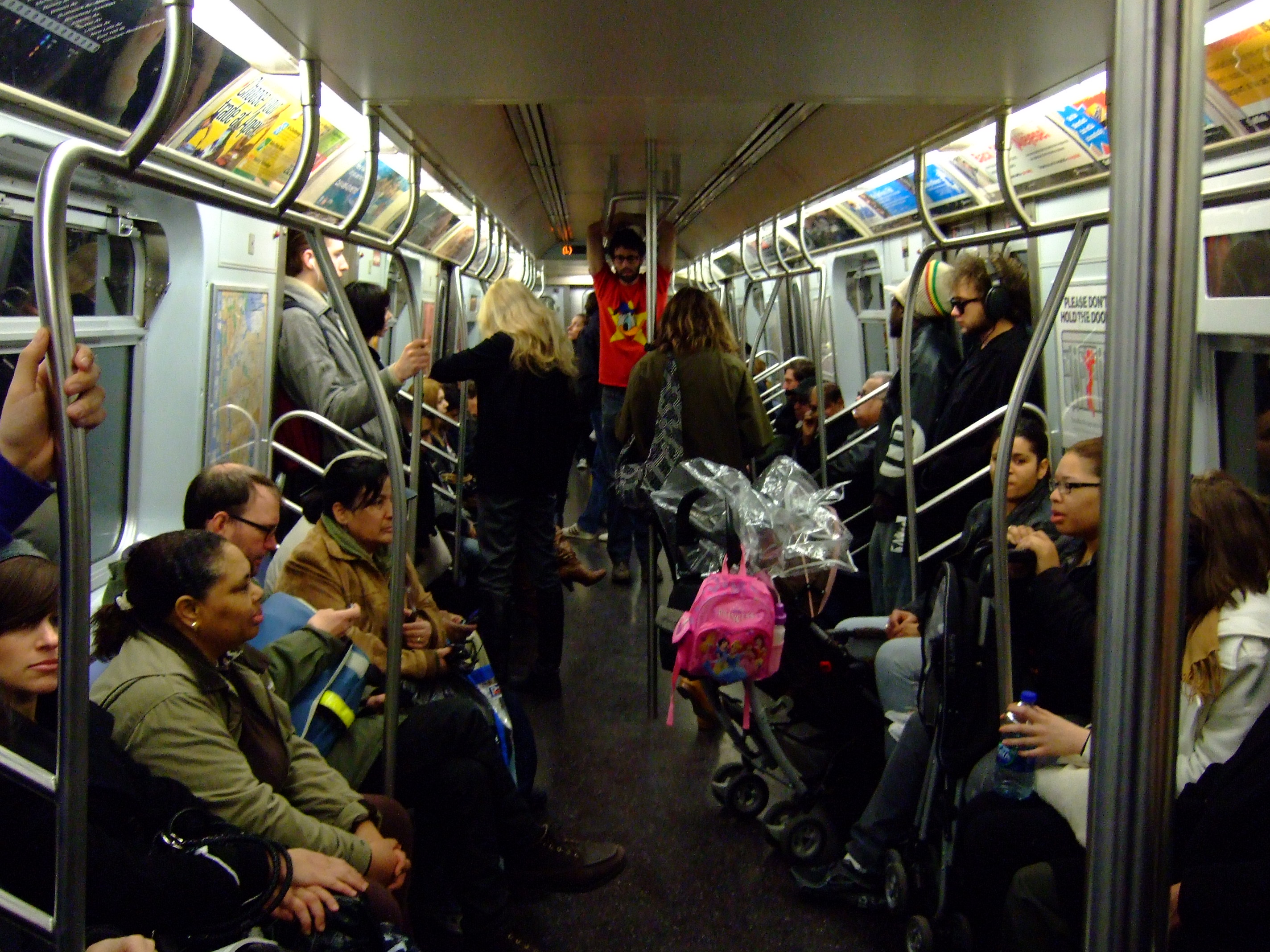
I spent this past week in New York City with my mom and little siblings, who are six and nine years old, respectively. Aside from a few times that they were too young to remember, this was their first time in the city and they had a great time.

On our last day in New York, however, they were confronted with a situation that they would never have encountered back home in Ohio.

We had just gotten on the subway in Queens to go to Manhattan. The train was full, but my  brother and sister found seats next to an older lady. My mom and I, meanwhile, stood facing them.

As my siblings sat down, the older lady mumbled something in their general direction. “I’m watching you,” she growled at them.

None of us paid much attention to this at first. I took out my phone and started reading on it, just as many other commuters on the train were doing.

And then the older lady started saying something that made me consciously notice her race–African American–for the first time.

“Are you takin’ pictures of me? You takin’ pictures of me? I can call the police on you for that. I’ll blow your brains out. Look at your ugly white face.”

I calmly ignored the diatribe, as is the unspoken code of conduct on the New York City subway. It’s impossible to spend even a day in the city without encountering at least one person who is drunk, high, schizophrenic, or otherwise in a state that makes them spew nonsense. The thing to do is to just let it go.

My mom and my siblings took note as the lady kept going.

“You bunch of white trash. I’m watchin’ all of you. You and you and you.” She gestured at my brother and sister.

She kept going in this vein right up until the train reached her station. She stood up and picked up her purse. “Finally I never have to see your ugly white faces again,” she said, and left the train.

I sat down in her seat next to my siblings, glanced out the window, and saw the lady walk off. I turned back around and relaxed. As the train was about to pull out of the station, I heard a thud on the window behind me. My siblings and I, startled, turned around and saw that the lady had come back and hit the window where we were sitting.

This experience made quite an impression on my brother and sister. They talked about it to all the friends and family we saw that day, and they were still talking about it on the plane home the next day. I tried to tell them that some people are strange or disturbed and say weird things, but that these people are not the majority. I’m not sure what they thought about it, but I’m afraid that they’re too young to consciously, coherently think about it at all.

As a young adult who purposefully tries to stay educated about race relations and the history thereof, I can’t say that this experience changed my opinion about anything. I’ve met and been close to enough black people to know that most would never say such things–just as most white people would never say such things to them.

But my siblings have not. In the leafy Ohio suburb where my family lives, diversity is almost nonexistent. We’re one of very few Jewish families here, for instance, and when I Iived here I knew only a handful of black people and no Latino/a people. (Asians are probably the only minority that’s well-represented here.)

This trip to New York was probably my siblings’ first experience with seeing such a tremendous diversity of races and ethnicities (not to mention orientations and gender identifications). The fact that one of their only verbal interactions with a stranger in New York happened this way can’t be a good thing.

Furthermore, unlike my little siblings, I’ve read enough about race relations to understand the circumstances that cause people to develop the views that the lady on the subway had. Perhaps she’s watched friends and family members being unjustly stopped and searched by the police. Perhaps she’s been denied housing or other needs because of her skin color. Perhaps she’s witnessed white people refusing to sit down next to her on the subway at all. Perhaps her calling us “ugly” is a response to a mass media that depicts whiteness as the only variety in which beauty can come.

I know all of this and more, but my siblings don’t, and they’re way too young for me to try to explain it to them. With all the difficulties they face because of learning English as a second language, having a culturally nonconforming family, and, sometimes, even simply being Jewish, the idea that someone might view them the way they view kids who taunt them for their accent or curly hair, is probably a confusing one. They don’t know what it means to be “white” in America. I don’t think they’ll know for a long time.

And that’s the real tragedy. If these two kids develop the unjustified fear of black people that many white people have (even if it’s only subconscious), it won’t be from the surrounding culture, as many would assume. It’ll be from a concrete experience that happened when they visited New York City for the first time and encountered people who don’t look like them. They’ll remember feeling trapped on the subway as a woman they don’t know threatened to “blow their brains out.” They’ll remember being told that their skin color makes them ugly. They’ll remember that the woman was black, because she pointed out that they were not.

And so, racism is perpetuated. Even if my siblings end up forgetting this particular experience, there may be others, and there will be many other kids who encounter a situation like this one. My brother and sister weren’t to blame for this woman’s distress, but to expect her to “rise above” it would be presumptuous. Whatever happened that made her say those things is real.

For once, I have no solution to propose. My purpose in sharing this story was only to illuminate the importance of teaching children how to empathize and how to keep themselves from forming stereotypes–much easier said than done.

They should also be taught more than just that slavery “happened” and is now over (if only race relations were really that simple). The woman on the subway was a racist and she was wrong, but people don’t become racists in a vacuum.

I can only hope that when my siblings are old enough to understand all of this, they will still be open-minded enough to learn it.
Yes, We Need Psychiatric Labels

Recently I stumbled upon a Huffington Post article by one Dr. Peter Breggin, who lists himself on HuffPo as a “reformed psychiatrist.”

This should’ve told me everything I needed to know, but I read on.

The article is titled “Our Psychiatric Civilization” and tries to make the tired point that in this day and age, we are defining ourselves by our psychiatric diagnoses and not by anything else. It’s difficult to fully dissemble this argument because Breggin unceremoniously shoves so many unrelated arguments into the same sad little article, but his main points seem to be:

  • Psychotropic medication is overprescribed.
  • Psychiatric diagnoses (i.e. major depression, bipolar disorder, ADHD, etc.) oversimplify the human condition.
  • Back in the good ol’ days, people apparently did a lot of spiritual soul-searching rather than resorting to all those damn pills.
  • The way people connect in our culture is through their psychiatric diagnoses.

I honestly don’t know which planet Breggin is living on, but it’s certainly not mine. I’ve addressed the overprescription crap elsewhere so I won’t talk about that now.

As for the second point, this is, to a certain extent, true. Psychiatric diagnoses DO oversimplify one’s psychological state, but that’s because you have to have a starting point. If you’re diagnosed with ADHD, you know that, some way–whether it’s through medication, therapy, or some combination of the two–you need to learn how to focus your attention better. If you’re diagnosed with major depression, you know that you need to somehow learn how to fix your cognitive distortions and become more active. If you’re diagnosed with seasonal affective disorder, you know that you need to do things that counteract the shortening of the days–use a full-spectrum lamp, take vitamin D supplements, etc.

Just as knowing that I have, say, asthma or the flu doesn’t describe the full state of my entire body, a psychiatric diagnosis isn’t meant to describe my entire psychological condition. Breggin seems to think that we live in a world where all we know about each other is what pills we’re popping, and nothing else. This is ludicrous. In fact, that’s something we don’t often know, given the stigma that still exists regarding mental illness.

Breggin goes on to claim in a condescending way that there’s no reason for people to connect with each other based on psychiatric diagnoses at all:

Patients ask me, “Should I join a bipolar support group?” If I were flippant, which I never am with patients, I could respond, “Only if you want support in believing you’re bipolar and need to take psychiatric drugs.”

My first thought upon reading this drivel was, Thank G-d he doesn’t say this to patients. My second was more like, What the fuck?

The idea that seeking support from others who face similar issues as you is somehow disempowering and promotes seeing oneself as a victim is quite possibly the most batshit stupid thing I’ve ever heard from someone whose profession is helping the mentally disordered. Shockingly enough, people like to feel like they’re not the only ones with problems. Perhaps this has truly never occurred to Dr. Breggin.

Quite the contrary, I have benefited immensely from connecting to other people who have depression and other mental disorders. Many of my friends have one, and together we’ve formed a sort of support network. All of us can always count on having someone to talk to, and those of us who aren’t as far along in the process of recovery as others can ask friends for advice. I don’t know where I’d be right now without that.

(Maybe in a perfect world, we could just have support groups called “Fucked-up People Support Group,” but somehow this seems counterintuitive.)

Anyway, psychiatric diagnoses can also be immensely helpful in explaining to healthy friends and family what the deal is. While Breggin seems to think that “depressed” is some sort of insulting, disempowering label I ought to reject, let me tell you some of the labels that my close friends and family described me with before they knew I had depression:

  • overdramatic
  • overemotional
  • bitchy
  • attention whore
  • immature
  • insensitive
  • selfish
  • crazy
  • weird
  • fucked up

Yeah um, I’d take “depressed” over that any day.

Not surprisingly, you don’t make a particularly strong case for yourself when you try to insist to people that, no, it’s not that you’re really overdramatic, it’s just that you have this problem with, well, being overdramatic, and you’re trying to work on it, you promise!

Trust me, that doesn’t work. What does work is saying, “I have a disorder called depression that distorts my thinking and sometimes makes me act in a way that seems overdramatic. With therapy and medication, it’ll improve.”

Apparently, though, Dr. Breggin is much too intent on destroying his own profession to allow those with mental illnesses even that small comfort. After all, he makes it pretty obvious that the reason he hates psychiatric labels so much is because they make it possible to prescribe medication, and that, of course, is a big no-no.

If I got a dollar every time some well-meaning fool tried to inform me that the medication that saved my life is unnecessary, I would have enough money to actually afford a therapist.

I Love My Body

[TMI Warning]

I’m going to say something women aren’t supposed to say–I love my body.

My favorite part of my body are my shoulders. I’m not entirely sure why; it’s an irrational feeling. During the summer I like to show them off as much as possible with halter-top shirts and dresses.

I also love my curves, but I try to keep those more covered up. Those are for me, and for whoever else has earned the right, to enjoy.

I love my legs. I have really strong legs from years of dancing, walking, and riding my bike all the time. My legs can do just about anything I want them to.

I love my stomach, which makes rolls when I slouch like most healthy stomachs do. When I want to look thinner I can suck it in, but I think it looks fine even when I don’t.

I love my thighs. They store most of my body’s fat, so it’s often hard to find jeans that will fit them. They jiggle. When I’m naked and I draw my thighs up to my stomach, it feels warm and comforting.

I love my hands. I have long fingers that are perfect for playing piano. The nails on my fingers are strange–they’re all different shapes. Some are rectangular, some are ovular, and some are nearly square.

I love my face. My bottom lip is much bigger than my top lip, and one of my eyes opens much wider than the other. My parents asked me if I wanted to have surgery to get that corrected, and for a while I did, but honestly, I’m terrified of surgery and I don’t really care that much about how wide my eyes can open. My eyes are either brown, hazel, or green; it depends.

I love my feet, which are too wide for many types of shoes and rather ugly because of ballet. I’ve had so many blisters on so many parts of my feet over the years, both from ballet and from my habit of wearing insensible shoes, but my feet have taken it all in stride.

My body is conventionally attractive, but that’s not why I love it. I love it because it’s always been there for me, because of the good sensations it provides, because I’m so intimately familiar with it, and because it’s all mine.

It wasn’t always this way. Until very recently, I hated my body, or thought I did. It was the same story–too fat, too weird, too asymmetrical, too disproportional. I pinched my thighs and stomach all the time. Sometimes I’d stop reading or doing homework and realize that, unthinkingly, my hand had drifted to my stomach and was grabbing it and trying to hide the extra fat.

When I dieted or exercised, it felt like I was punishing my body. I took a sick pleasure in this. I liked to make myself hungry, sweaty, and exhausted. I counted calories, and some days I ate as little as 700 calories. That qualifies as a starvation diet. There, I said to my body. Take that.

Things are very different now. When I exercise, I like to think about my muscles working. Sometimes I even touch them while I’m working out so that I can feel them move. When my muscles are sore, I feel like they’re happy and exhausted. I stretch them and imagine them thanking me.

When I try to diet, I enjoy the feeling of eating well and of not having too much food in my body. I hate feeling stuffed; I prefer small portions. When I’m dieting, I’m more mindful of what I eat, and I feel my body appreciating each bite, and I like that feeling.

People think that loving your body means either thinking it’s flawless or completely abandoning the idea of health or beauty. The media perpetuates this myth–only “perfect” people (who don’t exist anyway) should love their bodies, and those who are “flawed” but love them anyway must simply be blinding themselves.

It’s not true. I don’t think my body’s perfect at all. It has plenty of flaws, some of which I mentioned above. Some of those flaws I counteract–I tweeze my eyebrows, wear makeup, diet (sometimes), wear flattering clothes, and use lotion. Other flaws I genuinely don’t care about.

But don’t we love people who aren’t perfect? Don’t we love our favorite writers, even though they might’ve written a couple books we could barely get through? Don’t we love our childhood homes despite the peeling paint and faded crayon marks on the walls?

You don’t have to be perfect to be loved, and neither does your body. I don’t think I’m the only woman who knows this. But I’m one of the few who’s willing to stick up for my body and declare that I love it despite a culture that says that women ought to be ashamed of what they were born with.

My body is there for me even when no one else is. I refuse to devalue it.